中文简体
中文简体






Previous Post
From Leather Appearance to Engineered Surface Performance
In contemporary furniture and interior design, surface materials are no longer defined by appearance alone. Designers increasingly look for surfaces that can combine visual character, tactile experience, manufacturing consistency, and long-term durability.
Leather has always been associated with sophistication and premium design. Its distinctive grain, subtle irregularities, matte appearance, and soft tactile character can add warmth and depth to furniture and interiors. However, genuine leather is not always the most practical solution for large-scale furniture production. Material cost, installation complexity, maintenance requirements, grain consistency, and production scalability can all become important considerations.
This is where leather design melamine surfaces offer a different approach.
YAKCO Leather Design Melamine Board combines the visual and tactile language of leather with the structural efficiency of engineered decorative boards. Through precision embossing, decorative surface technology, and high-pressure lamination, the board transforms a traditionally upholstery-oriented texture into a standardized architectural and furniture surface.
Rather than simply printing a leather pattern onto a flat board, YAKCO focuses on creating a coordinated relationship between visual grain and physical texture. This approach reflects a broader shift in furniture design—from purely visual decoration toward sensory material design, where what a surface looks like and how it feels are equally important.
To know more about yakco Leather Design Melamine Board
Why Leather Texture Is Becoming More Important in Furniture Design
For years, wood grain, stone, and solid colors dominated decorative board applications. Today, designers are increasingly exploring surfaces that introduce more tactile depth and material identity into contemporary interiors.
Leather texture is particularly effective because it creates a visual balance between luxury and restraint. Fine grain patterns can soften minimalist furniture, while darker leather-inspired finishes can add depth to cabinets, wall systems, reception areas, and commercial interiors.
More importantly, leather-inspired surfaces can create a warmer sensory experience than completely smooth or high-gloss materials. This makes them especially relevant to contemporary hospitality, retail, residential, and office environments where material perception contributes directly to the overall character of a space. YAKCO's existing research and product positioning also emphasize the role of texture, touch, and perceived material quality in modern furniture design.
How YAKCO Leather Design Melamine Board Recreates Leather Character
The challenge of leather-inspired decorative surfaces is not simply reproducing a visual pattern. Natural leather contains complex grain structures that vary in scale, direction, depth, and irregularity.
A high-quality leather design board therefore needs to address two different layers simultaneously:
Visual reproduction creates the color, grain, pores, highlights, and tonal variation associated with leather.
Physical embossing creates the three-dimensional texture that allows the surface to be experienced through touch.
YAKCO combines decorative paper technology with precision embossing and high-pressure thermosetting lamination. The result is a surface in which the decorative appearance is supported by a corresponding physical texture, creating greater visual depth and a more convincing tactile effect.
This distinction is critical. A printed leather pattern can imitate appearance, but a textured surface can communicate material character.
For furniture manufacturers, the advantage is that this effect can be incorporated into a standardized board-based manufacturing process rather than relying entirely on hand-applied or upholstered leather finishes.
From Luxury Material to Scalable Furniture Surface
One of the key advantages of engineered leather design surfaces is manufacturing consistency.
Natural leather is inherently variable. Differences in grain, color, thickness, and surface characteristics can make large-area matching more difficult. A board-based decorative system, by comparison, can provide greater consistency across production batches and furniture components.
This is particularly valuable for:
- Wardrobe and cabinet doors
- Kitchen and bathroom furniture
- Bedroom furniture
- Office desks and executive furniture
- Reception counters
- Retail display systems
- Hotel furniture and feature walls
YAKCO's Leather Design Melamine Board is positioned around this combination of realistic surface design and industrial manufacturing efficiency, making it suitable for both furniture production and architectural interior applications.
Performance Matters as Much as Appearance
A premium furniture surface must remain attractive after repeated everyday use. For this reason, decorative design cannot be separated from physical performance.
The attached YAKCO test report provides useful evidence for the performance of an 18 mm double-finish, paper-impregnated thermosetting-resin surface-decorated particleboard tested according to GB/T 15102-2017. The tested product achieved passing results across bending strength, modulus of elasticity, internal bond, thickness swelling, moisture content, density, screw-holding capability, thermal cycling, surface scratching, surface wear, cigarette burn, dry heat, staining, cracking, and vapor resistance.
Several results are particularly relevant when evaluating the engineering foundation of decorative furniture boards:
- Bending strength: 8 MPa
- Modulus of elasticity in bending: 4240 MPa
- Internal bond strength: 36 MPa
- 2-hour thickness swelling: 0%
- Moisture content: 3%
- Density: 72 g/cm³
- Screw-holding capability: 1110 N on the face and 860 N on the edge
The same report recorded successful performance in surface resistance testing. The sample passed high-low temperature cycling, surface scratching at 1.50 N, and surface wear testing, with a measured wear value of 57 mg/100 r against a permitted value of no more than 80 mg/100 r.
Additional testing showed pass results for cigarette-burn resistance, dry-heat resistance, surface staining, cracking, and vapor resistance, with results ranging from Grade 4 to Grade 5 depending on the test item.
It is important to note that this report identifies the tested product as a surface-decorated particleboard with paper impregnated thermosetting resins, rather than identifying the sample specifically as a Leather Design Melamine Board. Therefore, these figures should be understood as evidence of the tested YAKCO board/surface system and substrate performance, rather than as a leather-pattern-specific certification.
Leather Texture Without the Maintenance Burden of Genuine Leather
One of the strongest advantages of leather-inspired melamine surfaces is the ability to introduce the visual language of leather while using an engineered board construction.
Genuine leather can require more careful maintenance and can be affected by staining, moisture, abrasion, and long-term environmental conditions. A melamine decorative surface is designed around a hardened resin-based surface layer, making routine cleaning and furniture maintenance more compatible with modern production and everyday use.
This is especially useful for commercial environments where furniture may experience frequent contact and repeated cleaning.
For designers, this means leather texture can move beyond traditional upholstered applications and become part of broader architectural surfaces.
A New Material Language for Premium Interiors
Leather design is no longer restricted to sofas, chairs, and upholstered panels.
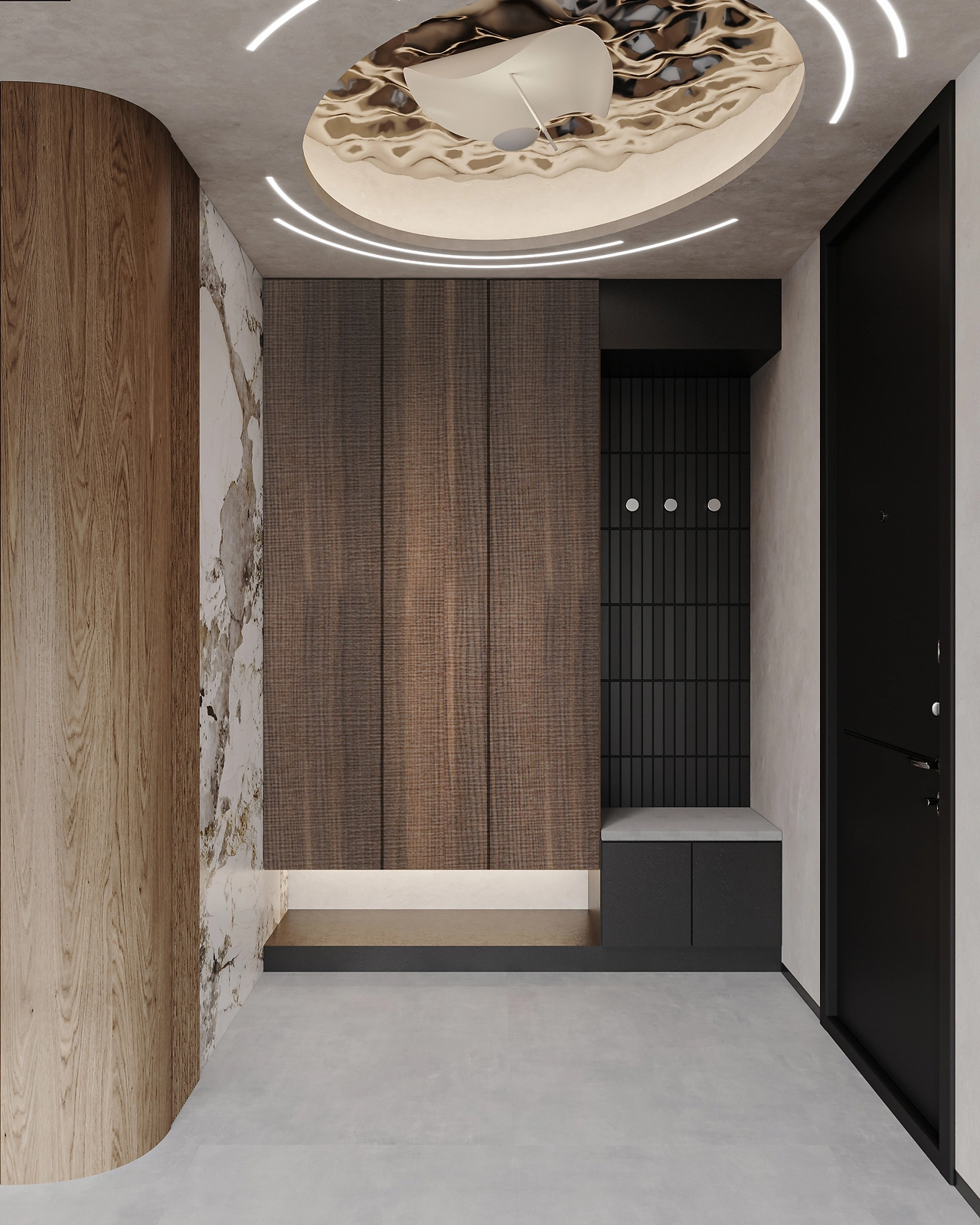
With engineered decorative boards, the same material language can be translated into wardrobes, cabinetry, office systems, wall panels, reception areas, retail displays, and hospitality furniture.
In residential interiors, leather-inspired boards can introduce warmth and sophistication into wardrobes, bedroom furniture, TV cabinets, and bespoke storage systems.
In hospitality projects, they can create a refined atmosphere in guest rooms, reception areas, furniture systems, and feature walls.
In retail and corporate environments, the texture can support a premium brand image while maintaining the consistency required for repeated production and larger installations. These application directions are consistent with YAKCO's positioning of Leather Design Melamine Board across residential, hospitality, retail, office, and architectural interiors.
The Value of Texture in Modern Furniture
The evolution of decorative surfaces is ultimately a shift in how designers define material value.
A surface is no longer judged only by its color or pattern. Designers increasingly consider:
How realistic does it look?
How does it feel when touched?
How consistent is it across production?
How well does it withstand everyday use?
How efficiently can it be manufactured?
Leather Design Melamine Board addresses these questions by combining a premium visual language with engineered board technology.
Instead of treating texture as an additional decorative effect, YAKCO treats texture as a core part of the material system. The result is a surface that brings together visual realism, tactile depth, production consistency, and functional performance.
Conclusion: When Leather Becomes an Engineered Surface
The future of premium furniture materials is not simply about reproducing expensive natural materials. It is about understanding what makes those materials desirable—and translating those characteristics into more consistent, efficient, and application-oriented surface technologies.
YAKCO Leather Design Melamine Board takes the distinctive language of leather—its grain, depth, matte character, and tactile appeal—and integrates it into an engineered decorative board platform.
For furniture manufacturers, architects, and interior designers, this creates a new possibility: the luxury of leather can be expressed not only through upholstery, but also through scalable furniture surfaces and architectural applications.
As furniture design continues to move from visual decoration toward sensory and performance-driven materials, leather-inspired melamine surfaces are positioned to become an increasingly important category in premium interior design.
YAKCO Leather Design Melamine Board — where leather-inspired texture meets engineered surface performance.