中文简体
中文简体





Previous Post
From Leather-Look Decoration to Authentic Tactile Design
In high-end furniture and interior design, the value of a material is no longer defined simply by its color or pattern.
As customized furniture, boutique hotels, premium residences, and commercial spaces place greater emphasis on material experience, designers are paying increasing attention to surface texture, tactile qualities, and the way light interacts with a material.
For leather-inspired surfaces, simply reproducing the appearance of leather is no longer enough. A truly sophisticated leather-inspired finish needs to achieve a balance between visual authenticity, tactile expression, and functional performance.
This is the design philosophy behind YAKCO Leather Design Melamine Board.
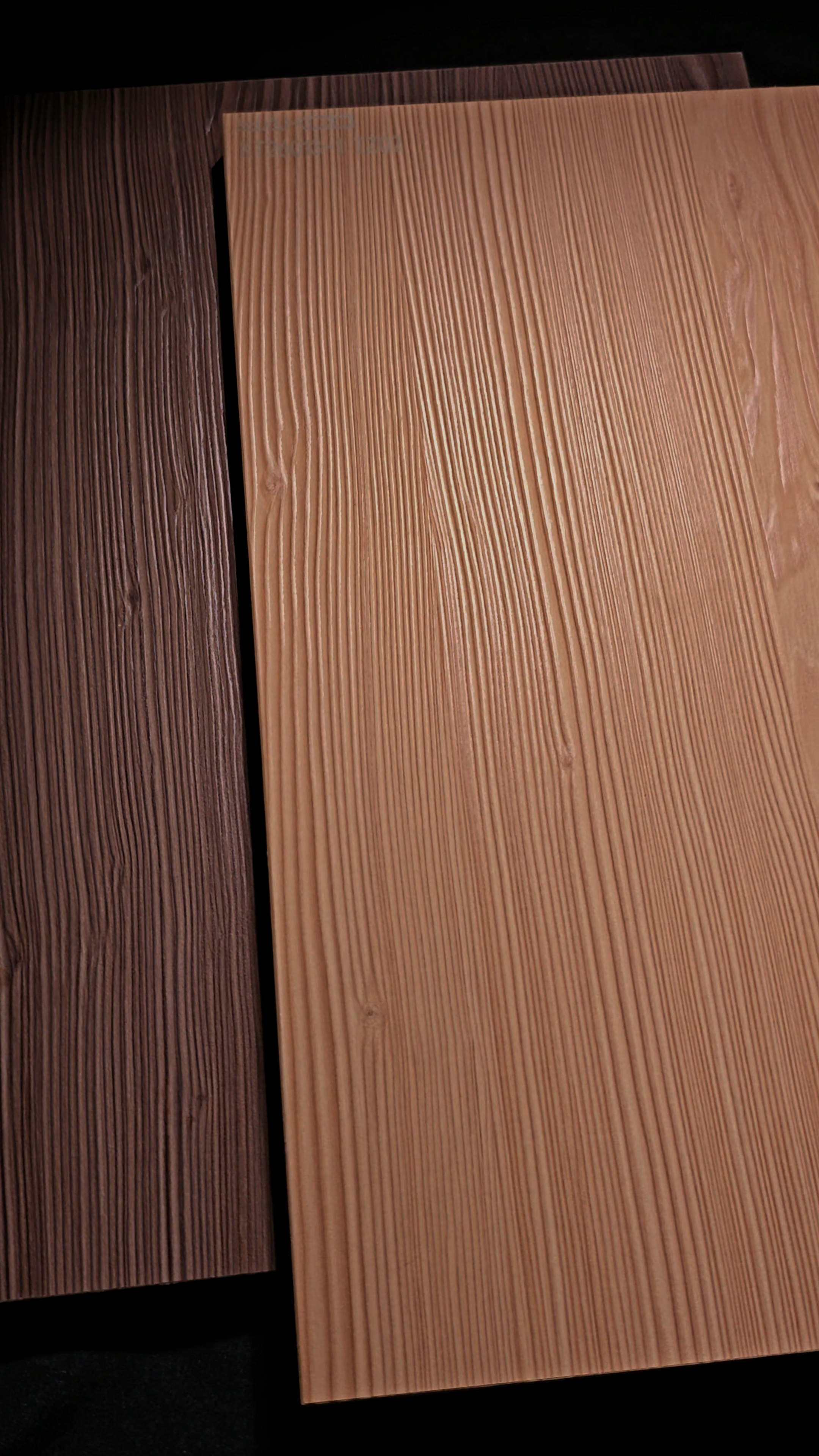
Inspired by the refined texture, subtle grain variation, soft relief, and understated character of genuine leather, YAKCO transforms these distinctive surface qualities into a stable and reproducible decorative solution through the combination of decorative paper and embossing technology.
The result is more than a leather-look surface. It is a complete material experience designed for contemporary furniture and interior applications.
To know more about YAKCO Leather Design Melamine Board
01 Why Leather Texture Works So Well in Modern Furniture
Leather has long been associated with premium furniture design.
Its distinctive warmth and sophisticated appearance can create a softer visual character while producing subtle changes in texture and light. In sofas, headboards, cabinetry, wall panels, and decorative surfaces, leather can reduce the visual hardness often associated with conventional board materials and bring a more refined atmosphere to an interior.
However, genuine leather also comes with practical considerations, including material cost, processing requirements, dimensional limitations, and consistency between different batches.
As a result, leather texture is increasingly becoming a design language in its own right—one that can be reproduced and integrated into different furniture materials and manufacturing systems.
YAKCO Leather Design Melamine Board responds to this trend by combining leather-inspired aesthetics with melamine decorative technology, allowing the visual and tactile qualities of leather to be incorporated into modern furniture in a more consistent and scalable way.
02 Beyond Color: Texture and Tactility Matter
The appeal of leather is not simply about classic colors such as brown, beige, or black.
One of the defining elements of its character is surface texture.
Fine and structured leather textures can create a refined visual rhythm, while more naturally varied textures introduce greater depth and individuality. When light interacts with these surface details from different angles, subtle highlights and shadows further enhance the three-dimensional appearance.
For this reason, YAKCO Leather Design Melamine Board focuses not only on reproducing leather-inspired patterns, but also on creating a coordinated relationship between texture, surface relief, light reflection, and tactile sensation.
When the visual pattern and embossed surface are properly integrated, the board surface becomes more than a flat decorative layer. It creates a richer interaction between light, shadow, and touch.
This represents an important evolution in decorative surfaces—from simply being a finishing material to becoming an integral part of material design.
03 Bringing Leather Design into Melamine Decorative Surfaces
One of the key advantages of melamine decorative boards is their ability to combine sophisticated surface design with established industrial manufacturing processes.
According to the YAKCO test report provided, the tested product was a surface-decorated particle board with paper impregnated with thermosetting resins, with a thickness of 18 mm. The evaluation covered both mechanical properties and a range of surface performance characteristics, based on GB/T 15102-2017.
From a material-design perspective, this construction provides a stable industrial foundation for leather-inspired surface design.
The decorative layer delivers the visual and textural expression, while the particle board substrate provides structural support for furniture manufacturing.
This allows leather-inspired aesthetics to move beyond traditional upholstered furniture and into cabinetry, doors, wall panels, display systems, and other panel-based furniture applications.
04 Texture Is Only One Part of the Story—Performance Matters Too
For a decorative material intended for real furniture applications, aesthetics are only the starting point.
In everyday environments, furniture surfaces are exposed to friction, scratching, temperature changes, moisture, steam, and various types of household or commercial contamination.
A premium decorative board therefore needs to achieve a balance between design appeal and practical durability.
The YAKCO test report evaluates a number of key performance indicators.
For the tested 18 mm sample, the internal bond strength was 0.36 MPa, the 2-hour thickness swelling was 1.0%, moisture content was 5.3%, and density was 0.72 g/cm³. Screw holding capability reached 1110 N on the face and 860 N on the edge, with the relevant tests recorded as Pass.
The surface performance evaluation also covered resistance to high-low temperature cycles, scratching, and wearing. The sample passed the scratching requirement at 1.50 N. In the abrasion test, the surface showed no show-through after 350 rotations, with a wear value of 57 mg/100r, and the result was recorded as Pass.
The report also recorded passing results for resistance to cigarette burns, dry heat, surface staining, cracking, and vapor. Among these, resistance to dry heat, cracking, and vapor reached Grade 5.
These results demonstrate how leather-inspired surface design can be integrated with an established performance-oriented board construction without relying solely on appearance.
05 From “Leather-Look” to Genuine Leather-Inspired Material Design
A sophisticated leather-inspired decorative surface is not simply a printed leather pattern applied to a board.
If the design is limited to visual reproduction, the texture and tactile experience can feel disconnected, while the surface may appear relatively flat under changing light conditions.
A more advanced approach is to coordinate decorative pattern, embossed texture, and surface sheen, creating a consistent material expression across both visual and tactile dimensions.
This design philosophy gives the board a refined, leather-inspired surface while retaining the characteristics required for industrial furniture production.
Therefore, the value of YAKCO Leather Design Melamine Board is not simply about “replacing leather.”
It is about creating a new surface-design solution:
Inspired by the visual and tactile language of leather, built on the industrial performance of decorative board materials.
06 A More Flexible Material Choice for Premium Interiors
Leather-inspired decorative surfaces are particularly suitable for spaces where texture, detail, and material quality play an important role.
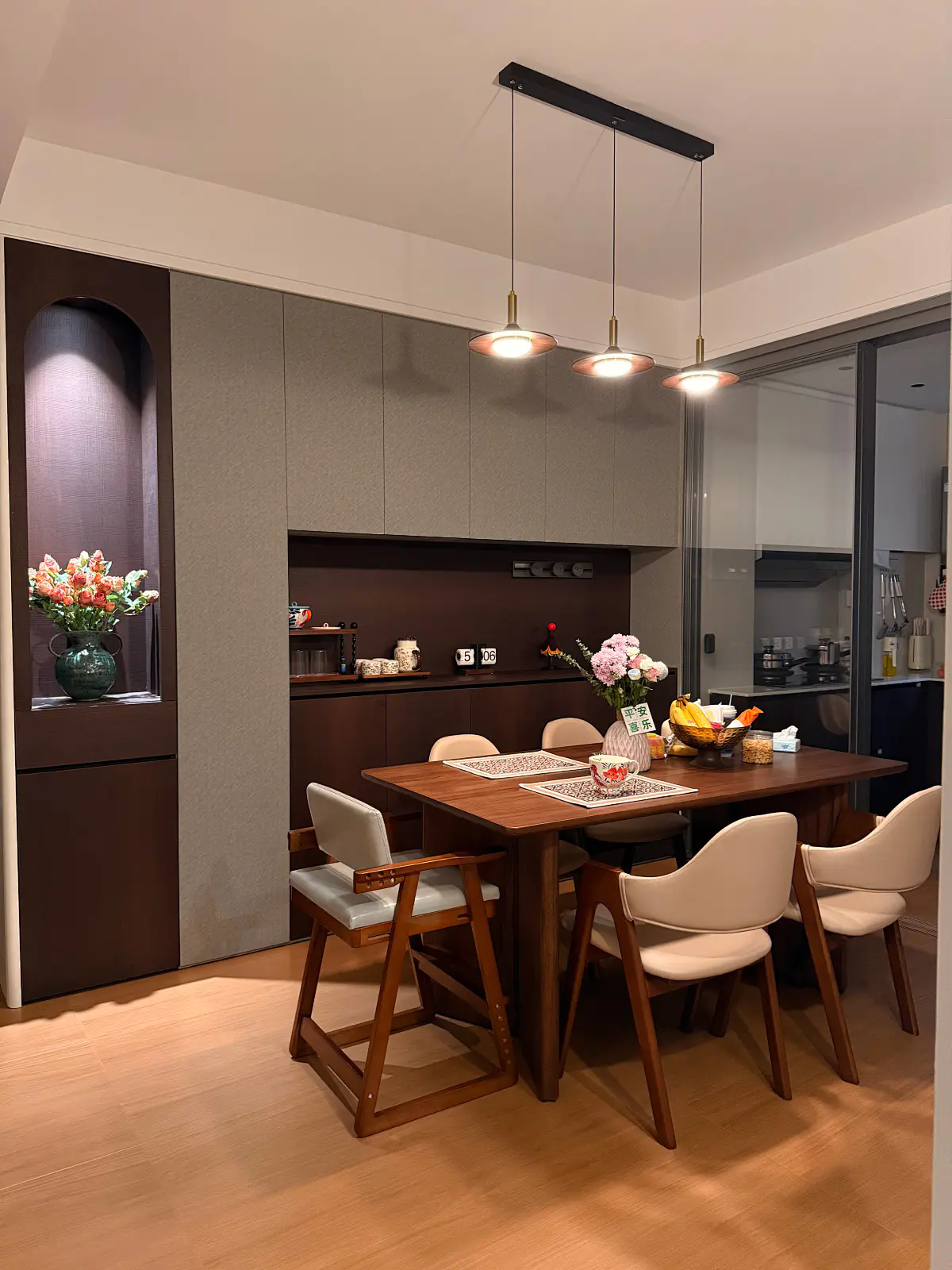
In high-end customized furniture, the boards can be used for cabinet doors, drawer fronts, wardrobes, TV cabinets, and other furniture surfaces, adding a softer and more sophisticated character to large areas of cabinetry.
In commercial interiors, leather textures can be applied to reception desks, display cabinets, brand walls, and retail systems, helping create a distinctive premium visual identity.
In hotels, clubs, and luxury residential interiors, different combinations of color and texture can bring together the mature character of leather and the clean architectural language of contemporary panel furniture.
Compared with genuine leather, this approach can also be integrated more easily into standardized panel-based manufacturing systems, giving designers greater flexibility in applying a consistent material language across different furniture elements.
07 The Surface of Furniture Is Entering an Era of Tactile Design
Today, it is becoming increasingly difficult to create meaningful differentiation through color or pattern alone.
As wood, stone, and other conventional decorative effects continue to expand, designers and consumers are paying more attention to whether a material can deliver a convincing sense of depth, texture, and quality.
This sense of quality is not defined by a single specification. It is created through the combination of texture, tactility, gloss, visual depth, and real-world performance.
The future of decorative surfaces may therefore be less about simply asking “Who offers more patterns?” and more about asking “Who can create a more complete material experience?”
YAKCO Leather Design Melamine Board reflects this transition—from two-dimensional decorative graphics toward a richer, three-dimensional material experience.
onclusion: Making the Surface Part of the Design
High-end furniture does not simply require decoration. It requires a coherent material language.
YAKCO Leather Design Melamine Board combines the refined visual and tactile character of leather with the industrial advantages of melamine decorative boards, allowing leather-inspired design to move beyond traditional upholstery and become part of modern panel-based furniture and interior architecture.
From visual expression to tactile experience, from design to performance, decorative boards are evolving from simply being “the surface of furniture” into an integral part of furniture design itself.
And leather, through this new material approach, is taking on a new role in redefining the surface of modern furniture.