中文简体
中文简体





Previous Post
In contemporary interior design and custom furniture manufacturing, surface materials have evolved far beyond their traditional role as simple “decorative coverings.” They are now integrated systems that combine design expression, tactile experience, and engineering performance. Among various design languages, Art Deco has regained strong influence due to its geometric order, structural rhythm, and architectural elegance.
The YAKCO Art Deco Melamine Board represents a modern interpretation of this design movement, merging Art Deco aesthetics with advanced melamine surface technology.
To know more about YAKCO Art Deco Melamine Board
1. Materializing Art Deco: From Visual Symbol to Structural Surface
Art Deco is not merely a decorative style; it is a design system defined by:
- Geometric order
- Symmetry and balance
- Layered visual rhythm
- Integration of metallic, stone-like, and high-gloss aesthetics
Traditionally, these effects were achieved through carving, inlays, or complex coating processes, which were costly and difficult to standardize.
YAKCO Art Deco Melamine Board transforms this artistic language into an industrialized, reproducible surface system, enabling design to shift from handcrafted expression to structured manufacturing.
2. Synchronized Embossing: Aligning Visual and Tactile Structure
One of the key technologies in modern premium decorative panels is EIR (Embossed In Register) technology.
This process aligns:
- Printed texture (wood, stone, or artistic pattern)
- Surface embossing structure
- Light reflection behavior
In Art Deco applications, this technology is particularly significant:
- Geometric patterns become physically tangible
- Lines and structures gain depth and dimension
- Lighting creates layered visual effects across the surface
This synchronization between vision and touch significantly enhances the perceived quality of the material.
3. Engineering Performance: From Decorative Panel to Structural Surface System
According to common testing frameworks for melamine-faced panels (such as GB/T and EN standards), high-performance decorative boards are typically evaluated across multiple dimensions:
1. Mechanical Strength
- Bending strength (load resistance)
- Modulus of elasticity (structural stability)
- Impact resistance
These properties ensure reliable performance in furniture systems and architectural installations.
2. Surface Durability
- Scratch resistance
- Abrasion resistance
- Stain resistance
Art Deco panels are widely used in commercial environments where durability is essential.
3. Environmental Performance
Industry-standard melamine boards typically follow:
- E1 formaldehyde emission standards
- Low-emission resin systems
- Stable thermosetting adhesive structures
YAKCO’s material system emphasizes indoor air quality compatibility for both residential and commercial applications.
To know more about YAKCO Technology
4. Design Value: Three Spatial Expressions of Art Deco
1. Architectural Order
Linear or radial textures reinforce spatial structure, integrating furniture with architectural rhythm.
2. Material Layering
Variations in gloss and texture depth create visual hierarchy and spatial dimension.
3. Commercial Identity
Art Deco is naturally associated with luxury hotels, exhibition spaces, and premium retail environments, enhancing brand recognition in spatial design.
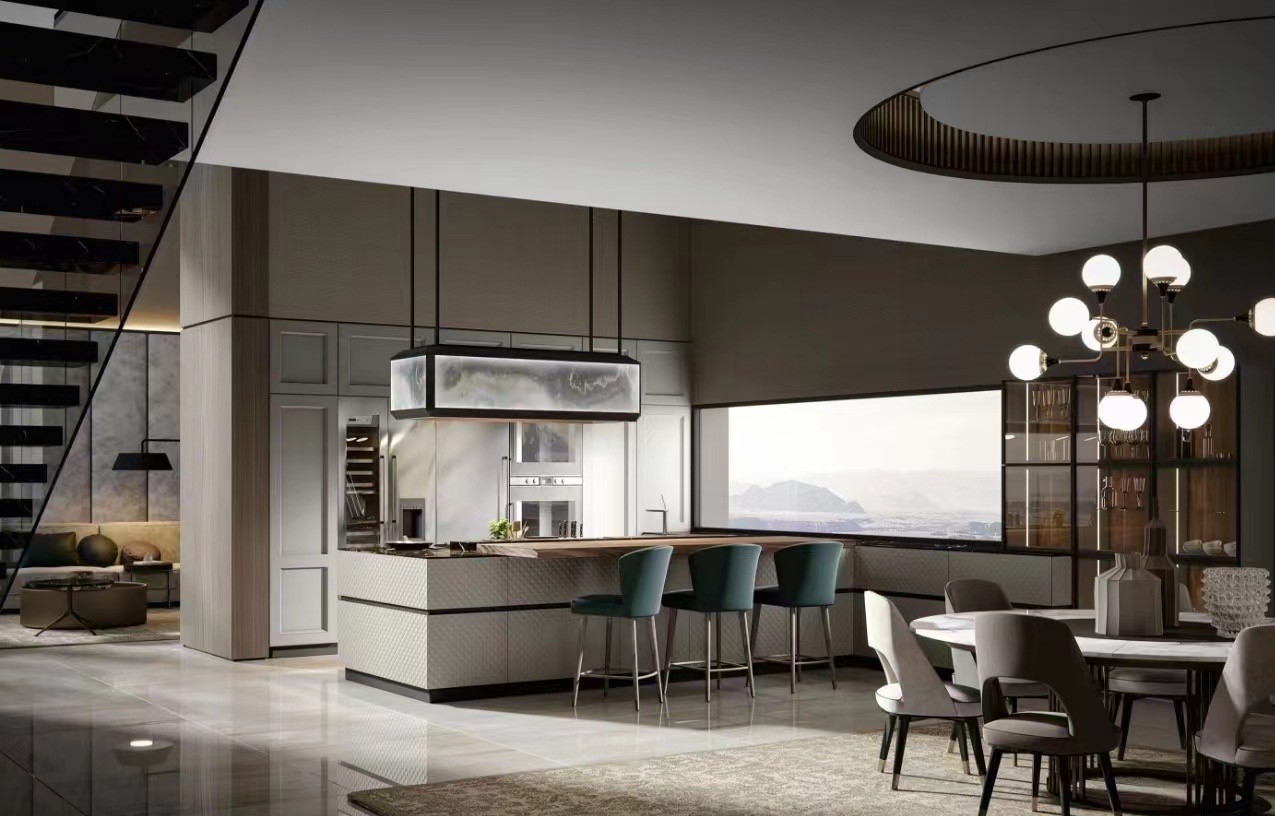
5. Application Scenarios: From Residential to Commercial Systems
The YAKCO Art Deco Melamine Board is widely applied in:
High-end custom furniture
- Wardrobe systems
- Wine cabinets and display units
- Bookcases and feature walls
Commercial interiors
- Hotel lobbies
- Brand showrooms
- Office feature walls
Residential interiors
- Living room TV walls
- Kitchen cabinetry systems
- Bedroom integrated furniture
6. Industry Trend: The Shift Toward Design-Driven Materials
The global decorative panel industry is currently evolving toward three major directions:
- Material realism (high fidelity textures)
- Synchronized surface structuring (EIR technology)
- Systematic design languages (style-based material systems)
Art Deco, as a classical design language, is transitioning from a visual style into a standardized material system.
YAKCO Art Deco Melamine Board embodies this transformation by converting artistic aesthetics into an industrially reproducible surface solution.
Conclusion
In future interior and furniture design, surface materials are no longer passive coverings but active carriers of spatial identity and aesthetic value.
The YAKCO Art Deco Melamine Board represents not only a product line, but a broader design direction:
the industrialization of Art Deco aesthetics into modern surface engineering systems.