中文简体
中文简体






Previous Post
The appeal of wood texture boards lies in translating the texture of natural wood onto an industrial decorative surface—the grain of oak, the waves of walnut, the fineness of cherry.
But when designers touch a good wood texture board, they feel not only the “visible texture” but also the “touchable quality”—smooth yet natural, fine yet layered.
This quality is known in the industry as “tactile feel.”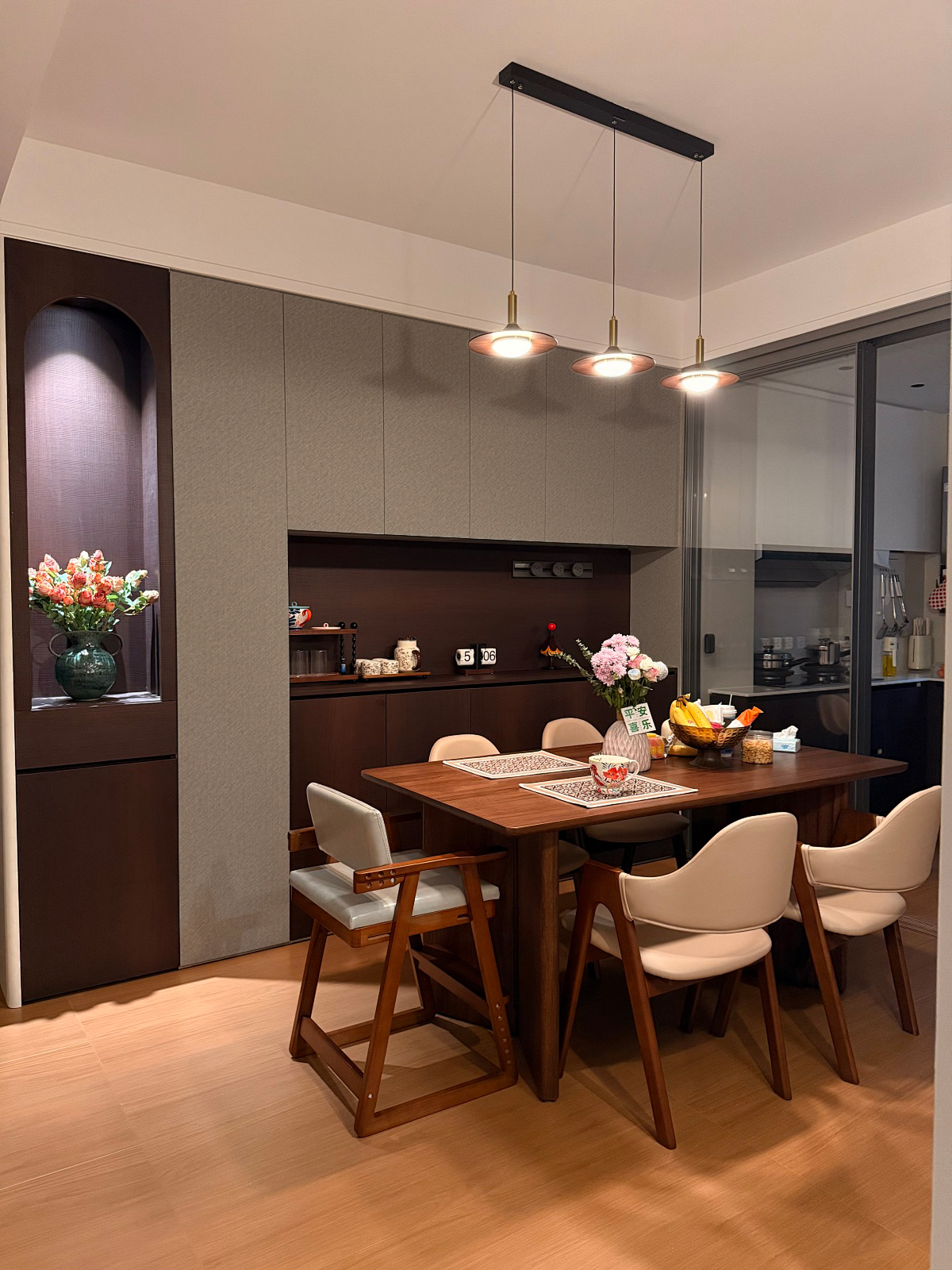
But “tactile feel” is not printed. It is embossed.
And it is “supported” by the substrate.
YAKCO’s test data points precisely answer the physical logic behind the “tactile feel” of wood texture: how comfortable the wood texture feels depends on how flat the substrate is pressed and how firmly the decorative layer is bonded.
More: yakco technology
1.The “Tactile Feel” of Wood Texture Comes First from Substrate “Flatness”
The production process of wood texture boards involves laying decorative paper impregnated with melamine resin onto the substrate, then applying heat and pressure with a steel plate that has a wood texture to “print” the texture onto the surface.
During this process, the flatness of the substrate surface directly determines the quality of the wood texture’s “tactile feel.”
If the substrate surface has uneven density—some areas dense, some loose—the decorative layer will develop microscopic “waves” during pressing.
Invisible to the eye, but when you run your finger over it, you can feel the “unevenness.” This unevenness is the first deduction from the wood texture’s “tactile feel.”
YAKCO’s substrate density is stable at 0.72 g/cm³, with minimal batch‑to‑batch fluctuation.
Uniform density means the substrate surface has no “soft spots” or “hard spots”—during pressing, the decorative layer is evenly stressed, without microscopic waves.
The wood texture surface is uniformly flat, and when you run your finger over it, the “tactile feel” is even and smooth.
2.The “Layered Feel” of Wood Texture Comes from Substrate “Load‑Bearing Capacity”
The realism of wood texture comes not only from the printed pattern but also from the microscopic concave-convex created by embossing—synchronized embossing aligns the wood texture with the concave-convex , with the texture areas slightly recessed and the annual ring areas slightly raised.
These microscopic rise and fall are the source of wood grain “tactile realism.”
But these microscopic rise and fall need the substrate to “bear” them.
If the substrate density is uneven, areas with higher density are embossed shallower, while areas with lower density are embossed deeper—the concave-convex depth of the wood texture varies, and the tactile layered feel “breaks.”
YAKCO’s uniform‑density substrate ensures that the embossing depth remains consistent from the head to the tail of the board.
The vessel recesses of oak are always the same depth, and the annual ring raised areas of walnut are always the same height.
The “tactile layered feel” of the wood texture does not “jump” due to density fluctuations—when you run your finger over it, the rise and fall of the texture is uniform and regular, just like solid wood.
3.The “Durability” of Wood Texture Comes from the Decorative Layer’s “Anchoring Force”
The “tactile feel” of wood texture is not a one‑time thing.
It needs to be maintained over years of use—not worn flat by daily wiping, not eroded by moisture, not damaged by temperature changes.
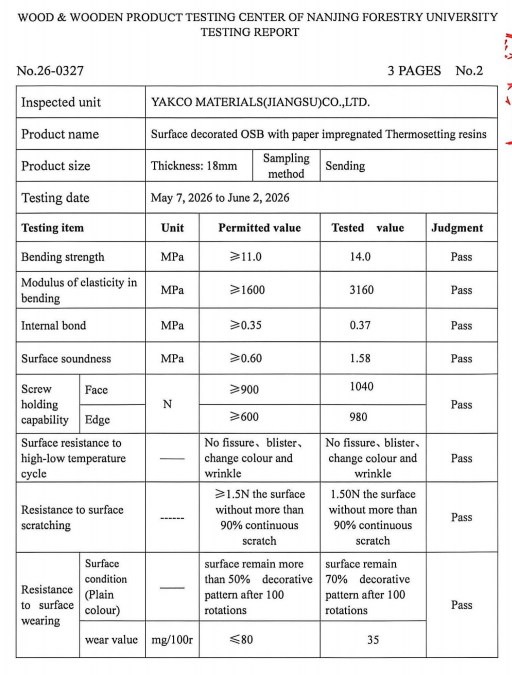
YAKCO achieved a surface soundness of 1.58 MPa, while the national standard requires only 0.60 MPa.
This data reflects the bonding strength between the decorative layer and the substrate—the higher the value, the more firmly the decorative layer is “nailed” to the substrate, and the less likely the microscopic rise and fall of the wood grain are to be “pressed flat” or “worn away” during use.
For high‑frequency commercial spaces—hotel guest room wardrobes, restaurant wood texture wall cladding, office wood texture desktops—a surface soundness of 1.58 MPa means that the “tactile feel” of the wood texture does not disappear within a few years.
The vessel recesses of oak remain touchable, the annual ring raised areas of walnut remain perceptible, and the tactile realism of the wood texture persists.
4.The Engineering Value of Wood Texture“Tactile Feel”
For furniture factories and engineering projects, the “tactile feel” of wood texture is not just an aesthetic issue—it is also an efficiency issue.
Uniform‑density substrates are more “cooperative” during processing.
During CNC cutting, edge banding, and drilling, uniformly dense panels are less prone to chipping and fuzzing—processing is smooth, and scrap rates are low.
Panels with high surface soundness do not warp at the cut edges, and after installation, the joints are flat—no additional repairs are needed.
Wood texture boards with good tactile feel result in higher customer satisfaction.
Every inch of surface that end users touch is flat, fine, and layered.
This tactile experience is a direct source of the “premium feel.”
Satisfied customers naturally spread the word.
5.Conclusion: The “Tactile Feel” of Wood Textures “Supported” by the Substrate
Designers choose wood texture boards for a “touch like solid wood.”
But this tactile feel cannot be determined by printing precision alone—it requires uniform substrate density to ensure flatness, and high surface soundness to ensure durability.
YAKCO Wood Texture Melamine Faced Board uses the two data points of density 0.72 g/cm³ and surface soundness 1.58 MPa to prove that the “tactile feel” of wood texture has a physical foundation.
The grain of oak feels layered, the waves of walnut feel rhythmic—these tactile details are not “printed,” they are “supported” by the substrate.
When a designer says, “I want the wood texture to feel like solid wood,” YAKCO provides an answer with data—an answer that does not require choosing between “visual effect” and “tactile experience.”
YAKCO specialises in the R&D and manufacturing of Melamine Faced Board, offering lots of series of Wood Texture, Leather Design, Rock Design, and Art Deco, providing “visible texture, touchable quality” decorative solutions for high‑end commercial spaces and residential projects.