中文简体
中文简体






Previous Post
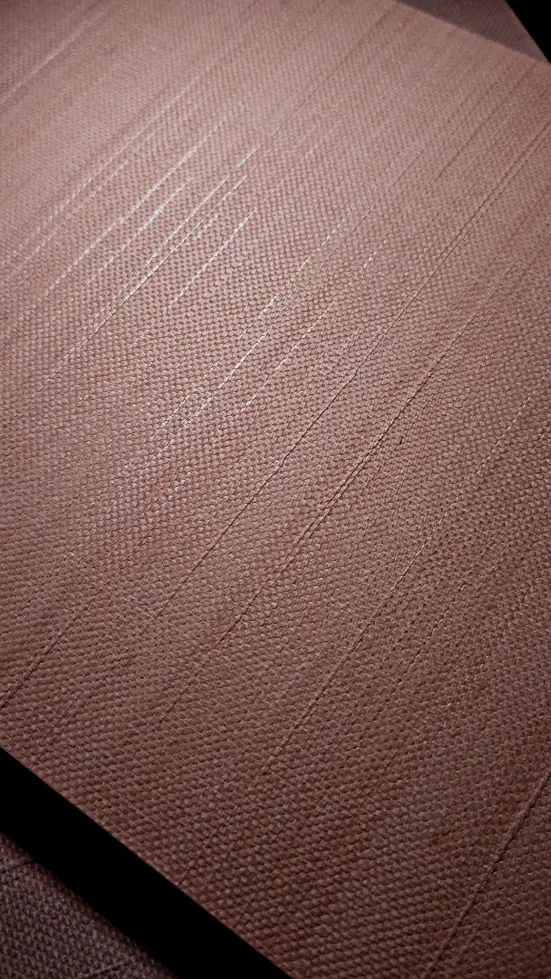
The evolution of wood texture Melamine boards has followed a clear technological path – from flat printing to synchronised embossing, from shallow embossing to deep embossing. Each step has done the same thing: bringing wood texture Melamine closer to the tactile experience of natural wood.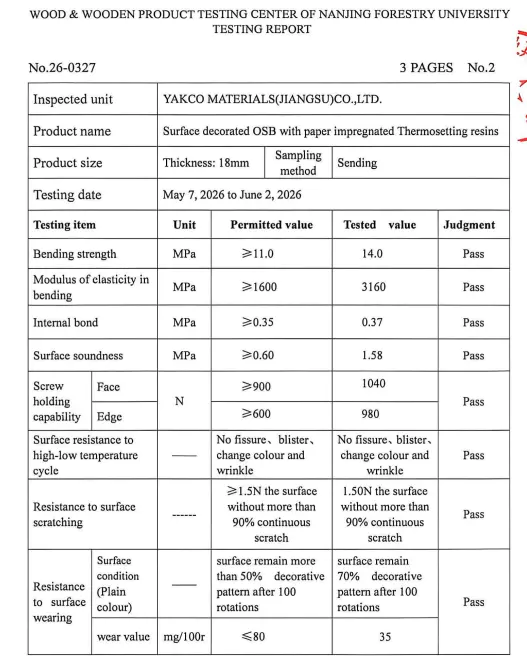
YAKCO's Wood Texture Melamine Faced Board's deep‑texture pressing line is the first truly deep‑texture pressing equipment of its kind in China, achieving a texture depth of 0.8mm. What does 0.8mm mean?
More:yakco technology
It is roughly 2.5 times the thickness of a standard business card. For wood texture Melamine boards, this depth means that the grain of oak is not just "printed," but "embossed" – when you run your finger over it, you can feel the Ups and downs of annual rings and the depressions of vessels.
But deep embossing has an easily overlooked process logic: the deeper the embossing, the higher the demands on the substrate.
Achieving an embossing depth of 0.8mm is not simply a matter of "increasing the pressure" – it requires the substrate to "hold up" across three dimensions: density, internal bond, and surface soundness.
1.The "Process Triangle" of Deep Embossing
Achieving 0.8mm deep embossing depends on the simultaneous fulfilment of three process conditions:
First, sufficient pressure and holding time.
Deep textures require greater pressure and longer holding time to ensure that the melamine resin fully fills the grooves and forms a sufficiently thick protective layer on the raised areas. However, if the pressure is too high or the time too long, the resin may become over‑cured and brittle.
Second, precise pressure control.
YAKCO's 3D deep‑texture pressing line is equipped with a fully automatic variable‑area pressure control system and a short‑cycle press with high heat transfer efficiency, enabling real‑time adjustment of the pressure curve and pressure distribution according to the depth and density of different textures. This maintains surface flatness and resin toughness while ensuring the fidelity and fullness of the deep texture.
Third, a stable substrate.
This is the most easily overlooked condition.
The stress of embossing is transmitted through the decorative layer to the substrate surface – if the substrate density is uneven, the embossing depth will vary; if the substrate's internal bond is insufficient, the surface layer will "collapse" under pressure; if the bond between the decorative layer and the substrate is not strong enough, the edges of the texture will experience slight "rebound" after the resin cures.
2.Test Data: Three Pieces of Evidence That the Substrate Provides the "Backbone"
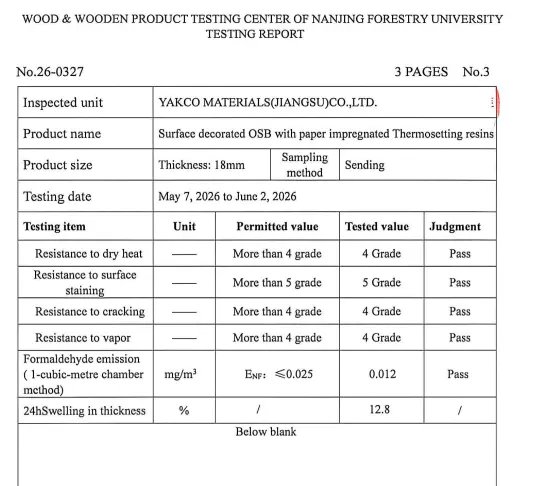
YAKCO Wood Texture Melamine Faced Board, in the 2026 national test, has three sets of data that precisely correspond to these three requirements of deep embossing on the substrate:
Density 0.72 g/cm³ – Embossing "consistent across the entire board"
During deep embossing, if the substrate beneath the raised areas of the steel plate has uneven density, areas with higher density will be embossed shallower, while areas with lower density will be embossed deeper – resulting in uneven texture depth on the same board.
YAKCO's substrate density is stable at 0.72 g/cm³, with uniform distribution.
This means that the embossing depth remains consistent from the head to the tail of the board – the oak grain does not show "deeper here, shallower there" variations.
Internal bond 0.37 MPa – Substrate "does not collapse"
During deep embossing, pressure is transmitted through the decorative layer to the substrate surface. If the internal layers of the substrate are not tightly bonded, the surface layer will "collapse" downward under pressure, resulting in an actual embossing depth less than the steel plate's designed depth.
YAKCO's substrate internal bond of 0.37 MPa (national standard ≥0.35 MPa) ensures that the substrate does not collapse or shrink during deep embossing.
Surface soundness 1.58 MPa – Texture edges "do not blur"
During deep embossing, the decorative layer is subjected to extreme stretching and compression at the edges of the texture.
If the bond between the decorative layer and the substrate is not strong enough, the decorative layer will experience slight "rebound" at the texture edges – the texture is clear when the steel plate presses down, but the edges shrink slightly after release, causing the texture boundaries to become blurred.
YAKCO's surface soundness of 1.58 MPa (2.6 times the national standard of 0.60 MPa)ensures that the deep texture edges remain clear, without delamination or rebound.
3.The Real‑World Value of 0.8mm Deep Embossing
Deep embossing is not a matter of "the deeper, the better" – its value lies in tactile realism and visual layering.
The 0.8mm depth allows the Concave and convex of the wood texture Melamine to be clearly perceived by the fingers, and creates richer light reflection and shadow on the textured surface.
At the same time, an embossing depth of 0.8mm means a greater "wear margin" for the decorative layer – even after years of daily cleaning and wiping, the Concave and convex feel of the texture remains and is not "worn flat."
YAKCO Wood Texture Melamine Faced Board's wear value of 35 mg/100r (national standard ≤80 mg/100r) ensures that the tactile feel of the deep texture remains clearly perceptible after years of use.
4.Conclusion: The "Confidence" of Deep Embossing Comes from the Substrate
Deep embossing on wood texture Melamine boards may appear to be created by the steel plate, but it is actually "supported" by the substrate.
Uniform density ensures consistent texture depth, internal bond ensures the substrate does not collapse, and surface soundness ensures the texture edges do not blur – these three data points together form the "process foundation" of 0.8mm deep embossing.
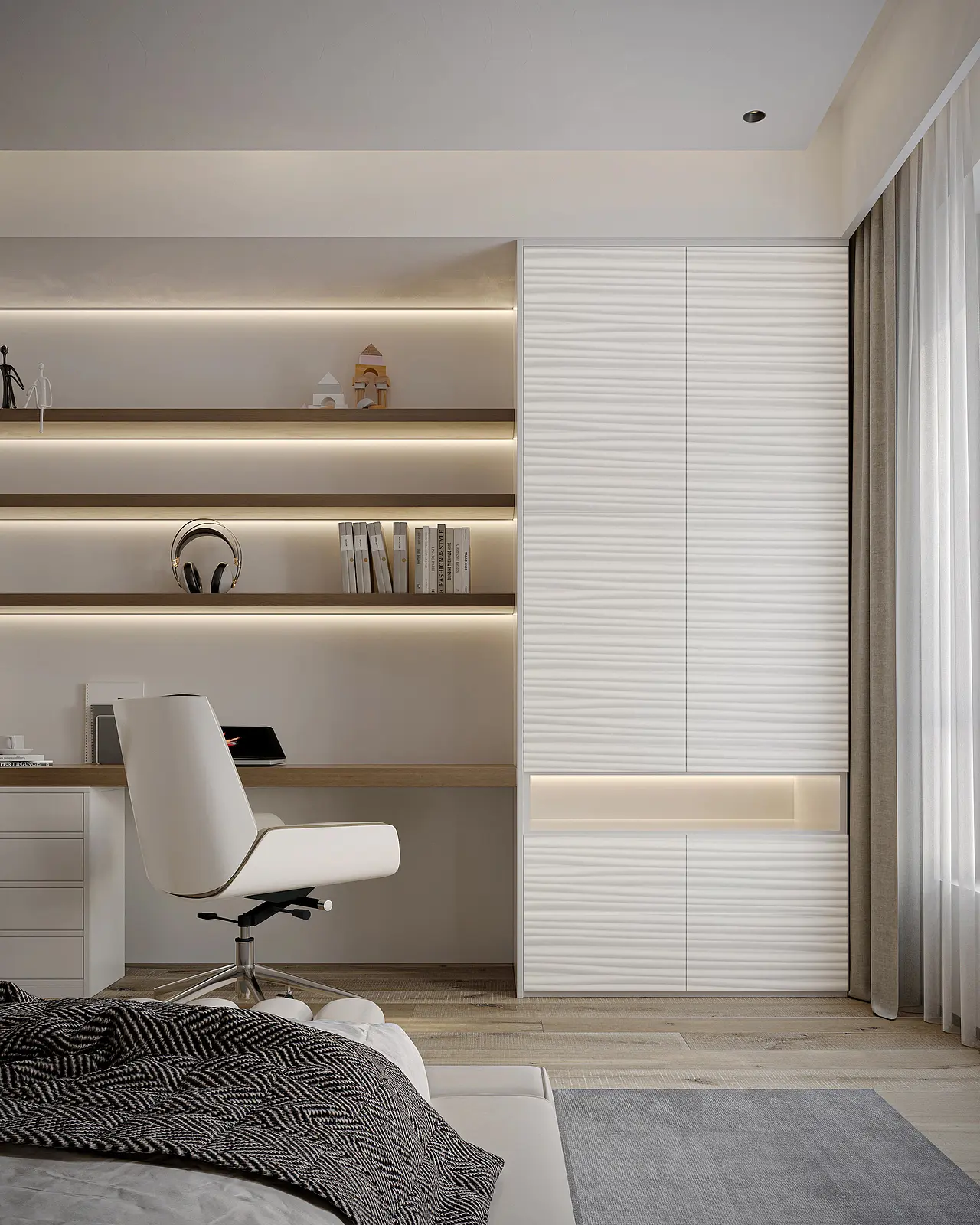
When a designer says, "I want the wood texture Melamine to feel like solid wood," YAKCO Wood Texture Melamine Faced Board answers the unspoken question with 0.8mm deep embossing and 1.58 MPa surface soundness: "Not just like it – you can actually feel it – and it withstands time."