中文简体
中文简体





Previous Post
The interior design and construction industries have undergone a significant transformation over the past few decades, primarily driven by the need for materials that offer a balance between aesthetic versatility, structural durability, and economic feasibility. At the center of this evolution is the melamine board, a highly adaptable engineered wood product that has become a staple in both residential and commercial applications. Often referred to in technical circles as melamine faced chipboard or melamine faced medium density fiberboard, this material provides a high performance surface that mimics the appearance of natural wood, stone, or solid colors while offering physical properties that traditional timber often lacks. This article provides an extensive exploration of the composition, manufacturing processes, performance advantages, and diverse applications of melamine board, illustrating why it remains the preferred choice for modern furniture manufacturing.
As the demand for functional yet stylish interior solutions continues to grow, understanding the technical foundation of melamine board becomes essential for designers, builders, and homeowners. Unlike raw wood panels that require extensive sanding, staining, and sealing, melamine board comes from the factory with a fully finished surface that is ready for immediate fabrication. This pre-finished nature significantly reduces production time and labor costs, making it an ideal solution for large scale projects such as kitchen renovations, office fit outs, and retail displays. By examining the complex engineering behind these panels, one can appreciate how chemical science and mechanical processing combine to create a material that stands up to the rigors of daily use.
Analyzing the Technical Composition and Production of High Quality Melamine Board
The effectiveness of melamine board lies in its multi layered construction, which combines a sturdy core with a resilient outer skin. The manufacturing process is a marvel of industrial chemistry and thermal engineering, ensuring that the decorative surface becomes an inseparable part of the structural substrate. To understand why this material performs so well in demanding environments, it is necessary to examine the two primary components that make up the finished panel.
The Chemical Impregnation of Decorative Surface Paper
The surface of a melamine board starts as a specialized decorative paper that has been printed with a specific pattern or color. This paper is not simply glued to the surface like a traditional laminate or veneer. Instead, it undergoes a process known as impregnation. The paper is passed through a bath of melamine formaldehyde resin, a thermosetting plastic that is known for its extreme hardness and thermal stability. During this immersion, the resin deeply penetrates the fibers of the paper, saturating it completely.
Once the paper is saturated with the resin, it is partially dried in a controlled oven to reach what is known as the B stage. In this state, the resin is stable enough to be handled and stored but remains reactive enough to bond under heat. The quality of the final melamine board depends heavily on the concentration of the resin and the quality of the base paper. High quality panels use thicker paper and a higher resin content, resulting in a surface that is more resistant to impact and moisture infiltration. This chemical treatment transforms the fragile paper into a tough, transparent, and waterproof layer that protects the underlying wood fibers from environmental damage.
Substrate Selection and the Thermally Fused Lamination Process
The core of the melamine board is typically composed of either particle board or medium density fiberboard. Particle board is made from wood chips and shavings that are bonded together with resin under high pressure, providing a lightweight yet stable base that is resistant to warping. Medium density fiberboard is made from finer wood fibers, resulting in a denser and smoother core that is ideal for applications where the edges may be profiled or where a higher degree of structural strength is required. Both substrates are engineered to have a consistent density and moisture content, ensuring that the finished board remains flat and dimensionally stable throughout its service life.
The final stage of production is the thermally fused lamination process. The resin impregnated paper is placed on both sides of the substrate and loaded into a large scale short cycle press. Under temperatures exceeding 300 degrees Fahrenheit and pressures reaching several hundred pounds per square inch, the melamine resin melts and flows into the pores of the wood substrate. As the resin cures, it creates a molecular bond between the decorative layer and the core. This is why the surface of a melamine board does not peel or delaminate in the same way that traditional contact glued laminates might. The result is a monolithic panel that possesses the structural integrity of the wood core and the protective properties of the melamine plastic.
Key Performance Advantages of Using Melamine Faced Materials in Interior Construction
The widespread adoption of melamine board is due to a unique set of physical characteristics that make it superior to many alternative materials in specific contexts. These advantages are not merely aesthetic but are functional requirements that ensure the longevity of the furniture or cabinetry in which the board is used.
Superior Resistance to Scratching and Surface Abrasion
One of the most significant benefits of melamine board is its incredible surface hardness. The cured melamine formaldehyde resin creates a cross linked polymer structure that is highly resistant to mechanical wear. In daily life, furniture is subject to constant friction from sliding objects, the movement of chairs, and the impact of household items. While natural wood or painted surfaces would quickly show signs of scratching or paint loss, melamine board maintains its original appearance for a much longer period.
This abrasion resistance is measured using specialized industrial tests, such as the Taber abraser test, which quantifies how many cycles a surface can withstand before the decorative layer is worn through. Commercial grade melamine board is specifically engineered to meet high standards of wear resistance, making it suitable for high traffic areas such as reception desks, school furniture, and laboratory workbenches. Because the color is integrated into the resin impregnated paper, minor surface scratches are often invisible to the naked eye, ensuring that the furniture looks new for years without the need for refinishing.
Chemical Stability and Protection Against Common Household Solvents
In kitchen and bathroom environments, surfaces are frequently exposed to a wide range of chemicals, including cleaning agents, food acids, and personal care products. Many natural materials are porous and can be easily stained or etched by these substances. Melamine board, however, features a non-porous surface that is chemically inert. This means that common household liquids like vinegar, lemon juice, alcohol, and even mild bleach do not react with the surface or cause permanent staining.
This chemical resilience makes melamine board an exceptionally hygienic choice for food preparation areas and medical facilities. Because the surface is non-porous, it does not harbor bacteria or mold, and it can be easily sanitized with standard disinfectants without the risk of damaging the finish. Furthermore, the moisture resistance of the melamine surface prevents water from penetrating into the core, provided that the edges are properly sealed. This protective barrier is essential for maintaining the structural integrity of cabinetry in humid environments where steam and occasional spills are inevitable.
Aesthetic Versatility and Consistency in Design
One of the greatest challenges when working with natural wood is the inherent variability in color and grain pattern. While this uniqueness is often prized, it can make it difficult to achieve a consistent look across a large installation of cabinets or office partitions. Melamine board solves this problem by providing perfect consistency. Because the decorative patterns are printed, every panel of a specific design will match the others exactly, allowing for a seamless and professional appearance throughout a project.
The range of available designs is nearly limitless. Modern printing technology allows manufacturers to create melamine board that perfectly replicates the look of exotic hardwoods, rustic oaks, industrial concrete, or elegant marble. Many high end panels also feature synchronized textures, where the physical embossing of the surface matches the printed grain of the wood, providing a tactile experience that is indistinguishable from real timber. This versatility allows designers to achieve luxury looks at a fraction of the cost of natural materials, all while benefiting from the superior performance of an engineered product.
|
Material Comparison |
Melamine Faced Board |
Natural Solid Wood |
Plywood with Veneer |
|---|---|---|---|
|
Surface Hardness |
High and resistant to scratches |
Variable and prone to denting |
Moderate depending on the finish |
|
Color Consistency |
Perfect across all panels |
Significant natural variation |
Variable based on the wood source |
|
Moisture Resistance |
High on the surface and low at raw edges |
High if properly sealed and finished |
Moderate with risk of delamination |
|
Maintenance Level |
Very low requiring only simple wiping |
High requiring periodic oiling or sealing |
Moderate requiring careful cleaning |
|
Resistance to Staining |
Excellent due to non-porous surface |
Poor if the finish is compromised |
Moderate depending on the top coat |
|
Fabrication Speed |
High as it is pre-finished |
Low requiring multiple finishing steps |
Moderate requiring sanding and staining |
Practical Applications of Melamine Board Across Residential and Commercial Spaces
The combination of durability, ease of maintenance, and design flexibility has led to the integration of melamine board into a vast array of environments. From the private home to the public office, this material provides a reliable foundation for functional design.
Enhancing Functionality in Modern Kitchen and Bathroom Cabinetry
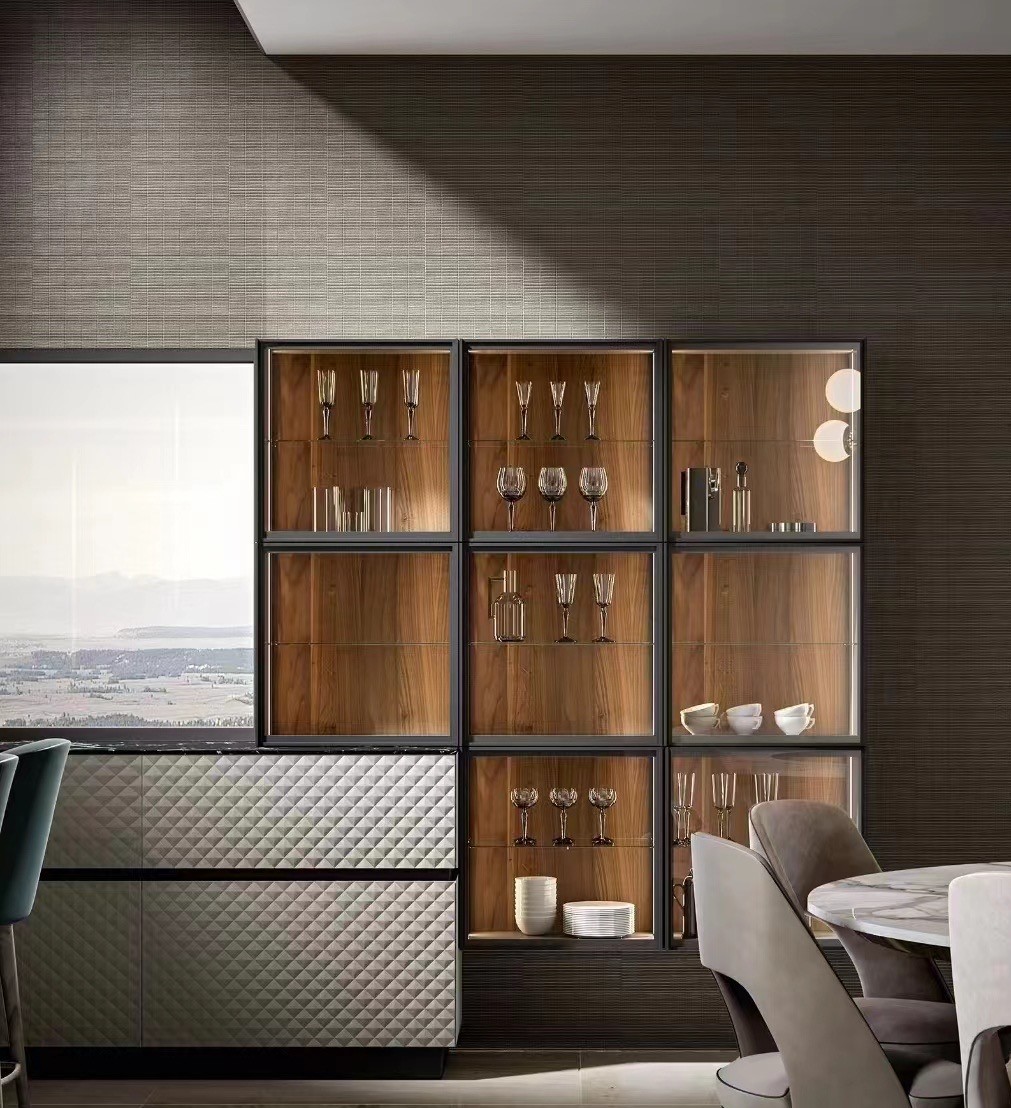
The kitchen is perhaps the most common place to find melamine board. Most modern kitchen cabinets utilize melamine faced particle board for the cabinet boxes or carcases because it provides a clean, white, or wood grain interior that is easy to wipe down and resistant to the humidity of the kitchen. The flat, stable surface of the board allows for the precise installation of hardware like drawer slides and concealed hinges, ensuring that the kitchen functions smoothly for decades.
In the bathroom, moisture resistant grades of melamine board are used to create vanities and storage units. These specialized panels use a green tinted core that contains moisture repelling additives, providing extra protection against the high humidity and occasional water contact found in bathrooms. By pairing these panels with high quality edge banding, manufacturers can create bathroom furniture that withstands the challenging environment while offering a wide range of colors to match the tile and fixtures.
Durable Solutions for High Traffic Office Furniture and Retail Fixtures
Commercial environments demand materials that can withstand heavy use without showing signs of wear. Office desks, workstations, and filing cabinets are almost exclusively made from melamine board because it provides a hard, flat writing surface that is easy to maintain. In an office setting, where furniture may be moved or reconfigured frequently, the impact resistance of melamine board is a vital asset, preventing chips and dents that would occur with softer materials.
The retail industry also relies heavily on melamine board for store fixtures, shelving, and checkout counters. Retailers need surfaces that are attractive to customers but can handle the constant movement of products and the cleaning required in a public space. Melamine board allows retailers to create branded environments by using custom colors or patterns, providing a consistent and durable backdrop for their merchandise. Its cost effectiveness also makes it possible to update store layouts more frequently to keep up with changing trends.
Closet Systems and Residential Storage Solutions
Custom closet systems have become a significant part of the residential furniture market, and melamine board is the primary material used for these installations. Homeowners appreciate the ability to create organized storage spaces that are both functional and visually appealing. Melamine board is ideal for closet shelving and hanging modules because it does not snag delicate clothing, unlike raw wood or low quality wire shelving.
Because closet systems often involve many small components and numerous adjustment holes for shelves, the dimensional stability of melamine board is a major advantage. The panels can be precision cut and bored using automated machinery, ensuring that every shelf and drawer fits perfectly. The wide range of wood grain finishes allows homeowners to create the look of a custom built mahogany or maple closet at a much more accessible price point, adding value and organization to the home.
Essential Maintenance Protocols and Repair Strategies for Laminated Surfaces
While melamine board is designed for durability, its longevity can be further extended through proper care and maintenance. Understanding the specific needs of the melamine surface and the underlying wood core will prevent common issues such as moisture damage or surface dulling.
Cleaning Techniques to Preserve Surface Sheen and Color Vibrancy
Maintaining a melamine board surface is remarkably simple, but using the correct materials is important. For daily cleaning, a soft cloth dampened with warm water and a mild dish soap is usually sufficient to remove dust and light grease. It is essential to avoid using abrasive sponges or steel wool, as these can create microscopic scratches that will eventually dull the surface sheen and make it harder to clean in the future.
For more stubborn stains, such as ink or dried food, a mixture of baking soda and water can be applied as a gentle paste. Alternatively, a specialized laminate cleaner can be used. After cleaning, the surface should always be wiped dry with a clean towel. Leaving water sitting on the surface for extended periods is generally safe for the melamine plastic itself, but the moisture can eventually seep into the seams or edge banding, potentially causing the core to swell. By keeping the surfaces dry, you ensure that the board remains flat and the edges stay tight.
Edge Banding Integrity and Protection Against Moisture Infiltration
The most vulnerable part of any melamine board is the raw edge where the wood core is exposed. During the furniture manufacturing process, these edges are covered with a protective strip known as edge banding. Edge banding can be made from various materials, including polyvinyl chloride, acrylonitrile butadiene styrene, or thin strips of real wood. The quality of the adhesive used to apply the edge banding is critical for preventing moisture from reaching the core.
Homeowners should regularly inspect the edge banding on their furniture, especially in areas near sinks or dishwashers. If the edge banding begins to pull away or peel, it should be repaired immediately to prevent water from entering the substrate. A small amount of high quality contact cement can often be used to re-attach loose edge banding. For commercial applications, using high temperature polyurethane glues for edge banding provides a much stronger and more moisture resistant bond, ensuring that the furniture remains intact even in demanding environments.
Strategies for Addressing Minor Surface Damage and Scuffs
Although melamine board is hard, it is not indestructible. Occasionally, a sharp object may cause a small chip or deep scratch. While it is not possible to sand and refinish melamine board like solid wood, there are effective ways to mask minor damage. Specialized touch up pens and wax filler sticks are available in hundreds of colors to match common melamine finishes. These tools can be used to fill the scratch and blend it with the surrounding pattern, making the damage much less noticeable.
For larger chips on the edges or corners, a two part epoxy filler colored to match the board can be used to rebuild the missing section. Once the filler has hardened, it can be carefully leveled with the surface. While these repairs are often invisible to a casual observer, the best strategy is prevention. Using coasters under hot drinks and avoiding the use of knives directly on melamine countertops will preserve the surface for many decades.
Understanding Environmental Safety Standards and Formaldehyde Emission Ratings
As with all engineered wood products, the environmental impact and indoor air quality associated with melamine board are important considerations. The resins used to bond the wood particles and the melamine paper often contain formaldehyde, a chemical that can off gas into the air if not properly managed.
The Significance of E0 and E1 Certification in Interior Air Quality
The global textile and wood industries have established strict standards for formaldehyde emissions to protect consumer health. Melamine board is classified based on the amount of formaldehyde it releases, with E1 and E0 being the most common ratings. E1 certified panels are considered safe for indoor use and are the standard in many parts of the world. E0 panels have even lower emission levels, often reaching the same levels found in natural wood, making them the ideal choice for sensitive environments such as nurseries, hospitals, and green building projects.
Modern melamine board manufacturers utilize advanced resin formulations that significantly reduce the amount of free formaldehyde. Furthermore, the melamine surface itself acts as a functional barrier, effectively sealing the wood core and preventing the off gassing of any remaining chemicals. This means that a fully encapsulated melamine board, with a laminated surface on both sides and proper edge banding on all four sides, is an exceptionally safe and stable material for interior use.
Sustainability and the Use of Recycled Wood Fibers
From a sustainability perspective, melamine board has several positive attributes. The core of the board is often made from recycled wood waste, such as sawdust and wood chips that are by products of the lumber industry. By using these materials, manufacturers reduce the need for harvesting virgin timber and divert waste from landfills. Additionally, because melamine board is so durable and long lasting, it reduces the frequency with which furniture must be replaced, leading to lower overall resource consumption over time.
Many manufacturers also seek certification from organizations like the Forest Stewardship Council, which ensures that the wood fibers used in the substrate come from responsibly managed forests. When combined with its long service life and low maintenance requirements, melamine board represents a responsible choice for eco conscious designers who want to create high performance interiors without an excessive environmental footprint.
Guidelines for Precision Cutting and Edge Treatment During Fabrication
For professionals and high end DIY enthusiasts, working with melamine board requires a specific approach to ensure clean cuts and professional results. Because the melamine surface is brittle, it is prone to chipping if the incorrect tools or techniques are used.
Achieving Chip Free Cuts with Specialized Saw Blades
To achieve a perfect edge on melamine board, it is essential to use a high tooth count saw blade specifically designed for laminates. These blades typically have a triple chip grind tooth geometry, which shears the melamine surface cleanly before cutting through the core. Using a standard wood cutting blade will almost always result in unsightly chips along the cut line, particularly on the underside of the panel where the saw teeth exit the material.
Another professional technique is the use of a scoring blade. Many industrial panel saws feature a small, secondary blade that spins in the opposite direction of the main blade. This scoring blade makes a shallow cut through the bottom melamine layer, ensuring that when the main blade passes through, the exit point is already cleanly defined. For those using a handheld circular saw, applying a strip of masking tape along the cut line or making a shallow initial pass can help reduce chipping and ensure a professional finish.
Proper Support and Handling to Prevent Structural Stress
Melamine board is heavy and can be brittle across its length. When handling large sheets, it is important to provide full support to prevent the board from flexing excessively, which can cause the core to crack or the melamine surface to craze. When cutting large panels on a table saw, using outfeed tables and side supports is vital for safety and accuracy.
Because the core of melamine board is made of compressed wood particles, it does not hold traditional wood screws as well as solid wood or plywood. For strong joints, it is best to use specialized fasteners such as confetti screws or cam and bolt systems. These fasteners are designed to grip the wood fibers effectively without stripping the hole. Pre-drilling all holes is essential to prevent the core from splitting, especially when working near the edges of the panel. By following these technical guidelines, fabricators can take full advantage of the consistency and durability that melamine board provides, resulting in high quality furniture that meets the highest professional standards.