中文简体
中文简体





Previous Post
In the modern fields of architecture and interior design, the evolution of materials has never ceased in its pursuit of balancing “natural aesthetics” with “industrial efficiency.” Much like how classic artistic movements such as Art Deco reinterpreted traditional ornamentation through geometry and modern materials, today’s surface technologies are carrying out a profound digital and industrial reconstruction of one of nature’s greatest masterpieces — natural stone.
As an innovative exploration in advanced decorative materials, Rock Design Melamine Boards, empowered by sophisticated surface treatment technologies, are rapidly becoming a core driving force in high-end customization and commercial interior applications. Their highly realistic visual expression, exceptional physical performance, and environmentally responsible characteristics are redefining the future of decorative surfaces.
To know more about Rock Design Melamine Board
I. Core Technology: From “Stone Imitation” to “Texture Revitalization” Through Micron-Level Engineering
Traditional melamine boards were often limited to low- and mid-end applications due to their “plastic-like” appearance and flat surface feel. The emergence of the new generation of rock texture boards represents a technological revolution combining digital texture acquisition with EIR (Embossed in Register) synchronization technology.
1. 1:1 Digital Texture Acquisition and Ultra-High-Definition Printing
Every rock texture panel begins with high-resolution 3D scanning of premium natural materials such as slate, marble, sandstone, or microcement surfaces. Through ultra-high-definition digital printing technology reaching up to 1200 DPI, the surface can accurately reproduce geological color transitions, mineral crystallization points, and even microscopic stone fissures.
This process allows decorative surfaces to achieve a visual authenticity that closely mirrors natural stone while maintaining industrial consistency and scalability.
2. Micron-Level Synchronization Through EIR Technology
Visual realism alone is not enough. Many conventional decorative surfaces fail once touched because the tactile experience does not match the printed texture. The true competitiveness of rock design melamine boards lies in the perfect synchronization between embossing and printed grain.
Technical Principle
Under high-temperature conditions of approximately 200°C–220°C and pressure levels ranging from 3.5–4.5 MPa, specially engineered steel plates carrying microscopic rock relief patterns emboss the decorative paper with an alignment precision below 0.5 mm.
This micron-level synchronization allows every fingertip contact to genuinely feel the ruggedness, weathered texture, and granular touch associated with natural stone surfaces.
The result is no longer simple “stone imitation,” but rather a surface material that delivers an authentic sensory experience.
To learn more about YAKCO Technology
II. Performance Engineering: Surpassing Natural Stone Through Material Science
Although natural stone possesses undeniable aesthetic value, it also comes with significant disadvantages such as brittleness, susceptibility to staining, excessive weight, and potential radiation concerns.
By integrating advanced chemistry and modern material engineering, Rock Design Melamine Boards outperform natural stone in multiple key physical performance categories.
|
Physical Property |
Rock Design Melamine Board (18mm) |
Natural Stone (20mm) |
Standard Melamine Board (18mm) |
|
Surface Weight |
Approx. 11–13 kg/m² |
Approx. 50–60 kg/m² |
Approx. 11–12 kg/m² |
|
Abrasion Resistance (Taber) |
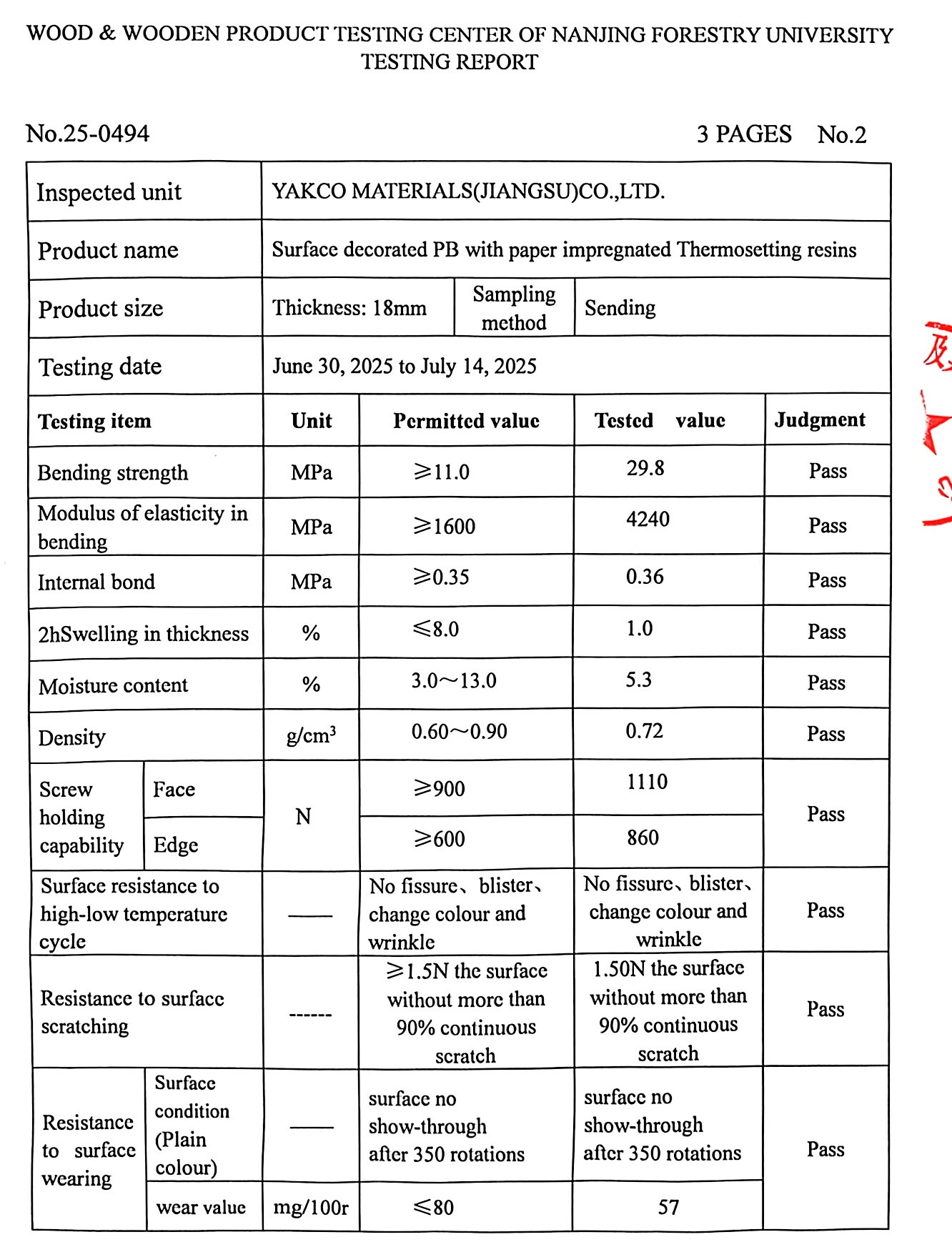
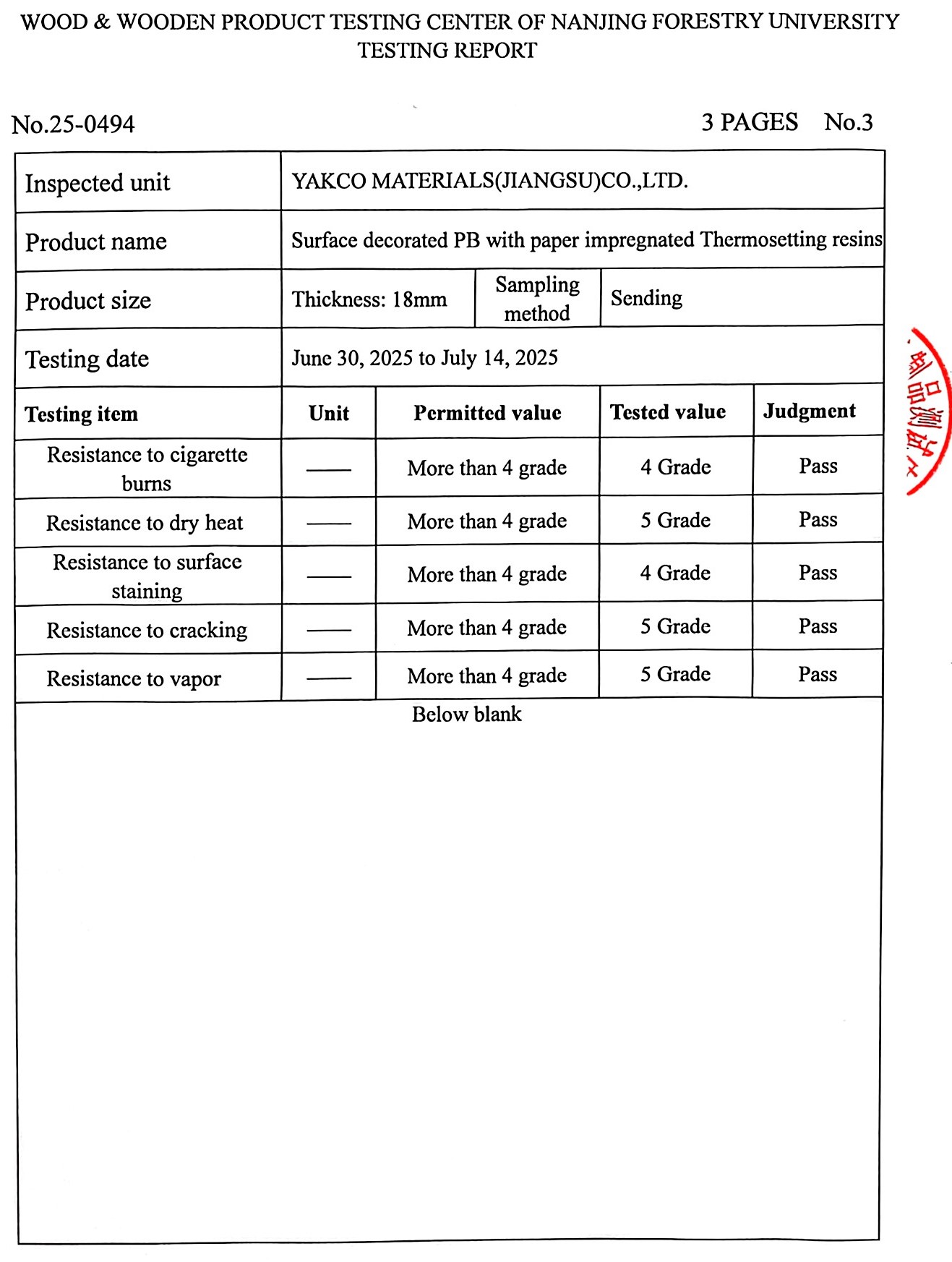
≥ 300 cycles (AC3/AC4 standard) |
Depends on stone hardness |
Approx. 100–150 cycles |
|
Scratch Resistance |
≥ 3.5 N |
Easily scratched |
Approx. 2.0–2.5 N |
|
Stain Resistance |
Class 5 |
Easily absorbs stains |
Class 3–4 |
|
Formaldehyde Emission |
ENF Grade (≤ 0.025 mg/m³) |
Potential radon risk |
E1 Grade (≤ 0.124 mg/m³) |
|
Gloss Level |
3°–5° Super Matte |
Typically polished/high gloss |
15°–30° Matte |
Key Performance Insights
1. 80% Weight Reduction Enables Structural Freedom
Compared to natural stone, rock texture melamine boards dramatically reduce structural load. This enables large-format stone-like wall applications without requiring heavy steel support systems or dry-hanging installations.
For modern interior projects, this means:
- Easier installation
- Reduced transportation cost
- Lower structural reinforcement requirements
- Faster project completion cycles
2. 3°–5° Ultra-Matte Surface Finish
Modern luxury interiors increasingly reject excessive reflections associated with cheap glossy surfaces.
Through advanced micro-particle surface treatment technology, the gloss level can be precisely controlled between 3° and 5°, creating a soft, weathered matte effect similar to naturally aged stone.
The visual result feels calmer, deeper, and significantly more premium.
3. ENF-Level Environmental Safety
Through optimized substrate selection and improved resin impregnation systems, free formaldehyde emissions are strictly minimized.
With emissions ≤ 0.025 mg/m³, these boards exceed many international environmental standards, making them suitable for high-end residential and commercial interiors where indoor air quality is critical.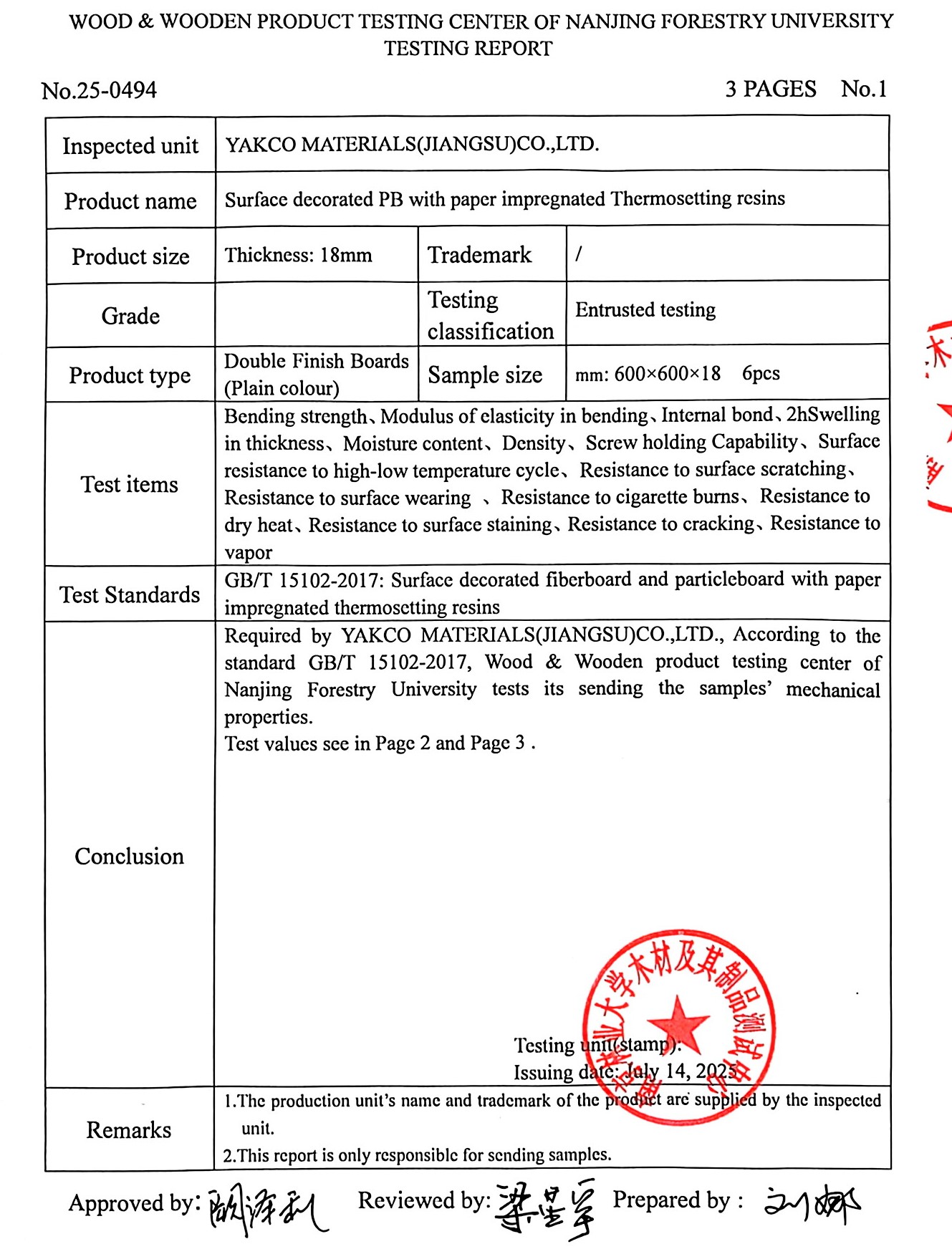
III. Economic and Ecological Value: A Sustainable Alternative to Natural Stone
As low-carbon construction and sustainable development become global priorities, excessive quarrying of natural stone faces increasing environmental restrictions.
Rock Design Melamine Boards are not only an aesthetic upgrade but also a modern ecological solution.
1. Resource Conservation
Producing 10,000 square meters of rock texture panels consumes natural resources equivalent to less than 50 cubic meters of quarried stone.
Additionally, most substrates are sourced from renewable fast-growing plantation timber, significantly reducing ecological damage to mountains and natural landscapes.
2. Lower Processing and Total Project Cost
Natural stone processing often results in:
- 20%–30% material waste
- Expensive diamond cutting tools
- High labor requirements
- Complex installation systems
In contrast, Rock Design Melamine Boards can be processed using standard woodworking equipment for:
- Cutting
- Edge banding
- Drilling
- CNC machining
Overall processing waste can typically be controlled below 5%.
Thanks to lightweight construction and simplified installation, the final integrated project cost is often only 15%–25% of premium natural stone systems.
IV. Application Scenarios and Design Trends
By successfully combining the visual depth of stone with the practicality of engineered panels, Rock Design Melamine Boards demonstrate remarkable versatility across modern interior environments.
High-End Residential Customization
Ideal for:
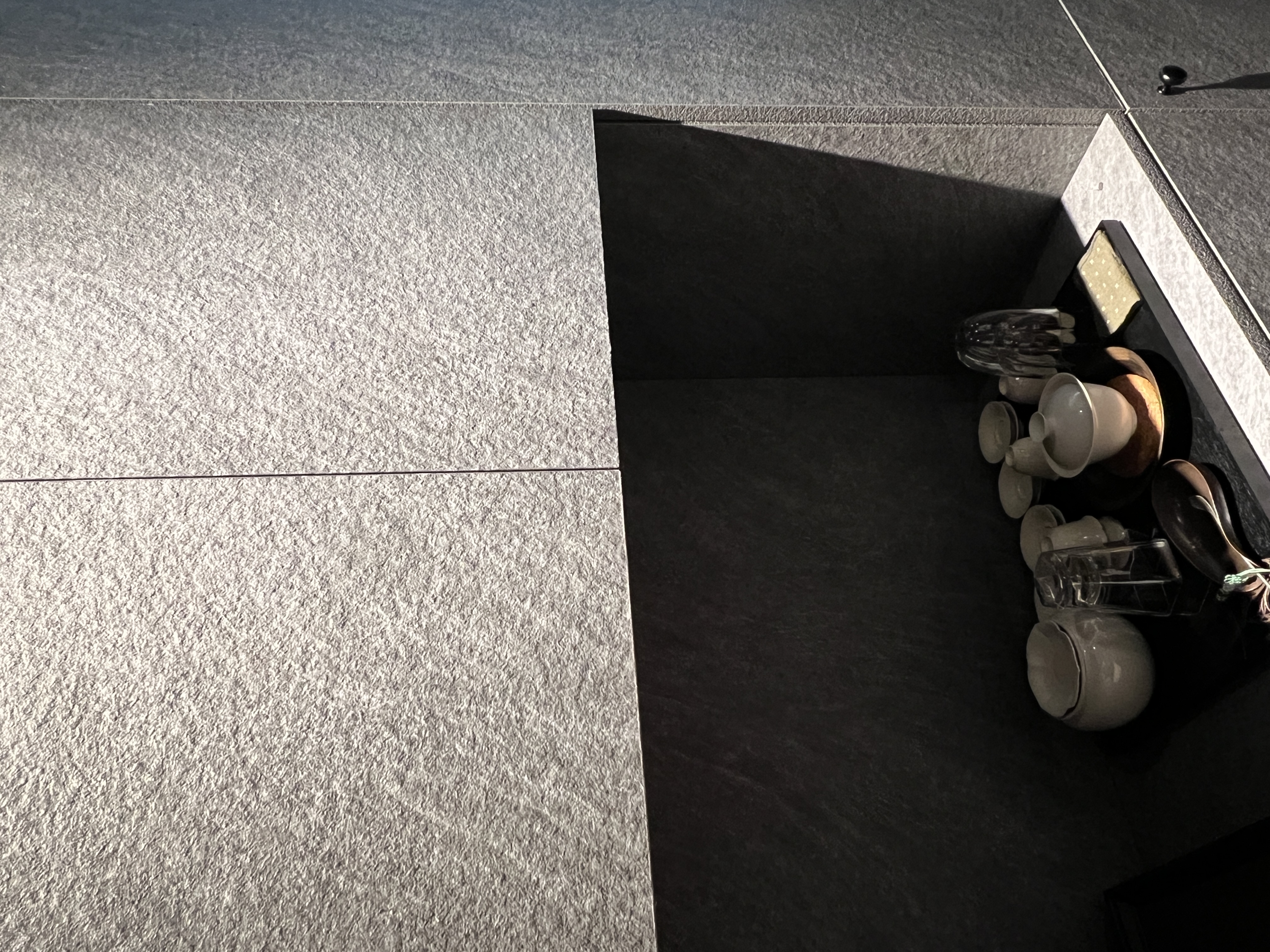
- Cabinet doors
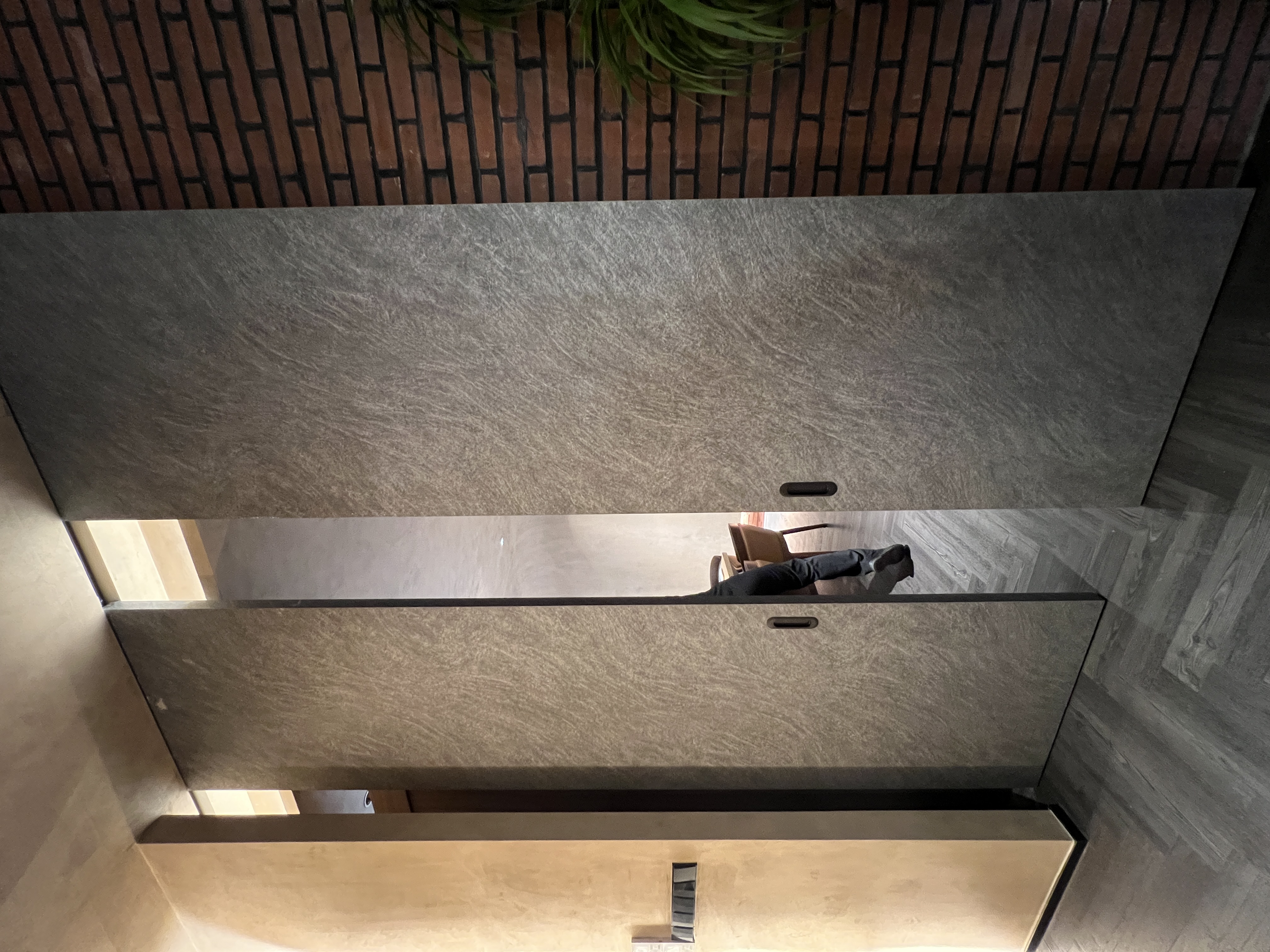
- TV background walls
- Hidden doors
- Wardrobes
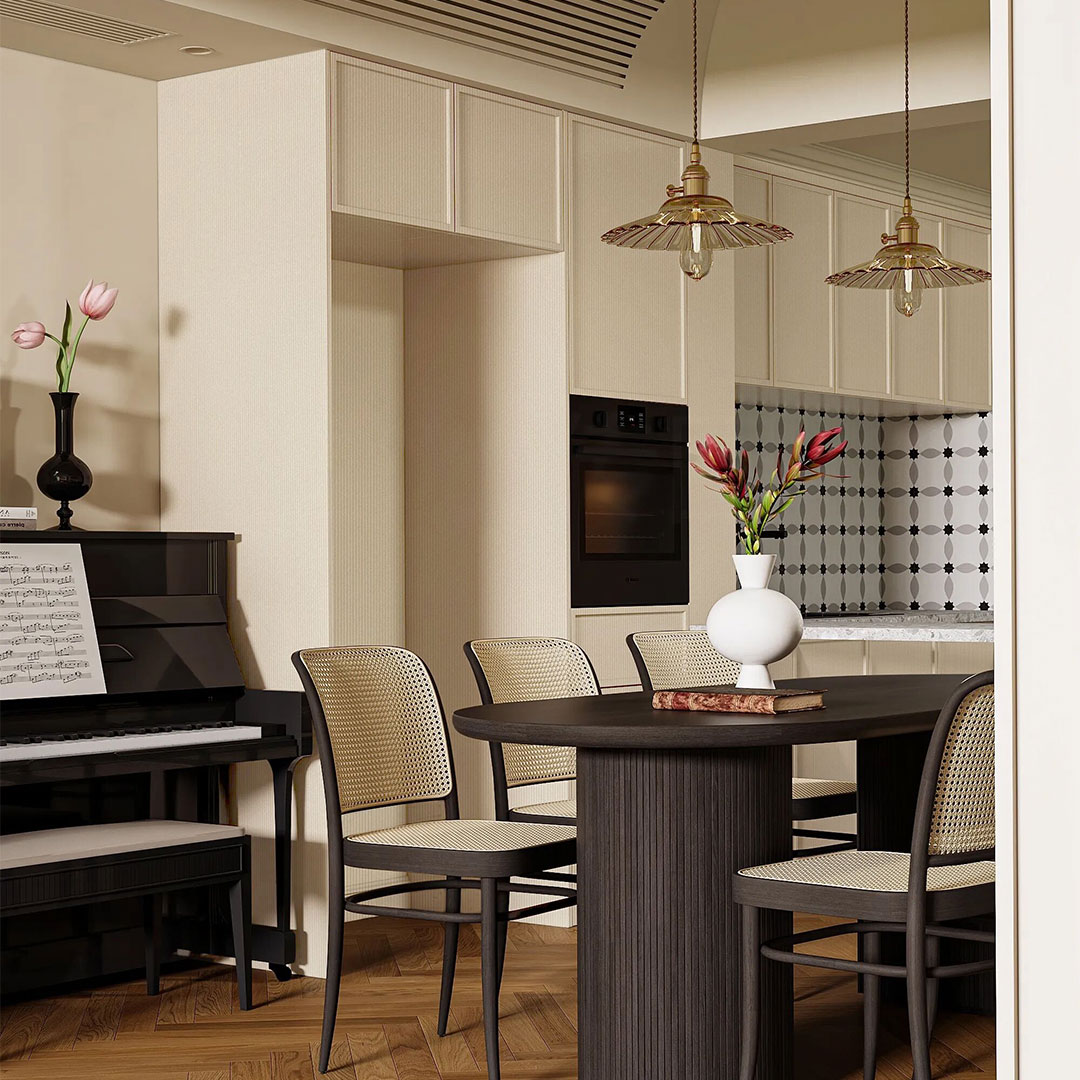
- Kitchen systems
Its Class 5 stain resistance makes it particularly suitable for kitchens and dining spaces exposed to oil, moisture, and seasoning residues.
Commercial Interiors and Hospitality Projects
In high-traffic environments such as:
- Hotel lobbies
- Elevator halls
- Retail environments
- Office reception areas
The ≥ 3.5N scratch resistance and high abrasion durability help maintain a refined appearance despite constant daily wear from luggage, carts, and foot traffic.
Fusion of Art Deco and Contemporary Minimalism
Whether paired with metallic accents to reinterpret the industrial luxury of Art Deco, or integrated into Wabi-Sabi and minimalist interiors, rock texture surfaces provide a grounded, architectural, and emotionally balanced spatial atmosphere.
Their restrained matte texture aligns perfectly with current international design trends emphasizing authenticity, tactility, and material honesty.
Conclusion
From an ordinary engineered panel to a highly sophisticated decorative surface rich in texture and technological value, modern surface engineering has achieved far more than material imitation.
It represents a leap forward in spatial aesthetics, efficiency, and sustainability.
Led by advanced manufacturers such as YAKCO, modern decorative material technologies are enabling natural beauty to be preserved through micron-level synchronization, rigorous environmental standards, and high-performance engineering.
In the future language of interior design, this fusion of “technology-enhanced naturality” will undoubtedly occupy an even more central position in global architectural and decorative applications.