中文简体
中文简体





Previous Post
In the evolving landscape of interior design and furniture manufacturing, surface materials are no longer judged by visual appeal alone.
Today's designers and homeowners demand materials that deliver sensory richness—texture, warmth, and tactile authenticity—while standing up to the rigors of daily use.
Leather Design Melamine Board has emerged as a compelling answer to this dual challenge, offering the refined look and feel of genuine leather with the engineered performance of high-quality wood-based panels.
More:yakco technology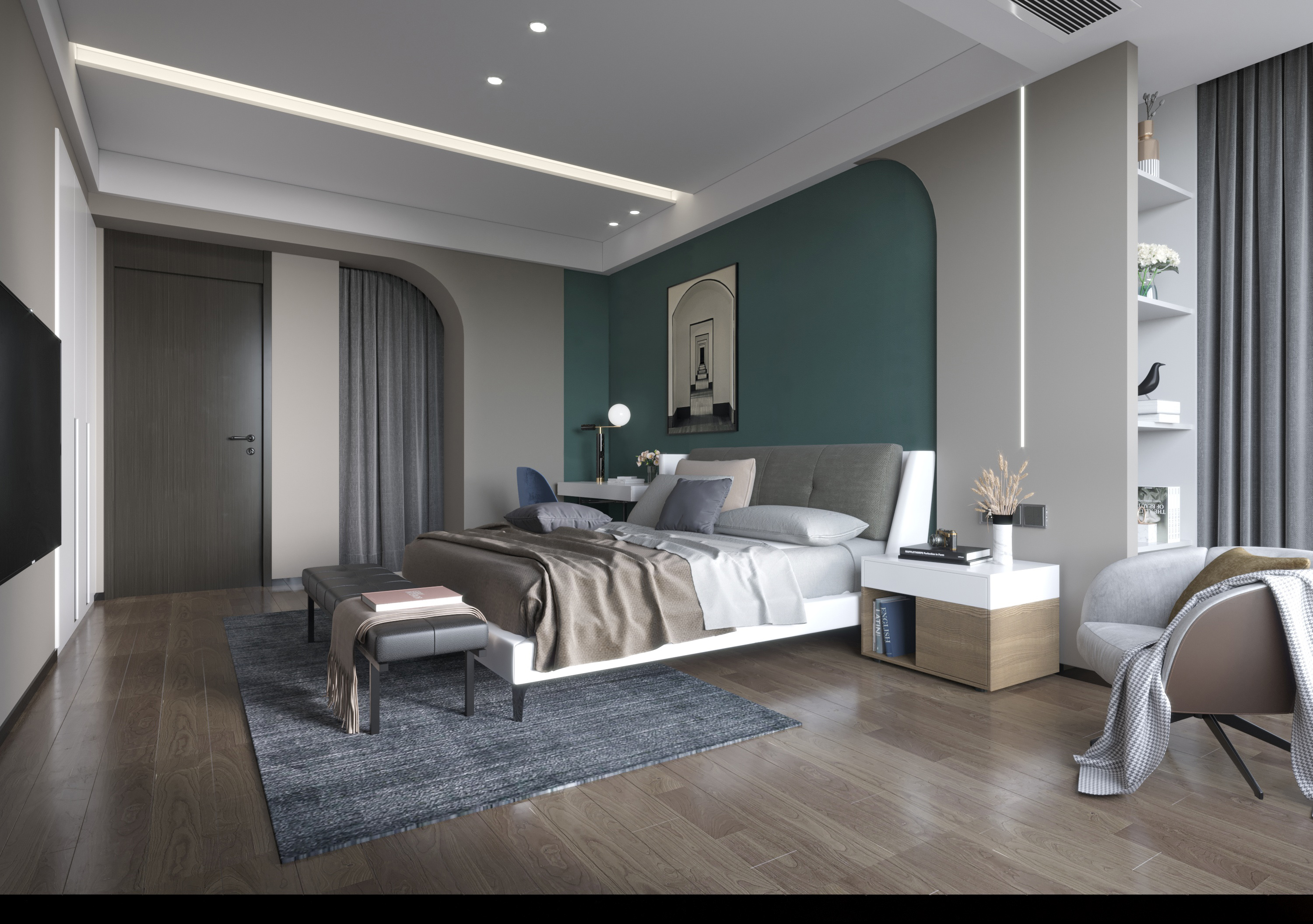
Why Substrate Performance Matters for Leather Texture
The deep embossing required to create realistic leather grain places exceptional demands on the substrate.
Unlike flat decorative surfaces, embossed panels feature raised and recessed areas where stress concentrates during use. If the underlying substrate lacks adequate mechanical strength, the embossed grain will gradually flatten, crack, or lose definition over time.
This is why the physical and mechanical properties of the substrate are not merely technical specifications—they are the foundation upon which the entire tactile experience rests.
Bending Strength: The Anti-Collapse Baseline
Bending strength measures a panel's ability to resist fracture under load.
For leather-textured panels, this is particularly critical because embossed surfaces create stress concentration points at the edges of raised grain patterns.
When subjected to vertical pressure—whether from seated weight on a chair, items placed on a desktop, or the cumulative load of cabinet contents—the embossed areas must not permanently deform.
Testing data shows bending strength reaching 14.0 MPa, exceeding the standard requirement of ≥11.0 MPa by 27%.
This margin ensures that the three-dimensional grain of the leather texture maintains its plumpness and definition over years of use, without flattening under repeated pressure.
Modulus of Elasticity in Bending: The Fatigue Resistance of Grain Ridges
The modulus of elasticity reflects a panel's resistance to elastic deformation under load—essentially, its ability to spring back after stress is removed.
Higher values indicate greater resistance to creeping or sagging over time.
For leather-textured panels, this property is what keeps the crisp edges of grain patterns from gradually "relaxing" under the constant weight of cabinet doors or the thermal expansion and contraction caused by seasonal temperature changes.
The tested value of 3160 MPa—nearly double the standard requirement of ≥1600 MPa—means that even after years of use, the sharp boundaries of pebble grain and fine leather wrinkles remain clearly distinguishable.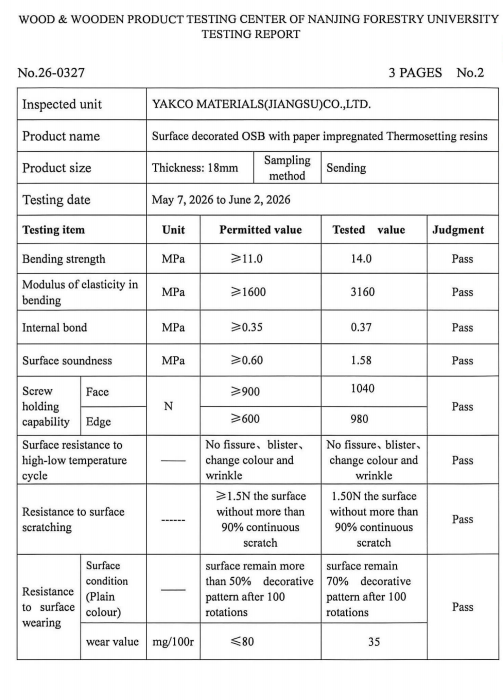
Internal Bond Strength: The Interlayer Integrity of Embossed Areas
Internal bond strength measures how tightly the internal layers of the substrate are bonded together.
During deep embossing, the substrate surface undergoes uneven compression and stretching. If internal bond strength is insufficient, micro-cracks can develop at the interfaces between layers, particularly beneath raised grain particles.
Testing shows internal bond strength of 0.37 MPa, exceeding the standard requirement of ≥0.35 MPa.
While the margin may seem modest, this value is critical for leather panels—it ensures that embossed protrusions do not delaminate or "shell" over time, and that the decorative layer in recessed areas remains securely attached.
Substrate Density: The Foundation of Embossing Clarity
Density directly affects how clearly embossing patterns form and how well they persist.
Too low a density, and the grain appears blurred; too high, and the panel becomes unnecessarily heavy and difficult to machine. A measured density of 0.72 g/cm³—in the upper-middle range of the national standard of 0.60–0.90 g/cm³—strikes an optimal balance. Uniform density across the panel ensures that grain clarity is consistent from edge to edge, with no localised collapse or uneven texture.
Surface Soundness: The Bond Between Leather Layer and Substrate
Perhaps the most critical indicator for leather-textured panels is surface soundness—the adhesive strength between the decorative paper layer and the substrate.
During deep embossing, the decorative layer is stretched into recesses and compressed over protrusions, subjecting it to extreme mechanical stress. If the bond is weak, the paper will delaminate at the deepest points of the grain, creating visible blistering or peeling.
Testing shows surface soundness of 1.58 MPa—2.6 times the standard requirement of ≥0.60 MPa.
This extraordinary bond strength means that even at the deepest recesses of the leather grain, the decorative layer remains fully integrated with the substrate, impervious to humidity changes, temperature fluctuations, or repeated wiping.
Surface Durability: Protecting the Tactile Experience
Beyond substrate mechanics, leather-textured panels must also withstand surface-level wear. Scratch resistance testing confirms that under a 1.5 N load, the surface shows no continuous scratch exceeding 90% in length.This means everyday encounters with fingernails, zippers, or metal pen clips leave no visible marks.
Wear resistance testing shows pattern retention of 70% after 100 rotations (standard ≥50%) and a wear value of just 35 mg/100r (standard ≤80 mg/100r)—meaning the leather grain remains clearly visible even on high-contact surfaces like desktops and armrests.
Stain resistance achieves Grade 5 (Full Score) , making the surface highly resistant to coffee, tea, soy sauce, red wine, and other common stains—cleaning is as simple as wiping with a damp cloth.
Dry heat and vapour resistance both achieve Grade 4 (Pass) , ensuring that hot cups, steaming dishes, and humid environments do not cause whitening, blistering, or loss of gloss.
Cracking resistance and high-low temperature cycle tests confirm no fissures, blistering, colour change, or wrinkling —even under alternating dry-wet conditions and seasonal temperature swings, the leather texture remains intact.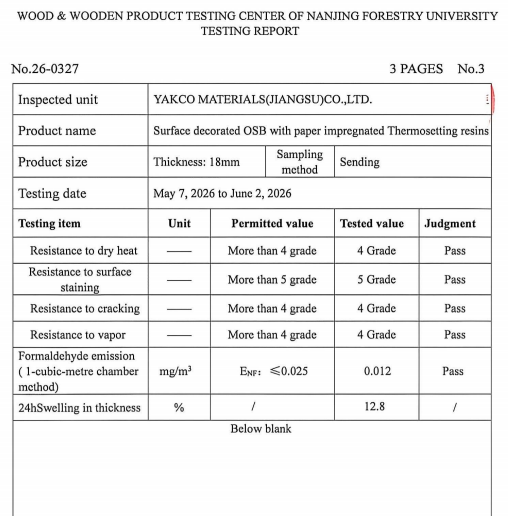
Applications Across Interior Spaces
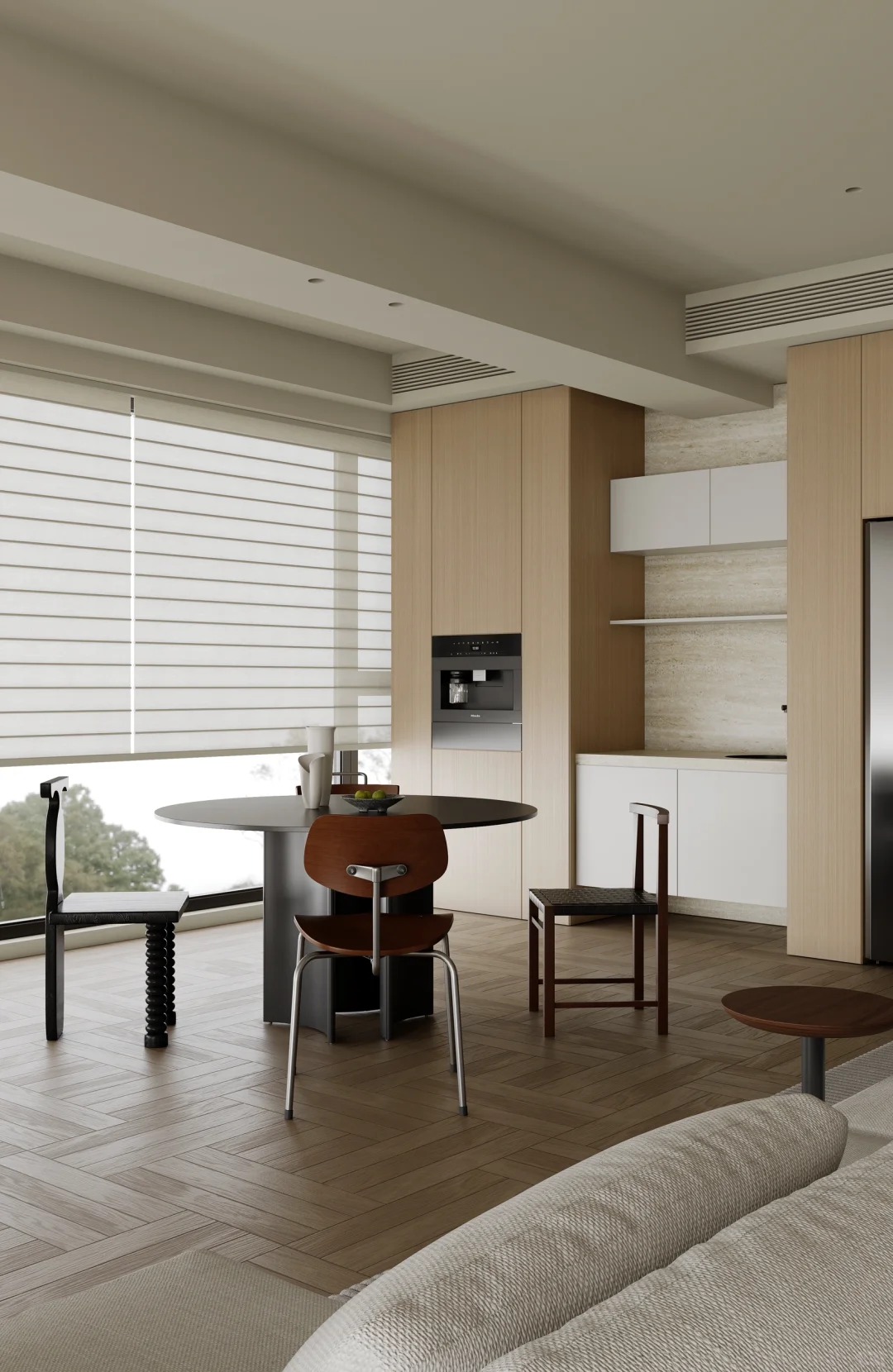
The versatility of Leather Design Melamine Board makes it suitable for a wide range of applications. In residential settings, it appears on kitchen cabinets, wardrobe doors, bedside tables, sofa side panels, and feature wall cladding. In commercial spaces, it is used for office furniture, retail display units, hotel room joinery, and restaurant booth seating.
The material's combination of leather-like aesthetics with superior durability makes it particularly attractive for high-end furniture and feature applications where both visual impact and long-term performance are paramount.
Market Trends and Growing Demand
The global melamine market is projected to reach USD 12.06 billion by 2030, growing at a CAGR of 6.43%. Within this expanding market, leather-design finishes are experiencing particularly strong growth, driven by the rising popularity of minimalist and natural-style interiors that demand diverse design options.
Manufacturers are increasingly offering leather-textured melamine panels as part of comprehensive design collections, available in multiple colours, finishes, and substrate options to meet the needs of both residential and commercial projects.
The ability to combine the opulent charm of leather with the durability and easy maintenance of engineered wood panels makes Leather Design Melamine Board a compelling choice for modern interiors.
Conclusion
Leather Design Melamine Board represents the convergence of sensory design and engineered performance. Its realistic leather texture, achieved through advanced embossing technology, delivers the tactile warmth and visual sophistication that designers seek.
But it is the underlying mechanical data—bending strength of 14.0 MPa, modulus of elasticity of 3160 MPa, internal bond strength of 0.37 MPa, density of 0.72 g/cm³, and surface soundness of 1.58 MPa—that ensures this tactile experience endures. For furniture manufacturers, interior designers, and homeowners alike, the choice of Leather Design Melamine Board is a choice for beauty that lasts.
Frequently Asked Questions
Q: Is YAKCO Leather Design Melamine Board durable?
A: Yes. It offers high resistance to scratches, stains, moisture, dry heat, vapour, and temperature cycling, with tested performance significantly exceeding national standard requirements.
Q: Where can YAKCO Leather Design Melamine Board be used?
A: It is suitable for kitchen cabinets, wardrobes, office furniture, retail displays, wall cladding, and commercial interiors.
Q: How does YAKCO Leather Design Melamine Board compare to genuine leather?
A: It offers a highly realistic leather texture and tactile feel at a lower cost, with superior durability, easier maintenance, and better resistance to moisture and staining.