中文简体
中文简体





Previous Post
You are standing in a kitchen showroom, running your hand across a cabinet door. The salesperson calls the material "melamine." Your instinct may be to hesitate. Melamine has a mixed reputation in kitchen discussions: some owners swear by its easy-to-wipe surface, while others describe chipped edges and swollen panels that failed after a few wet years. Both stories are true, and both are useless without the details that matter.
The direct verdict is this: melamine board is good for kitchen cabinets, provided that the substrate is appropriate for the location, the edges are properly sealed, and the panel is not expected to behave like plywood or solid wood. For standard cabinet boxes, interior shelving, and many door fronts, a well-made melamine-faced panel is actually one of the most reliable and cost-effective materials available. The bad outcomes almost always come from a poor-quality core, exposed cut edges, or the wrong board being installed in a constantly wet zone. Once you understand what sits underneath that glossy surface, the decision becomes far easier.
What Is a Melamine Board, Exactly?
A melamine board, in the cabinet industry, is an engineered wood panel with a decorative resin-treated paper surface fused to a core. The core is almost always particleboard, also called chipboard, or a medium-density fiberboard (MDF).
The manufacturing process begins with wood particles or fibers combined with synthetic resin and pressed under heat. The decorative paper is impregnated with melamine resin, dried, then pressed onto the core in a short-cycle press at roughly 170 to 220 °C. The resin crosslinks during pressing, forming a hard, closed, thermosetting surface that bonds to both faces. This is a low-pressure process, distinct from high-pressure laminate (HPL), which is produced separately and then glued to a substrate.
In kitchen cabinetry, most manufacturers use 16 or 18 mm melamine-faced particleboard, often abbreviated as MFC, for carcass panels and shelving. For profiled or painted doors, MDF cores are common because the edges accept machining and paint better. When someone says "melamine cabinets," they usually mean boxes and doors made from these prefabricated panels rather than from solid wood, veneer, or stainless steel.
The term "melamine board" can be confusing because it refers to the complete composite, not just the surface. The quality of the complete board is determined more strongly by the core than by the decorative layer. A gorgeous wood-grain face will not save a low-density core that crumbles around a hinge screw.
If you want to go deeper into how melamine boards are structured and how to select the right substrate from a manufacturer, our detailed guide to melamine board composition and substrate selection walks through each layer and the physical tests that separate better boards from the rest.
The Short Answer: Yes, If You Match the Board to the Kitchen
In most residential kitchens, melamine board is a genuinely good choice. It will serve for fifteen to twenty years in normal conditions without structural failure, as long as the cabinet is made with a solid panel and respectable edge banding. Rather than asking whether melamine is "good" as a general category, ask which melamine board is appropriate for the specific cabinet component and location in your kitchen. There are three factors that control the outcome.
The first is the core. A cabinet box panel needs a high-density particleboard or an HMR board with good internal bond strength and sufficient thickness, typically 18 mm. A low-cost board with an irregular particle distribution may sag on long spans and tear out around screws. The second is the edge. Every cut edge inside the cabinet, around a sink cutout, and along a door must be sealed with edge banding or a compatible sealer; the edge is where moisture enters and where cheap cabinets fail. The third is the location. A cabinet next to a dishwasher experiences steam and occasional splash; a pantry drawer under the kitchen island experiences milder humidity. Different locations deserve different panel grades.
So a balanced answer is: melamine board is good for kitchen cabinets when you select the correct core grade, work with a fabricator who seals edges properly, and keep the true water-exposure zones protected. In those conditions, melamine outperforms many painted surfaces in durability and maintenance cost.
Why Melamine Board Works Well in Most Kitchens
Melamine would not be the default panel for kitchen cabinet producers unless it had real technical advantages. These benefits are measurable in production capacity, installation time, and year-after-year cleaning effort.
Cost Efficiency Without Looking Cheap
The clearest advantage is cost. Melamine-faced particleboard carries a significantly lower material price than plywood and solid wood, yet it delivers a flat, stable, and visually uniform panel. A kitchen is a large-area application: a typical island, wall run, and upper cabinets can require more than forty panels of 2.44 by 1.22 m. Choosing melamine over plywood can reduce the material cost for boxes by 30 to 50 percent, depending on the market. For rental properties, starter homes, small apartments, utility rooms, and offices, that difference is not cosmetic; it is the difference between a kitchen project being financially possible and not.
The surface finish of quality melamine boards is far removed from the glossy, obviously artificial appearance of old low-pressure laminates. Modern decorative papers replicate the printing precision of natural veining, with synchronized embossing that lets your fingers trace the grain exactly as the pattern indicates. A well-executed melamine-faced door can sit next to a veneered cabinet and be difficult to distinguish at normal viewing distance, which is a strong argument for using melamine on most of the cabinet fronts while reserving the budget for a few premium elements.
Easy to Keep Clean, Even in Greasy Kitchens
The melamine surface is a closed, non-porous film. Because the resin has crosslinked during pressing, it resists absorption of cooking oil, sauce, coffee, and food acids. A quick wipe with a damp cloth restores the surface; the same cannot be said for unsealed wood, painted MDF with a damaged topcoat, or some soft low-pressure laminates.
In a kitchen, the simplicity of cleaning is not a luxury. The cabinet front around a stove collects a sticky mixture of oil steam and fine dust. On a melamine door, that film stays on the upper surface and does not absorb into the panel core. On a real wood door with an open-pore finish, the same vapor can penetrate microscopic cracks and cause the finish to bloom or flake. This maintenance advantage is also why melamine is widely used in laboratories, clinics, retail shelving, and hotel pantries: it tolerates frequent wiping with mild disinfectants without losing its gloss level.
Wide, Consistent Range of Color and Texture
Melamine boards are produced in massive runs with the same decorative paper roll, which means the color and pattern do not vary from door to door the way that natural veneer does. If you replace a damaged door five years after the original installation, you have a realistic chance of matching the new door to the old ones, provided the same product series is still in production. With plywood or V-groove solid wood, grain matching across different batches is far less predictable.
The design choice today is almost unlimited. Plain acrylic-look colors, white and grey tones, deep matte black, brushed metal-look, marble and rock patterns, coarse linen, leather grain, and many wood species, from white oak to walnut to tropical hardwood look-alikes. For kitchens moving toward a rich, tactile look, deeper embossed textures matter more than the color itself. A synchronized oak with cutting texture panel reproduces the open-sawn surface of real oak in a way that is comfortable to touch and extremely durable in daily use. This product is a natural fit for cabinet doors and drawer fronts where the client asks for "realistic wood but not high-maintenance."
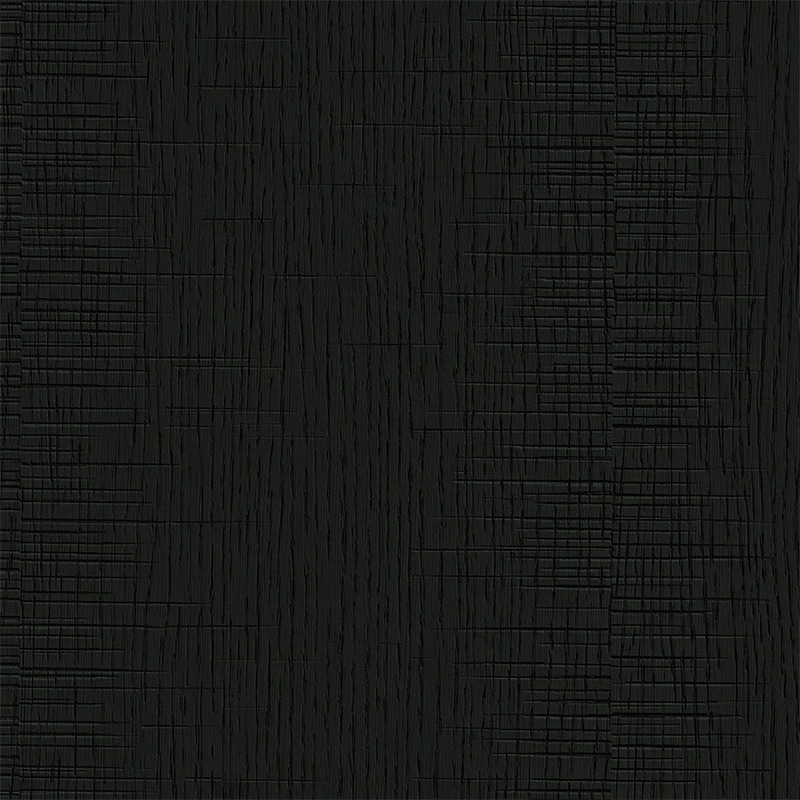 Custom TS01 Synchronized Oak with cutting texture - Natural Suppliers, Factory -YAKCO New Materials (Jiangsu) Co., Ltd is China Custom TS01 Synchronized Oak with cutting texture - Natural suppliers and factory, detail...View Product →
Stable Panels and Predictable Fabrication
Particleboard is more dimensionally stable than solid wood panels in normal indoor conditions. Because the wood particles are mixed randomly and bonded with resin, the panel does not expand or contract with humidity the way that a wide solid board does. The internal structure absorbs the movement, so the cabinet carcass remains square, doors remain aligned, and drawer openings do not change size through the year.
Fabricators also appreciate the consistent thickness and flatness of melamine-faced panels. A panel with a thickness tolerance of about plus or minus 0.2 mm across its width allows CNC machining, edge banding, and hinge insertion to be automated. That consistency is what enables cabinet factories to guarantee that a 500 mm-wide drawer cabinet will not bind after a rainy month. For the homeowner, the result is a kitchen that works smoothly without the seasonal adjustment that is normal for solid-wood furniture doors.
Where Melamine Board Causes Problems
Every negative experience with melamine cabinets can be traced to one of four concrete failure modes. Understanding these helps you avoid them by specifying the material correctly instead of rejecting the material itself.
Edge Swelling Is the Most Common Failure
If you look at a failed melamine cabinet, the first thing you usually notice is the edge of the horizontal panel: it has bloomed like wet cardboard, the surface paper has lifted, and the decorative face is swollen into a ripple. This happens because the core of ordinary particleboard is made with adhesives that are not waterproof in the same way that plywood adhesives are. When liquid water penetrates through an unsealed edge, the particles in the core absorb moisture and swell in thickness, permanently distorting the panel. Once that happens it cannot be reversed by drying; the panel must be replaced.
The preventive measures are straightforward: every cut edge must be protected. A professional edge bander applies ABS or PVC banding, then trims it flush on both faces, forming a continuous protective barrier. A notch for a hinge, a wire hole, or a vent cut in the factory must also receive a sealed edge. In a kitchen remodel, if you see an installer cutting melamine panels on site without sealing the edges, the cabinets will fail years before they should.
Impact Damage and Chipping
The melamine face is hard and brittle. A heavy object dropped on a cabinet door, or the edge of a metal tray hitting the face at speed, can cause a chip that exposes the pale board underneath. The surface resists scratches well, but it does not absorb sharp impact. In kitchens with small children, the lower part of the cabinet doors and the corners of drawer fronts are the most vulnerable positions.
Some manufacturers respond by using thicker papers with higher abrasion resistance, but impact resistance remains a trade-off of the resin surface. You can reduce the risk by choosing a door with profiled edges or a matte texture, which visually disguises small chips better than a high-gloss surface does. Still, no melamine door is indestructible against blunt force.
Repairability Is Limited
When a painted door gets scratched, a repairer can sand the affected area, apply primer and paint, and the scar blends almost invisibly into the surrounding finish. With a melamine face, the decorative resin is fused into the paper, and that paper is bonded to the panel. There is no easy way to retexture or recoat just a small area without leaving a visible border. Wood furniture markers work for tiny chips in matte wood-grain patterns, but they do not restore the tactile surface. For deeper damage, the standard professional response is to order a new door, drawer front, or panel.
This repairability limitation matters if you expect your kitchen to survive twenty years with the exact same doors. The solution is to store the product reference code and keep the supplier note about availability. With a stable series, replacement doors are usually produced from the same decorative paper and match closely. The real risk is with discontinued finishes, which is why buying from a manufacturer with a long production history is safer.
Low-Quality Substrate Beneath a Pretty Face
It is important to name the real issue: not every melamine board is manufactured to the same standard. Some commodity boards use low-density recycled particles, high moisture content, and a thin resin application just to keep the retail price down. The surface may look perfect in the showroom, but the panel is brittle, sags over wide openings, and fails the 24-hour edge-seal test. A kitchen built with these boards can begin to show problems within two or three years: sagging shelf supports, hinge screws that will not hold, and the internal bond of the panel disintegrating where it meets the connector fittings.
The lesson is not "avoid melamine." It is "avoid cheap melamine." The identical face finish can be applied to a premium substrate that performs for decades. Asking the manufacturer for physical data, such as internal bond strength, 2-hour thickness swelling, and formaldehyde emission classified values, is the only reliable way to see the difference.
Melamine Board vs Plywood vs MDF for Cabinet Components
For kitchen cabinets, the comparison that really matters is not melamine as a category but melamine-faced board versus veneered or coated plywood and bare or painted MDF. The table below summarizes typical performance differences. The values are directional rather than absolute because each product has its own quality classes.
| Property | Melamine-Faced Particleboard | Plywood (Interior / Sheathing Grade) | MDF |
|---|---|---|---|
| Cost per 18 mm panel | Low to moderate | Moderate to high | Moderate |
| Moisture resistance at cut edges | Moderate; edges must be sealed; HMR core is better | High; wood veneer layers resist long-term water exposure | Low for standard grade; high for HMR grade; edges need sealing |
| Impact resistance on the face | Moderate; surface cracks under hard impact | High; the wood face absorbs some impact | Moderate; similar to particleboard but core is more homogeneous |
| Resistance to screw and hinge pull-out | Good in dense PB; moderate in cheap board | Excellent with good plywood veneer thickness | Better than standard PB at the face; edge screw-holding is low unless glued dowel |
| Surface finish options | Very wide; colors, wood, marble, leather, 3D textures | Limited; veneer is natural wood with visible joints | Best for painted and profiled doors; can be lacquered or foil-wrapped |
| Flatness and dimensional stability | Very flat; low seasonal movement | Good but depends on wood species and construction | Very flat; deforms less than PB under concentrated load |
| Repairability | Poor; deep damage requires panel replacement | Good; sand, reseal, and sometimes patch veneer | Poor to moderate; surface repair is possible but the substrate swells once wet |
| Weight | High | Moderate | High |
Plywood Boxes Versus Melamine Panel Boxes
Plywood has long been considered the premium box material in North American cabinetry. It is undeniably strong: a 12 mm plywood shelf spans longer distances without sagging than a 16 mm particleboard shelf, and plywood resists the bathroom moisture incidents that killed particleboard boxes in older homes. But there are real trade-offs. Good cabinet plywood with solid core plies and a balanced construction is expensive. It can also have visible color variation between panels, and the exposed ply edge must be either taped or treated with edge filling to look clean. Many modern cabinet factories prefer melamine-faced PB boxes because they are white or wood-toned on the inside without additional painting, easier to keep clean, and more economical. If your kitchen has dry, moderate conditions and the boxes are hidden behind doors, the theoretical strength advantage of plywood is often irrelevant in practice.
MDF and HMR MDF as a Closer Competitor
MDF enters the conversation when the goal is a smooth, paint-ready, or profiled door. Unlike particleboard, MDF has a uniform fiber structure that can be routed into a shaker profile, a curved panel, or a fluted design without the edge tearing that appears on particleboard. But standard MDF is moisture-sensitive; a leak that sits on the lower edge of an MDF door will be absorbed quickly and turn the edge into a soft sponge. The professional answer is HMR (high moisture resistant) MDF, which contains a hydrophobic agent in the fiber blend. A melamine-faced HMR MDF panel combines the machining advantages of fiberboard with the cleanability of the resin surface and a core that resists swelling better than standard chipboard. This is a natural combination for sink-base cabinet side panels, drawer fronts near a dishwasher, and any area where steam is present. It is a worthwhile upgrade for the panels that sit close to the plumbing.
 Custom HMR MDF - Yakco/Lekco Suppliers, Factory - YAKCO New Materials (Jiangsu) YAKCO New Materials (Jiangsu) Co., Ltd is China Custom HMR MDF - Yakco/Lekco suppliers and factory, details:View Product →
What Separates a Cabinet-Grade Melamine Board from a Cheap Board
Because the decorative surface looks similar across a wide price range, most buyers judge melamine board by appearance alone. That is a mistake. The performance of a panel is determined primarily by three internal characteristics: the core, the decorative layer, and the edge treatment.
The Core Substrate Sets the Real Performance
Start with the particleboard core. In Europe and China, standard particleboard is classified for dry conditions, while moisture-resistant board is intended for humid spaces. The key parameters to request from the panel manufacturer are internal bond strength (IB), 2-hour thickness swelling after immersion, and screw-holding resistance on both the face and the edge.
For kitchen cabinet boxes, a practical benchmark for internal bond strength is roughly 0.35 to 0.50 N/mm² for 16 to 18 mm board. A value below 0.30 N/mm² tells you that the panel may delaminate around connectors and hinges. For thickness swelling, better moisture-resistant boards report 2-hour swelling near 3 to 8 percent; ordinary dry-grade boards may show 10 to 20 percent, and everything above around 12 percent in the 2-hour test will cause visible edge deformation when water finds a path. You should ask for the data sheet and, if the supplier cannot provide measured data, treat the product with suspicion.
Density is a visible clue. A cabinet-grade board in the 640 to 750 kg/m³ range has a dense, fine surface layer that holds hinge screws. A light board around 560 kg/m³ may feel easy to carry in the showroom, but it will not hold hardware for decades. MDF cores, especially HMR MDF, behave differently: they offer higher density, smoother surface, and better moisture resistance in HMR versions, but they also weigh more.
The Decorative Layer Controls Appearance, Abrasion and Cleaning
The printed paper that carries the pattern and the melamine resin overlay are what create the "melamine" surface. The paper weight, usually 60 to 120 g/m², and the resin content, typically 50 to 70 percent of the paper weight, determine how well the surface withstands daily friction, spills, and cleaning agents. High-quality impregnating papers include an abrasion-resistant coating layer with fine particles of corundum. That is the difference between a door that stays matte after years of wiping and one that becomes glossy in the middle of the handle zone.
Texture also matters more than many buyers expect. Standard melamine papers have a smooth surface with a simple embossing. Premium panels use synchronized pressing, where the steel press plate is engraved to match the exact visual pattern: an oak-grain print has an oak-porous emboss, a rock pattern has a micro-relief like natural stone. You can feel the difference with your fingertip. A deep-embossed panel not only looks richer; its tactile surface also hides fine scratches and finger marks better than a flat shiny surface. This is especially noticeable in kitchens, where surfaces are constantly touched, cleaned, and sometimes hit by the edge of a dish.
For a specific premium direction, leather-textured melamine panels have become popular in cabinet doors and drawer fronts. The soft, slightly grained feel brings a tactile warmth that a pure wood-grain cannot offer. A light luxury leather-textured panel demonstrates how deep-embossed surface technology transforms a standard cabinet component into a design element, while the panel retains the cleaning properties of melamine.
 Custom PZ01 Leather1 texture Panel-Light Luxury Suppliers, Factory - YAKCO New MYAKCO New Materials (Jiangsu) Co., Ltd is China Custom PZ01 Leather1 texture Panel-Light Luxury suppliers and factory, details:What is th...View Product →
Edge Banding Is the Difference Between a Cabinet That Lasts and One That Leaks
The best board in the world will fail if its edges are unprotected. Edge banding performs a structural role, not just a decorative one. A proper machine-applied ABS or PVC band, 1 to 2 mm thick, wraps the panel edge and covers it with a smooth waterproof film that extends to the face exactly flush. The quality of the glue line determines whether the band remains attached when it encounters moist air and thermal movement. A cheap hand-ironed band with a thin glue layer may lift within a year; a professionally applied band can last as long as the panel.
It is worth asking the cabinet manufacturer exactly how the edges are sealed, especially for the bottom of the sink-base side panels, the cutout around the sink flange, and the shelf ends in open dish racks. If the fabricator uses a CNC router and applies edge banding to every exposed edge, the risk of edge swelling is low. If the fabricator simply cuts a panel and installs it without edge sealing on some hidden side, that panel is the first candidate for failure.
Formaldehyde Emissions and Environmental Standards
Kitchens are small rooms where cabinets occupy every wall surface. Indoor air quality depends strongly on the emissions of the boards used. The standard for many years has been E1, which means the formaldehyde release is limited to 0.124 mg/m³ in a test chamber. Stricter classifications exist: Japanese, U.S. CARB/EPA TSCA Title VI, and the Chinese ENF classification at 0.025 mg/m³ in chamber testing, which is currently among the strictest limits in the world. Some premium manufacturers now use MDI (methylene diphenyl diisocyanate) adhesive in the core instead of urea-formaldehyde resin, which pushes emission levels to some of the lowest measurable values while improving the moisture resistance of the board itself.
For the buyer, the practical step is to request the emission certificate for the exact board being used. A cabinet supplier that cannot or will not share that document is not necessarily doing anything wrong, but you are taking on the risk of an unverified material in a small, enclosed kitchen environment. A written specification of ENF or E0 for base cabinets, wall cabinets, and door panels is enforceable; a verbal "it's all ecological" is not.
Moisture, Heat, Steam, and Everyday Kitchen Abuse
The kitchen is the most aggressive room in the house for any panel material. The question is not whether melamine board can handle humidity in theory, but where and how the water appears in practice.
Consider steam. A dishwasher opened immediately after the cycle releases hot steam into the base of the adjacent cabinet bank. If that steam repeatedly finds a gap in the edge banding, the moisture will enter the particleboard core. Over years, the bottom corners of the drawer bank darken and swell. The standard protection is an aluminum moisture film applied to the inner face of the side panel and a sealed edge at the bottom. In more expensive kitchens, the dishwasher area is lined with a PVC or aluminum film that reflects heat and repels steam, independent of the cabinet material.
Consider condensation. Inside a base cabinet below a sink, the temperature difference between the inner panel and the plumbing can create micro-condensation on the wall of the cabinet. It takes a long time for visible droplets to form, but the cumulative effect on an unsealed chipboard carcass is significant. This is precisely where HMR boards justify their slightly higher cost: their core has been formulated to resist moisture uptake, and the melamine face adds an impermeable layer on the main surfaces.
Now consider heat. The melamine surface tolerates the brief contact from a hot pan that gets placed on a countertop or, accidentally, against a door. The temperature resistance of melamine resin is generally cited around 160 to 200 °C for short contact. What will damage it is prolonged contact with a very hot item or a radiator that continuously heats the door at 70 to 80 °C for hours; the surface can dull or develop fine crazing. Real kitchens do expose doors to hot sidewall heat next to a range, and a melamine front placed there will age sooner than a heat-resistant product. The solution is to specify a deep matte finish, which is less sensitive to heat marking than a glossy one, and to keep a minimum clearance between the hot zone and the door face.
You should also understand what the "moisture resistance" label means. A moisture-resistant melamine board is not waterproof. It has been engineered to tolerate humidity, occasional condensation, and brief splashes, but it will still be damaged by standing water in a cut edge or by a flooded countertop that reaches a cabinet bottom panel for days. No cabinet material, including plywood, survives submerging without consequences. The design of the kitchen, the quality of the plumbing, and the maintenance habits of the owner are the first line of defense.
How to Use Melamine Boards Correctly in Cabinet Construction
Good melamine is not a self-fulfilling material. The cabinet must be designed and assembled with its limitations respected. A fabricator who understands these rules can produce melamine cabinets that genuinely outperform painted MDF cabinets on durability.
What the Fabricator Should Do
First, use the right board for the right element. For cabinet boxes in dry areas, an 18 mm high-density melamine-faced PB is sufficient. For sink-base units, laundry rooms, or cabinets beside a dishwasher, switch to an HMR core board on the base panels and the side panels adjacent to the plumbing. For door fronts, use an MDF core or a particleboard core with at least 1.2 mm of edge banding on all four sides. MDF edges take the machining of shaker-style profiles better, and HMR MDF improves the durability of a profiled door.
Second, seal every cut surface. In a CNC machining center with a drill head and a router, the panel holes and cutouts should receive a layer of hot-melt sealant on the cut edge if no banding is applied. Holes for shelf pegs that go through the decorative face into the core do not need banding in normal dry areas, but the pilot holes for hinge screws should be precisely sized; an oversize hole strips the thread fixings.
Third, position the shelf support so that the panel does not bear too much concentrated weight. A standard shelf peg can be sufficient for normal stacking; but for a pantry shelf holding dozens of bottles and jars, install a full-width front rail or use heavier metal shelf brackets. A melamine panel spans a distance of about 700 mm with light load; beyond that, a stiffener is needed. Do not trust generic maximum load charts without knowing the board's modulus of elasticity.
What You Can Do During Installation
On-site cutting of melamine panels in a kitchen renovation is common, but it carries the same edge risk. If a panel must be trimmed during installation, the exposed edge should be coated with a melamine edge sealer or covered with a compatible tape band. Many manufacturers sell a water-resistant edge paint in matching tones; using it on internal edges is a simple, inexpensive measure that dramatically reduces failure rates inside a humid kitchen.
Check the gap between a dishwasher and the side cabinet panel. A standard installation leaves an air space, but if the dishwasher is enclosed with an end panel, the side of the appliance that faces the cabinet should have a foil heat shield on the cabinet panel. Do not rely on a 16 mm board to insulate heat from the dishwasher motor and the steam vent for a decade without some form of thermal barrier.
Sink-cutout edges are the most critical spots in a room. The installer should run silicone sealant along the entire under-side edge of the sink flange where it meets the worktop, and the worktop cutout itself should be sealed on the face before the sink is seated. Even with a perfect seal, the edge of a cutout that will frequently see water should use HMR board, not standard chipboard.
Daily Care and Maintenance
Melamine panels are forgiving, but the daily routine should match the material. Use a soft damp cloth or sponge with warm water and a mild detergent. A small amount of neutral kitchen cleaner works well; avoid concentrated bleach, paint thinner, or thick citrus degreasers left on the surface for long periods. Do not scrub with green abrasive pads because they will gradually polish the melamine into a dull shine in the area near the handle. For stubborn stains, a paste of sodium bicarbonate with a soft cloth is usually sufficient.
After cleaning, wipe the surface dry rather than letting water collect along the lower door edge. This is not because the melamine face fears water; it is because the edge of the door, together with the banding, is the most exposed point. By drying the lower edges of the doors and the tops of the base rail once every few weeks, you eliminate the slow moisture accumulation that is responsible for most swollen melamine doors.
A Practical Decision Checklist for Your Kitchen
If you are planning a new kitchen or evaluating a quote, the decision about melamine board can be reduced to a short list of questions. Rather than asking "melamine or not," ask the following.
- Where will the cabinet live? Dry wall run, island, tall pantry, and utility area have different moisture demands. Specify standard melamine-faced PB only in dry areas; use HMR core for sink bases, dishwasher-adjacent cabinets, and any panel that receives direct humidity.
- Is the door front a premium design element? If the door carries a visible textured finish, choose a door-grade panel with a hard, abrasion-resistant melamine surface and a synchronous or deep-embossed texture that matches the visual pattern.
- Are the edges sealed? Confirm that every cut edge in the factory and on site has an edge band or a sealant. Measure the edge against the face; a flush, tight band of at least 1 mm is a positive sign.
- What do the physical data say? Ask for internal bond strength, 2-hour thickness swelling, screw-holding resistance, and, for the door surface, abrasion resistance. Values above the minimum thresholds for dry or humid conditions should be in the material specification.
- What about formaldehyde? Request the emission class certificate for the exact board: E1 at a minimum, E0, or ENF for stricter requirements. The paper trail matters in a small ventilated kitchen.
- How will hinges, shelf pegs, and connectors be installed? Dense core material and correctly sized pilot holes matter far more than whether the panel is PB or MDF. A heavy pot drawer needs a reinforced runner; a wide shelf needs a stiffener.
- Can the supplier deliver replacement parts? A kitchen is used for years. If a door is damaged in year eight, you want the same decorative paper series to still be available. Buy from a panel manufacturer with a stable product line and documented references, not just from a woodworking outlet that buys whatever is on the market.
When these questions are answered, the material choice clarifies by itself. Melamine board is usually the right call for most cabinet boxes and a large share of door fronts. Plywood remains the stronger and simpler structural option for fully exposed boxes, very heavy loads, and spaces where the cabinet must survive occasional plumbing incidents. MDF, particularly HMR MDF, fills the machining premium role but needs its edges and surfaces controlled. The kitchen is a test of materials precisely because it combines moisture, heat, grease, and continuous use; a melamine board with a real core, sealed edges, and honest data is not the fallback option. It is the engineering choice.
So, is melamine board good for kitchen cabinets? The answer is a conditional yes. A well-specified melamine-faced panel, produced on a quality substrate, machined cleanly, and sealed on every edge, will deliver years of clean, stable service in the majority of households. The product deserves neither blind trust nor automatic rejection. The difference between a melamine cabinet that disappoints and one that performs is contained in the core, the edging, and the environment of your kitchen. Give those three things the same attention you give to the door color, and the cabinet will hold up longer than your taste changes.