中文简体
中文简体





Previous Post
The appeal of wood texture boards lies in replicating the texture of natural wood onto the decorative surface–the undulating texture of oak, the flowing waves of walnut, the fine uniformity of cherry.
Designers choose wood grain boards for a "realism like solid wood."
More:yakco technology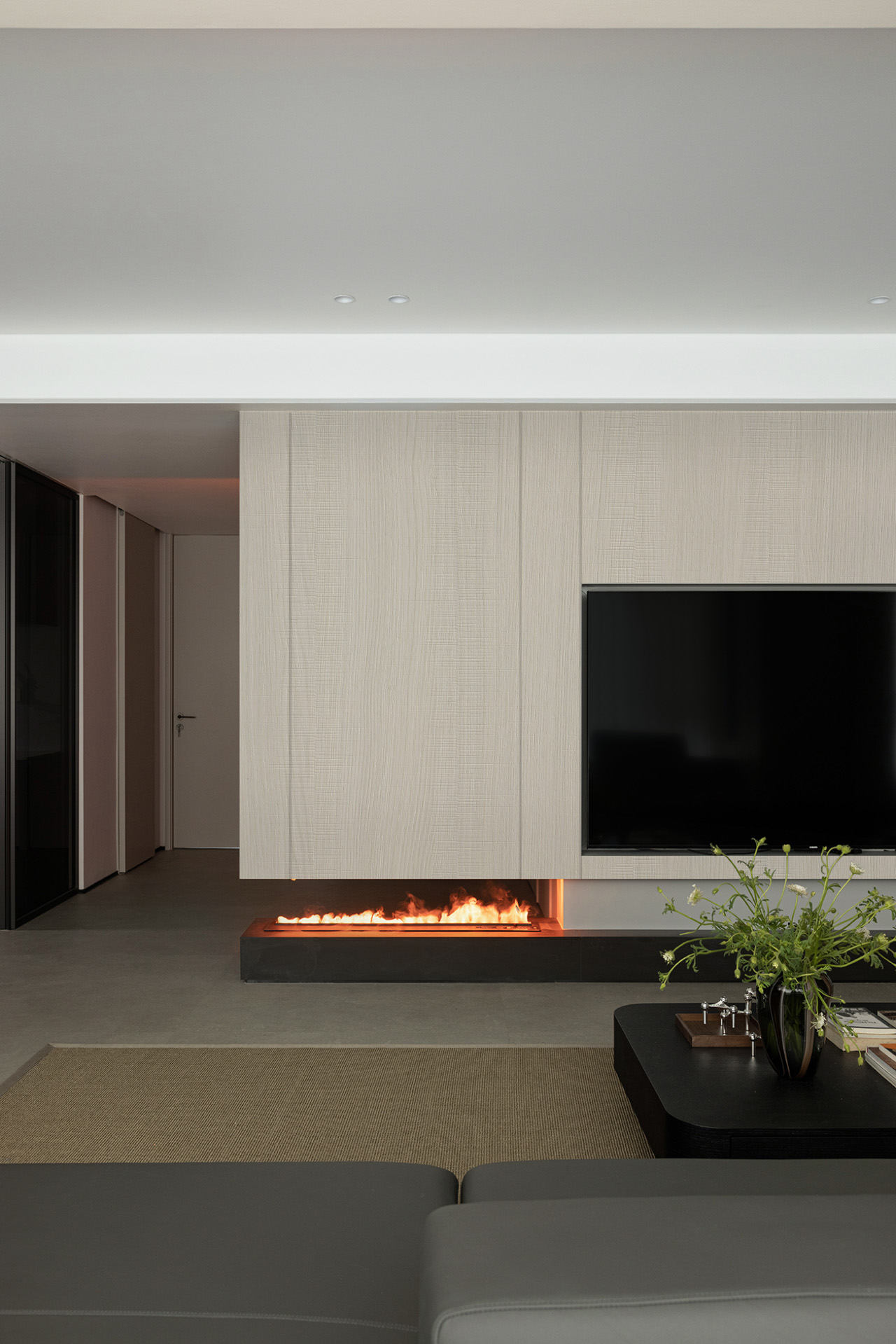
But designers and homeowners often overlook one issue: the "realism" of wood texture is lost gradually, not suddenly.
It does not suddenly become "worn out" one day; it is consumed little by little through daily use–starting with blurred edges, then fading colour, and finally losing surface texture.
Throughout this process, the owner may not even notice, but one day looking back, they will find, "How did the wood grain become so worn?"
The following sections break down, from the four stages of wood texture "wear" in real‑world usage scenarios, how this data slows the loss of wood grain realism.
Stage One: Wood Texture "Scratched Away"
The visual realism of wood texture depends on the integrity of the printed layer.
Once the printed layer is scratched, the continuity of the wood grain is "cut off"–a white scratch running across the grain appears visually like a "wound."
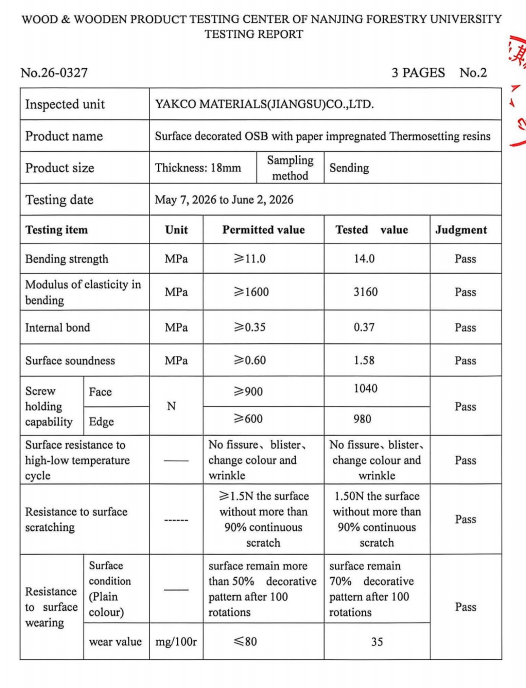
YAKCO achieved 1.5N in resistance to surface scratching, meaning no more than 90% continuous scratch under the standard load.
Metal corners during furniture moving, keys and zippers in daily use–when these hard objects slide across the wood texture surface, they do not leave long, deep continuous scars, only extremely slight and discontinuous marks.
The continuity of the wood texture is not broken, and the realism remains intact.
Stage Two: Wood Texture "Stained Away"
The light areas of wood texture–the pale yellow base of oak, the light pink base of cherry–once liquid stains penetrate, they form yellow marks.
Once the base colour of the light areas changes, the "naturalness" of the wood texture disappears, replaced by a feeling of "dirtiness."
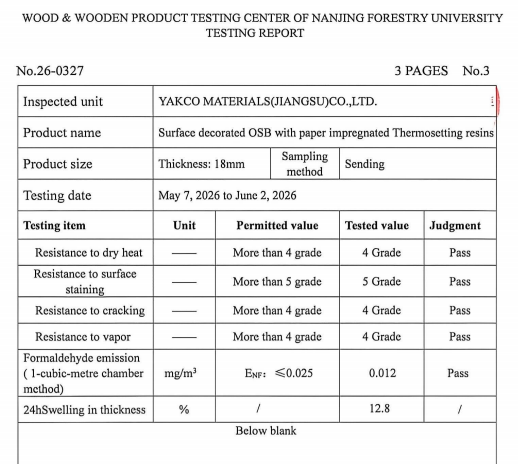
YAKCO achieved Grade 5 in resistance to surface staining (the highest level).
When liquids such as coffee, red wine, and soy sauce are spilled on the wood texture surface, they can be wiped clean with a damp cloth–no staining, no rings.
The light‑coloured base is not eroded, and the "naturalness" of the wood texture is not destroyed by liquids.
Stage Three: Wood Texture"Worn Away"
The surface of wood texture is not completely flat–synchronised embossing makes the texture and sense of concave-convex align, with the texture areas slightly recessed and the annual ring areas slightly raised.
These microscopic rise and fall are the source of wood grain "realism."
But if wear resistance is insufficient, these microscopic rise and fall are gradually worn down by daily wiping–from "concave-convex " to "touchable flatness," and the realism of the wood texture disappears.
YAKCO achieved a wear value of only 35 mg/100r, far better than the national standard requirement of ≤80 mg/100r.
Even with daily cleaning and wiping, the microscopic rise and fall of the wood texture remain clear.
The vessel texture of oak is not flattened, the annual ring rise and fall of walnut are not polished away, and the "tactile realism" of the wood texture remains after years.
Stage Four: Wood Texture "Pressed Away"
There is also an invisible support for the realism of wood texture: the stability of the substrate.
If the substrate undergoes slight deformation over long‑term use, micro‑cracks appear on the decorative layer–invisible to the naked eye, but they accelerate the wear of the wood grain, deepen scratches, and expand channels for liquid penetration.
YAKCO's substrate has a stable density of 0.72 g/cm³and internal bond of 0.37 MPa, ensuring that the wood texture surface does not develop micro‑cracks due to substrate deformation over long‑term use.
A stable substrate allows the "realism" of the wood texture to be "preserved."
From Installation to Use: The "Preservation Cycle" of Wood Texture Realism
The realism of a wood texture board enters a "wear cycle" from the day of installation.
In commercial spaces, the "half‑life" of realism for ordinary wood texture boards is about 2‑3 years–after 2 years, the edges of the wood texture begin to blur and the tactile feel begins to flatten.
The "half‑life" of realism for YAKCO wood texture boards can be extended to 5 years or more.
For hotel guest rooms, high‑end residences, and commercial spaces, this means that the "freshness" of the wood texture lasts longer, the refurbishment cycle is extended, and overall maintenance costs are reduced accordingly.
Conclusion: The "Realism" of Wood Texture Is Protected
The "realism" of wood texture is not static–it can be damaged in the first year, or it can remain like new in the fifth year.
The difference lies in whether there is a set of data to "protect" it–to prevent it from being scratched away, stained away, worn away, or pressed away.
When a designer says, "I want the realism of wood texture," YAKCO provides an answer with data–an answer that does not require choosing between "aesthetic effect" and "long‑term durability."
More:3D Embossed Wood Melamine Faced Board