中文简体
中文简体






Previous Post
What makes 3D embossed wood texture melamine panels so captivating is their ability to break through the limitations of "flat decoration" found in traditional decorative panels – when you glide your finger across the surface, you can clearly feel the undulating texture, the recessed pores, and the winding grain, achieving a perfect unity of visual and tactile experience.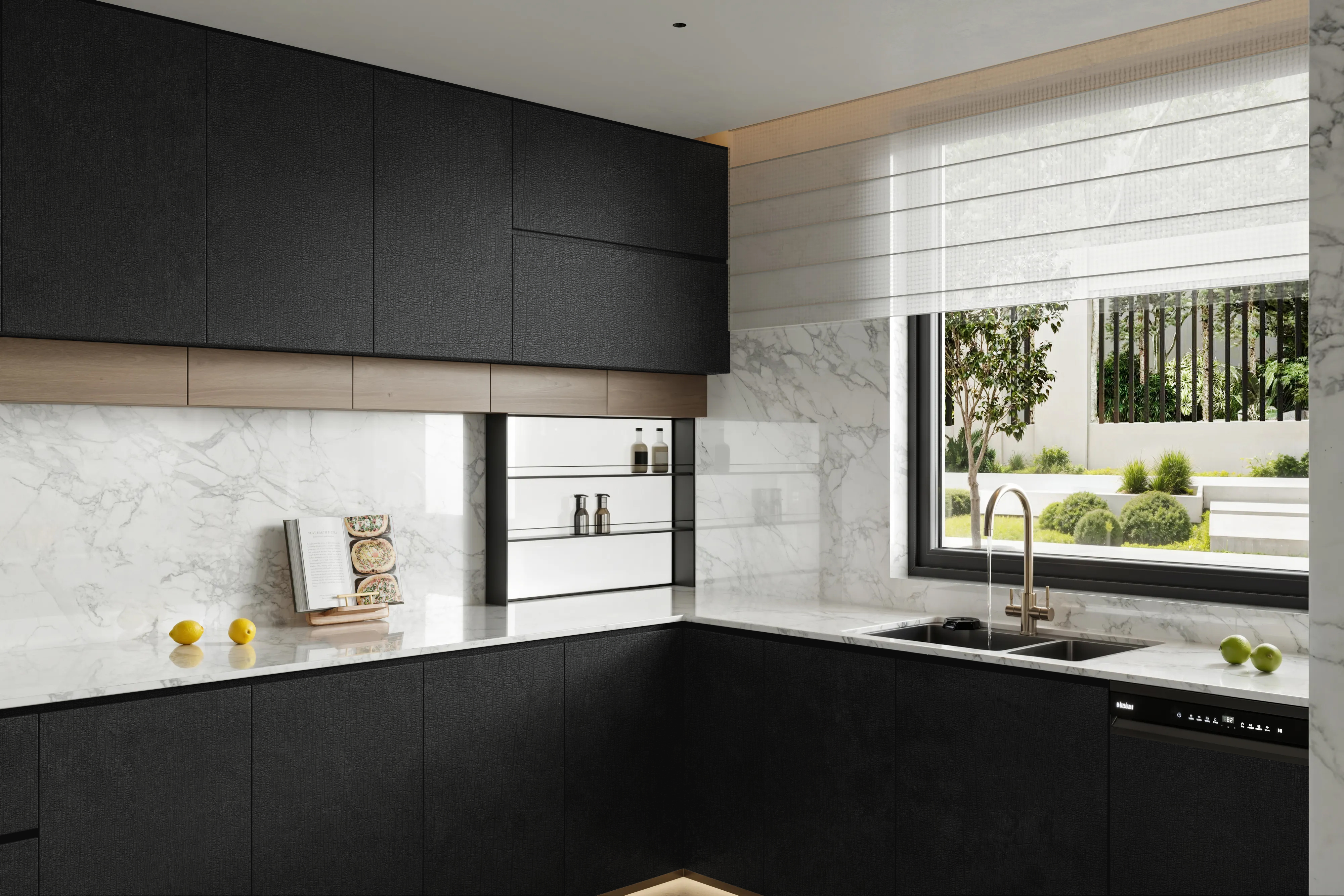
However, while deep embossing endows the panel with an exceptional tactile quality, it also creates varying degrees of "stress concentration zones" on the substrate surface – the deeper the embossing, the greater the structural change to the substrate surface. If the substrate's own bending strength, modulus of elasticity, and internal bond strength are insufficient, the embossed areas are prone to deformation, spring-back, or even cracking under stress or environmental changes.
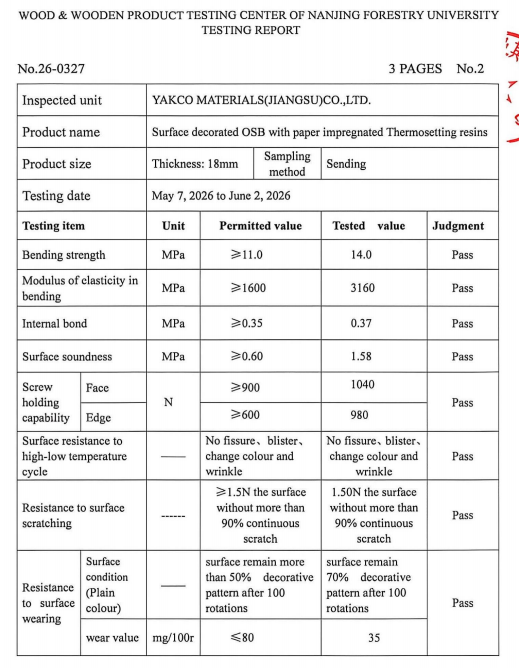
The mechanical data in the test report serve as the scientific yardstick for measuring whether this "structural aesthetics" is robust.
More:yakco technology
Bending Strength: The "Flexural Skeleton" of 3D Embossing
Bending strength reflects the panel's ability to resist fracture when subjected to external bending forces.
For 3D deep-embossed panels, the raised and recessed texture means the panel surface is not a completely uniform plane, and stress distribution becomes more complex under load.
The standard requires bending strength ≥ 11.0 MPa, and the tested value reached 14.0 MPa–exceeding the requirement by 27%.
This means that even with deep embossing on the surface, the panel still maintains sufficient structural rigidity under load (e.g., bookshelves, desktops), preventing premature fracture or irreversible deformation due to stress concentration at embossed areas.
Modulus of Elasticity in Bending: The "Shape Memory" of Embossed Ridges
The modulus of elasticity measures the panel's ability to return to its original shape after deformation under load – the higher the value, the greater the resistance to deformation, and the less likely it is to undergo permanent bending from its own weight or external forces.
The standard requires ≥ 1600 MPa, and the tested value reached 3160 MPa – nearly double the standard.
For 3D embossed melamine panels, the significance of this data is particularly pronounced: with microscopic raised and recessed structures on the surface, high modulus of elasticity ensures that embossed areas do not gradually flatten due to "creep" from long-term cabinet door weight, shelf loads, or temperature changes.
The ridges of the three-dimensional wood grain maintain their initial sharp clarity year after year, never losing their "three-dimensionality."
Internal Bond Strength: The "Interlayer Stability" of Embossed Protrusions and Depressions
Internal bond strength measures the bonding integrity between the internal layers of the substrate.
During the hot-pressing process of deep embossing, significant pressure is applied to the substrate surface; if internal bond strength is insufficient, the interlayer structure at the embossed protrusions may develop micro-cracks or loosening.
The standard requires internal bond strength ≥ 0.35 MPa, and the tested value was 0.37 MPa – exceeding the requirement.
This value ensures that the internal layers are tightly bonded without gaps; even with considerable embossing depth, the substrate will not experience surface blistering or blurred embossing due to delamination.
Substrate Density: The "Underlying Logic" of Embossing Clarity
Substrate density directly affects the forming effect and durability of the embossing.
Too low a density prevents clear embossing; too high a density increases machining difficulty and panel weight.
The product's density measured 0.72 g/cm³, placing it in the upper-middle range of the national standard, balancing embossing definition and processability.
Uniform density ensures that embossing depth and clarity are highly consistent across different areas of the same panel, avoiding localised collapse or blurred grain.
Surface Soundness: The "Bonding Strength" Between the Embossed Decorative Layer and the Substrate
The decorative layer on deep embossed surfaces is stretched or compressed in the embossed areas, placing higher demands on bonding strength.
The tested surface soundness reached 1.58 MPa– 2.6 times the standard value.
This data means that even at the deepest embossing points (such as recessed wood pores), the decorative paper remains tightly adhered to the substrate, with no delamination, blistering, or edge curling.
Every stretch of the decorative layer during the embossing process is backed by sufficient bonding strength.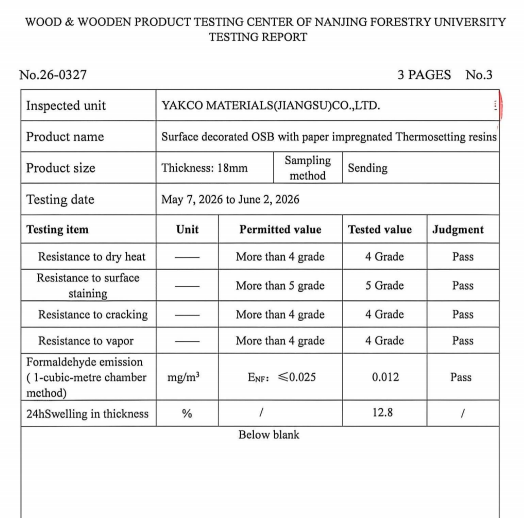
Conclusion
The aesthetic appeal of 3D Embossed Wood Texture Melamine Panel lies in making wood grain come alive–but true industrial quality lies in ensuring that this "living" three-dimensionality does not collapse, deform, or blur over decades of use.
Bending strength of 14.0 MPa, modulus of elasticity of 3160 MPa, internal bond strength of 0.37 MPa, density of 0.72 g/cm³, and surface soundness of 1.58 MPa – each data point reinforces the "skeleton" of the embossing.
When choosing 3D embossed panels, remember: the visible depth of the texture depends on the invisible mechanical strength.
Only a structurally sound substrate can support a three-dimensional beauty that withstands the touch of time.