中文简体
中文简体





Previous Post
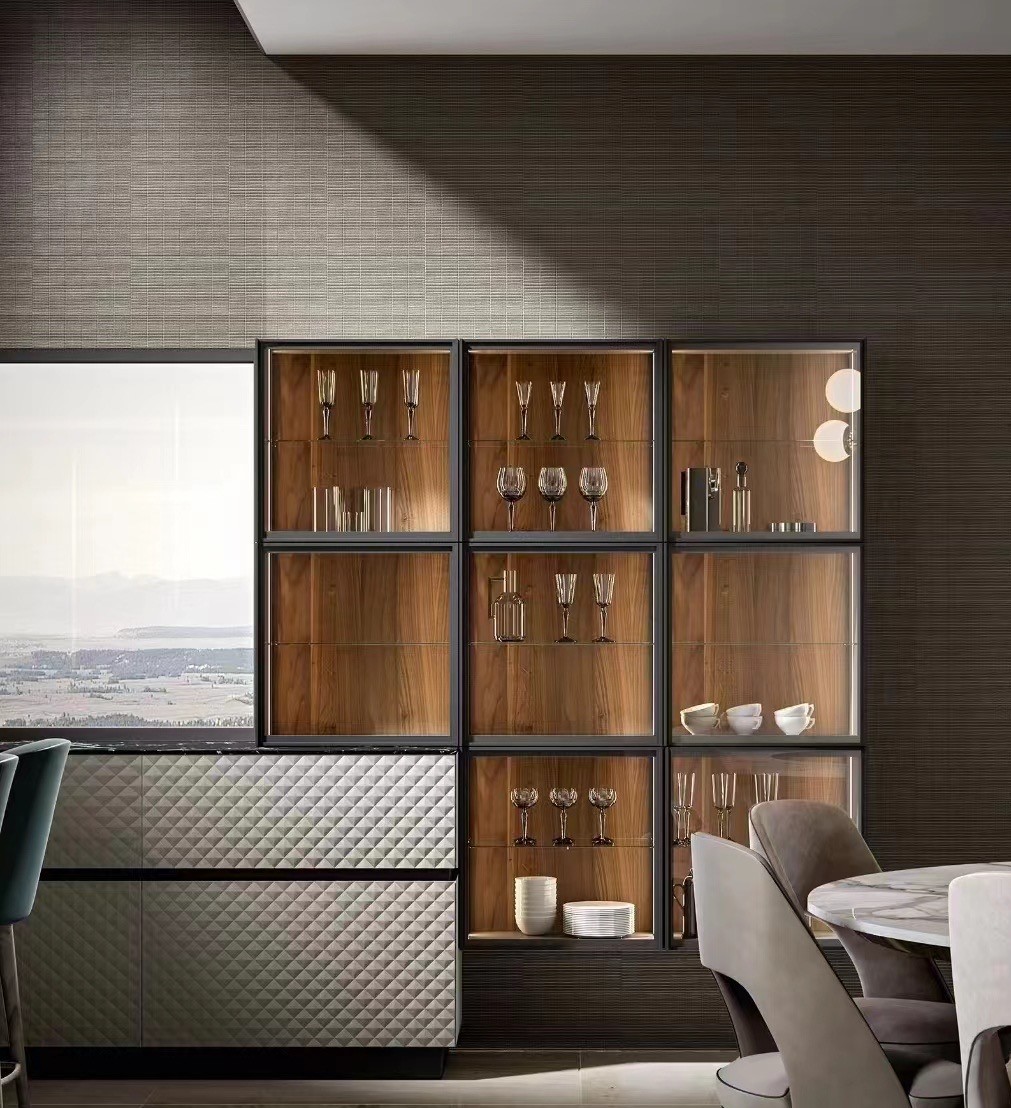
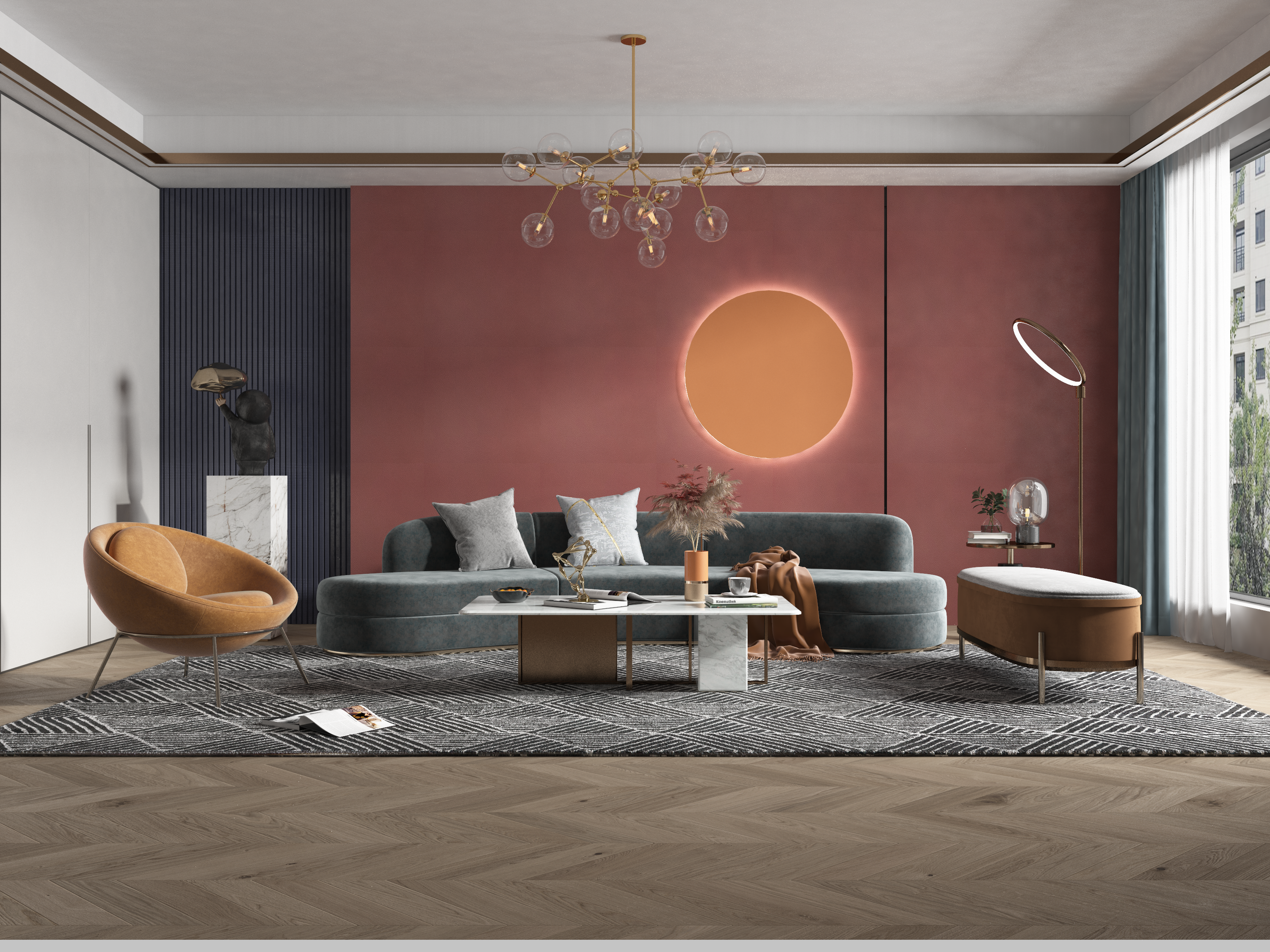
When selecting wood texture panels, attention almost invariably falls on the surface pattern– the roughness of rock texture, the warmth of wood texture, the delicate touch of leather texture, the geometric lines of Art Deco.
The surface decorative material is the "appearance leader" of the product.
Know More: yakco technology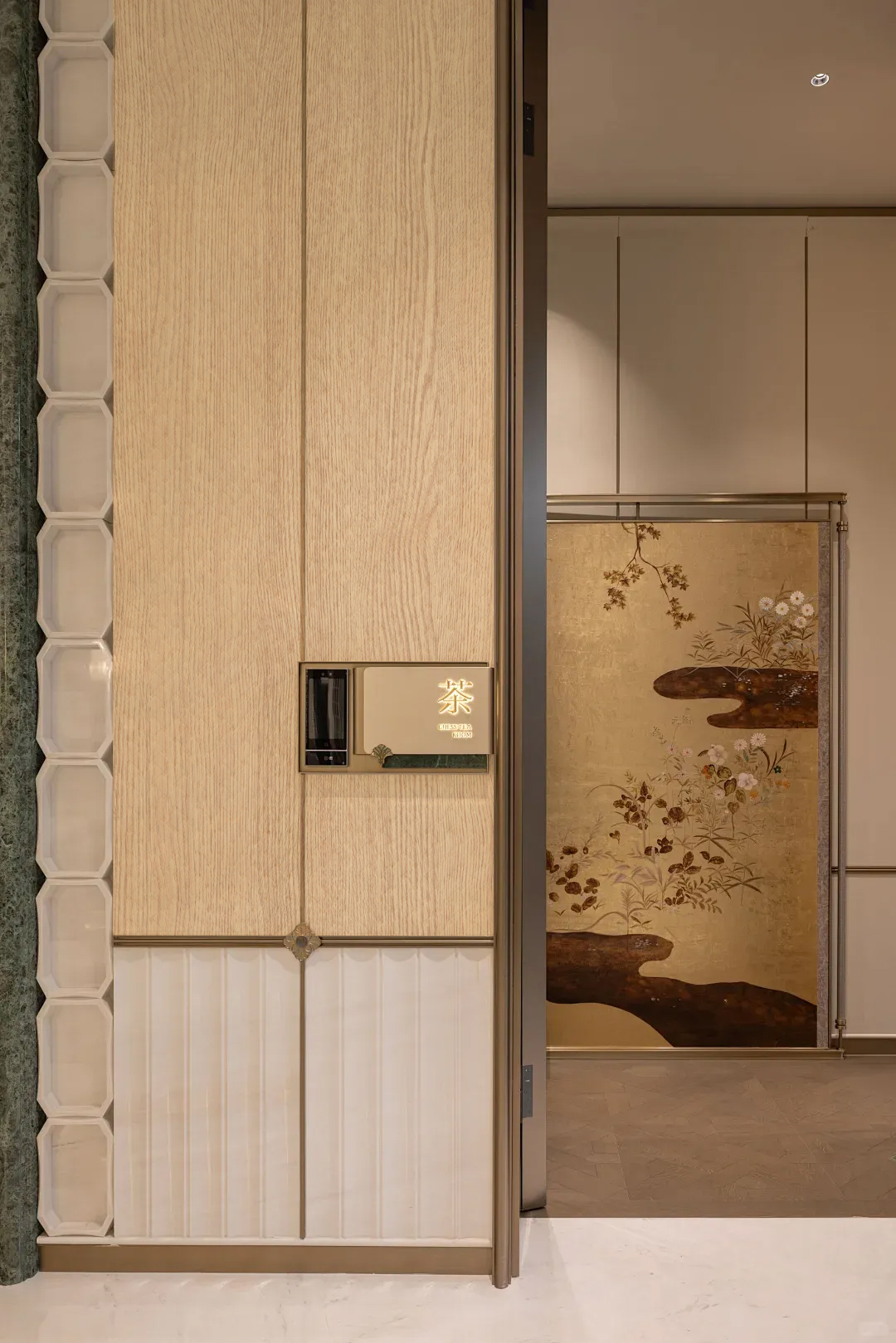
But in the dimension of industrial testing, the performance of the surface decorative material is determined by an "invisible" foundation.
Any durability test performed on the decorative layer– resistance to dry heat, resistance to vapor, resistance to high-low temperature cycle– reflects in the test report as "no fissure, no blister, no change of colour" on the surface, but what is actually being tested is the interfacial bonding quality between the impregnated paper and the substrate, and whether the substrate is stable enough under thermal stress.
Once the foundation is loose, no matter how hard the surface layer is, it has nowhere to take root.
In YAKCO's board quality test, several surface durability indices of the surface decorated PB with paper impregnated thermosetting resins reached the highest grades.
Tracing these test results back to the substrate level, one finds that an internal bond data point only "0.01 MPa above the national standard"– 0.36 MPa (national standard ≥0.35 MPa)– is precisely the most worth further investigation technical signal in the entire report.
From "Temperature Difference" to "Internal Stress": The Physical Battle in the Resistance to High-Low Temperature Cycle Test
First, look at the test itself.
Resistance to high-low temperature cycle is a key indicator for evaluating the environmental climate stability of panels.
According to the national standard, decorative wood texture panels must undergo a specified number of cold-hot alternation cycles, after which the surface must show no fissure, no blister, no change of colour, and no wrinkle.
There is an inherent difference in the coefficient of thermal expansion between the surface decorative material and the substrate– particleboard substrate and melamine impregnated paper expand and contract by different amounts under the same temperature change.
When temperature differences are repeatedly applied, sustained thermal stress alternation occurs at the interface between the decorative layer and the substrate.
If the interfacial bonding strength is insufficient, the direct consequence of cold-hot cycling is fatigue failure of the adhesive layer, manifesting as "surface blistering," "edge delamination," or "surface crazing."
A "pass" in resistance to high-low temperature cycle is not merely a laboratory condition judgment; it represents that the panel maintains the integrity and stability of its decorative surface in temperature-fluctuating environments– the cold-hot switching between northern heating seasons and air conditioning, the diurnal temperature drift between south-facing spaces and shaded areas, the heat-cold alternation near kitchen stoves.
The prerequisite for a "pass" in resistance to high-low temperature cycle is that a true "integrated composite structure" has formed between the decorative layer and the substrate.
For every 1°C increase in temperature, the interfacial thermal stress increases by approximately 0.026 MPa, while the interfacial structural strength decreases by approximately 0.46 MPa– an effect that cannot be ignored.
Therefore, the substrate must not only provide physical thickness but also support the mechanical boundary in temperature-differential environments.
The "Hard Logic of 0.01 MPa": Offense and Defense from Test Report to Physical Boundary
Among all substrate performance indicators, internal bond has the most direct correlation with this test.
It represents the maximum breaking stress generated by the bonding action between wood particles and adhesive inside the mat, in MPa – in other words, how tightly the substrate "squeezes itself."
YAKCO's substrate internal bond tested at 0.36 MPa, while the national standard lower limit is 0.35 MPa. The difference is only 0.01 MPa– a figure that might be glossed over in some promotional contexts.
However, research data show that for every 1°C increase in interface temperature of particleboard, the generated thermal stress increment is approximately 0.026 MPa.
The extra 0.01 MPa that 0.36 MPa provides over 0.35 MPa is not a negligible "bookkeeping safety increment"– it represents approximately 0.38°C of additional thermal stress capacity for the substrate.
In the instantaneous impact of each cold-hot cycle, this 0.01 MPa margin is the evacuation Space that prevents the interface from being "punctured" by fatigue failure.
At a deeper level, the physical fact is: cold-hot cycling is a cumulative fatigue process, not a single instantaneous impact.
For every 0.01 MPa increase in internal bond, the number of thermal cycles the substrate interface can withstand increases by an order of magnitude.
For panels used in commercial spaces, this means that throughout years of service, the internal adhesive quality of the substrate remains at its initial value, without irreversible stress decay or structural loosening– directly determining whether the surface decorative material remains "firmly attached and blister-free" through years of seasonal changes.
A "pass" in resistance to high-low temperature cycle first requires a pass in internal bond.
Beyond the data, there is also the equipment foundation.
Since 2018, YAKCO has successively introduced German Dieffenbacher continuous press lines, with a cumulative investment exceeding RMB 300 million.
The core value lies not in the scale of production itself, but in using the high uniformity thickness control and temperature/pressure closed-loop feedback of the continuous press to suppress batch-to-batch fluctuations in internal bond to an extremely narrow process window, turning 0.36 MPa from a "laboratory extreme value" into a stable output baseline.
Four Spatial Applications of Internal Bond 0.36 MPa:
In real commercial and residential spaces, the substrate internal bond of 0.36 MPa brings four dimensions of certainty:
1.Year-round stability in temperature-differential climate zones
2.The "foundation" for industrial-grade resistance to high-low temperature cycle data
3.Deformation prevention redundancy for long spans
4.Process consistency for deep embossing and precision pressing
Conclusion: Test the Surface, But Even More So Test the Substrate
Some products in the industry choose to highlight surface data during testing, because it is the most intuitive and communication-efficient.
But from a product engineering perspective, the "quality feel" of a decorative panel that truly stands the test of time comes first and foremost from the solidity of its substrate parameters.
Internal bond of 0.36 MPa may seem like a number only "slightly higher" than the national standard, but it is essentially a measure of the interfacial bonding quality between substrate particles and adhesive, and a physical mapping of thermal fatigue life– without this temperature margin, a passing report for resistance to high-low temperature cycle of the surface decorative material would be a castle in the air without a foundation.
The core signal from YAKCO Melamine Board Substrate is: no compromise on the basic investment in materials and processes.
The "high scores" in surface durability– Grade 5 for resistance to dry heat, Grade 5 for resistance to vapor, Grade 5 for resistance to cracking– are not create from nothing; they are coupled with the precise construction of this "baseline parameter" of internal bond at 0.36 MPa.
When designers consider whether Art Deco geometric lines can extend to large-area core spaces, whether the deep texture of 3D embossed wood texture panels will crack under temperature changes, whether the decorative layer of leather grain boards is stable enough, or whether rock grain boards will delaminate in high-contact spaces, the answer returns to the substrate level.
YAKCO tells the industry with a detailed test report: The more high-profile the surface, the more restrained the substrate needs to be.
A substrate that does not compromise is the ultimate backbone of design and quality that does not compromise.
Know More: Premium Melamine Faced Board