中文简体
中文简体





Previous Post
In today’s furniture and interior design industry, wood remains one of the most influential materials for creating warmth, authenticity, and a connection with nature. Yet modern designers and manufacturers are no longer looking for wood appearance alone. They increasingly expect decorative surfaces to combine realistic texture, tactile depth, consistent quality, manufacturing efficiency, and reliable long-term performance.
This shift is transforming the role of wood-effect decorative surfaces. Instead of simply reproducing the visual pattern of timber, advanced wood design melamine boards are becoming engineered surface solutions that bring together the visual character of natural wood and the functional advantages of modern decorative materials.
YAKCO Wood Design Melamine Board is developed around this concept. By combining wood-inspired decorative designs with engineered surface technology and performance-oriented substrates, YAKCO aims to create furniture and interior surfaces that look natural, feel authentic, and perform reliably in demanding applications.
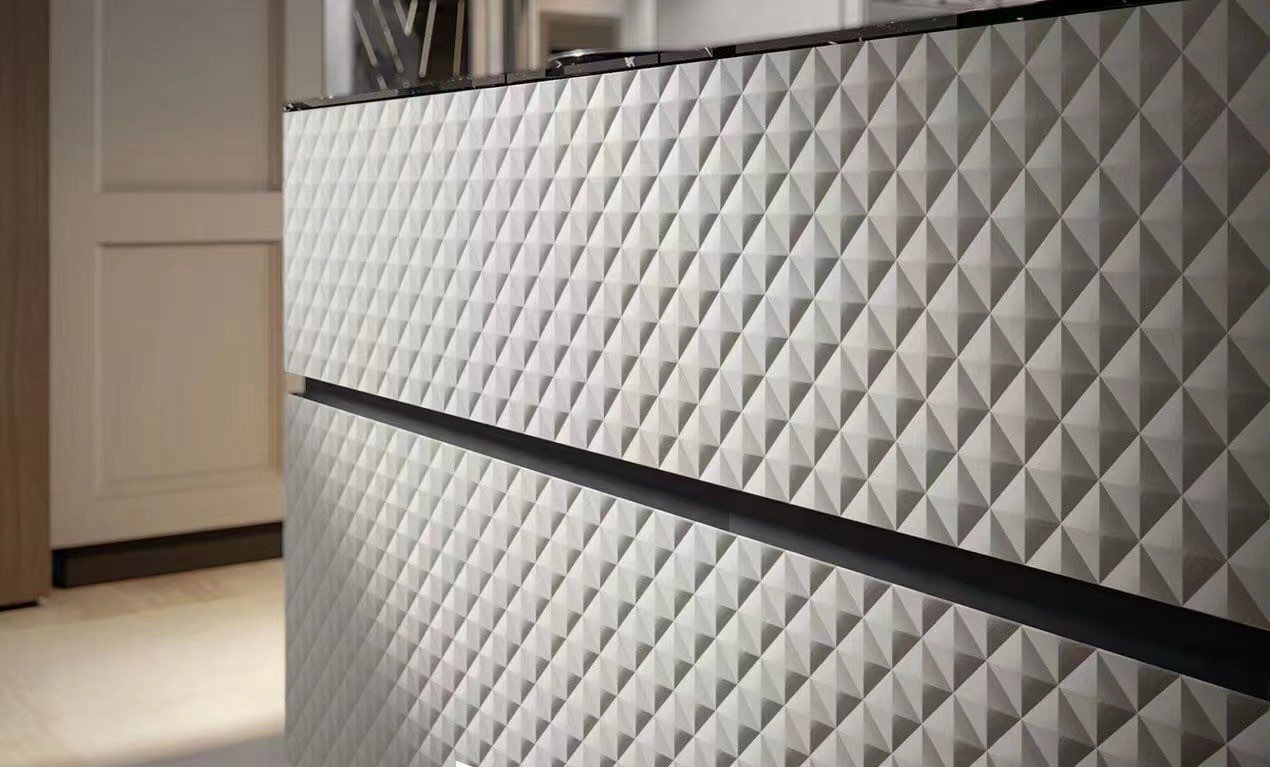
To know more about yakco 3D Embossed Wood Board
From Wood Appearance to Multi-Sensory Wood Design
Traditional wood-effect panels have often relied primarily on printed grain patterns. While high-resolution printing can reproduce the appearance of timber, a purely visual approach has limitations. When users touch the surface, the texture may not correspond naturally with the printed grain, reducing the sense of authenticity.
Modern interior design is moving toward a more complete sensory experience.
Surface texture now plays an important role alongside color, pattern, and form. Designers increasingly consider how a material looks under different lighting conditions, how its texture responds to touch, and how well it maintains its appearance during everyday use.
This is particularly important for wood-inspired surfaces. Natural timber is valued not only for its color and grain but also for its tactile irregularities, pores, growth patterns, and three-dimensional character.
YAKCO Wood Design Melamine Board responds to this design direction by treating wood texture as a three-dimensional surface experience rather than simply a printed image. The result is a more convincing visual and tactile interpretation of natural wood for contemporary furniture and interior applications.
Reinterpreting Natural Wood Through Engineered Surface Technology
The appeal of natural wood comes from its individuality. Every species presents its own combination of grain direction, pores, knots, growth patterns, color variations, and tactile characteristics.
Replicating these qualities consistently at an industrial scale requires much more than decorative printing.
YAKCO’s approach combines decorative surface design with precision embossing and lamination technology to create dimensional wood textures. Instead of leaving the surface completely flat, the embossing structure adds physical depth to the decorative layer, allowing the visual grain and tactile surface to work together.
This design philosophy creates several important advantages:
- More realistic wood grain perception
- Greater tactile depth and surface definition
- Stronger visual interaction with light and shadow
- More consistent appearance across production batches
- Greater design flexibility for modern furniture
The objective is not to reproduce one specific piece of timber perfectly. It is to translate the visual language and tactile qualities of natural wood into an engineered decorative material that is suitable for modern manufacturing.
Why Texture Matters in Premium Furniture Design
Texture has become an increasingly important tool for differentiating furniture products.
Smooth surfaces can create a clean and minimalist aesthetic, but textured finishes provide another dimension. They can make large furniture surfaces appear warmer, more natural, and more visually sophisticated. Texture can also enhance perceived material value by creating an interaction between light, shadow, and touch.
For wood-inspired furniture, this is especially significant.
A well-designed wood surface can transform a basic cabinet into a visually richer product. A deep grain can emphasize vertical proportions on wardrobes. A natural-looking texture can add warmth to contemporary kitchens. A subtle tactile structure can introduce material contrast into minimalist interiors.
This makes Wood Design Melamine Board particularly relevant to furniture brands that are seeking differentiation through surface design rather than relying solely on structural changes.
Combining Natural Aesthetics with Manufacturing Efficiency
One of the biggest challenges of using natural wood is balancing aesthetic requirements with industrial production.
Natural timber can vary significantly in color, grain structure, moisture content, and dimensional behavior. These characteristics contribute to its appeal, but they can also create challenges for large-scale furniture production.
Engineered decorative boards offer a more controlled alternative.
YAKCO Wood Design Melamine Board is designed to support standardized manufacturing while maintaining a wood-inspired premium appearance. For furniture manufacturers, consistency is particularly valuable when producing large quantities of wardrobes, cabinets, office furniture, hotel furniture, or retail fixtures.
A controlled decorative surface can help manufacturers achieve:
- Consistent visual quality
- Stable dimensions
- Efficient CNC machining
- Compatibility with modern furniture production processes
- Reliable edge-banding and component processing
- Improved repeatability across production runs
This combination of decorative performance and manufacturing consistency allows designers to use sophisticated wood aesthetics without depending entirely on the variability of natural timber.
Performance Beyond Appearance
A premium decorative surface must do more than look attractive.
Furniture is exposed to scratches, abrasion, stains, heat, moisture, cleaning, and repeated handling throughout its service life. Therefore, the value of a decorative board depends not only on design but also on the substrate and surface performance supporting that design.
YAKCO’s available test data provides a useful performance reference for its surface-decorated particleboard substrate.
According to Test Report No. 25-0494, an 18 mm surface-decorated particleboard sample was tested according to GB/T 15102-2017. The reported tested values included a bending strength of 29.8 MPa, modulus of elasticity in bending of 4240 MPa, internal bond strength of 0.36 MPa, and 2-hour thickness swelling of 1.0%. The sample showed a moisture content of 5.3% and a density of 0.72 g/cm³.
The same report also recorded screw-holding capability of 1110 N on the face and 860 N on the edge. Surface performance testing recorded a passing result at 1.50 N for scratch resistance, while surface wear testing reported no show-through after 350 rotations and a wear value of 57 mg/100r.
Additional testing showed Grade 4 resistance to cigarette burns and surface staining, while dry heat resistance, cracking resistance, and vapor resistance reached Grade 5.
These test results should be understood as performance data for the tested surface-decorated particleboard sample rather than automatically representing every YAKCO Wood Design Melamine Board specification. However, they demonstrate the type of substrate and surface-performance foundation that can support YAKCO’s engineered decorative board solutions.
Wood Design for Contemporary Furniture Applications
The design possibilities of wood-effect melamine boards extend far beyond traditional furniture styles.
Residential Furniture
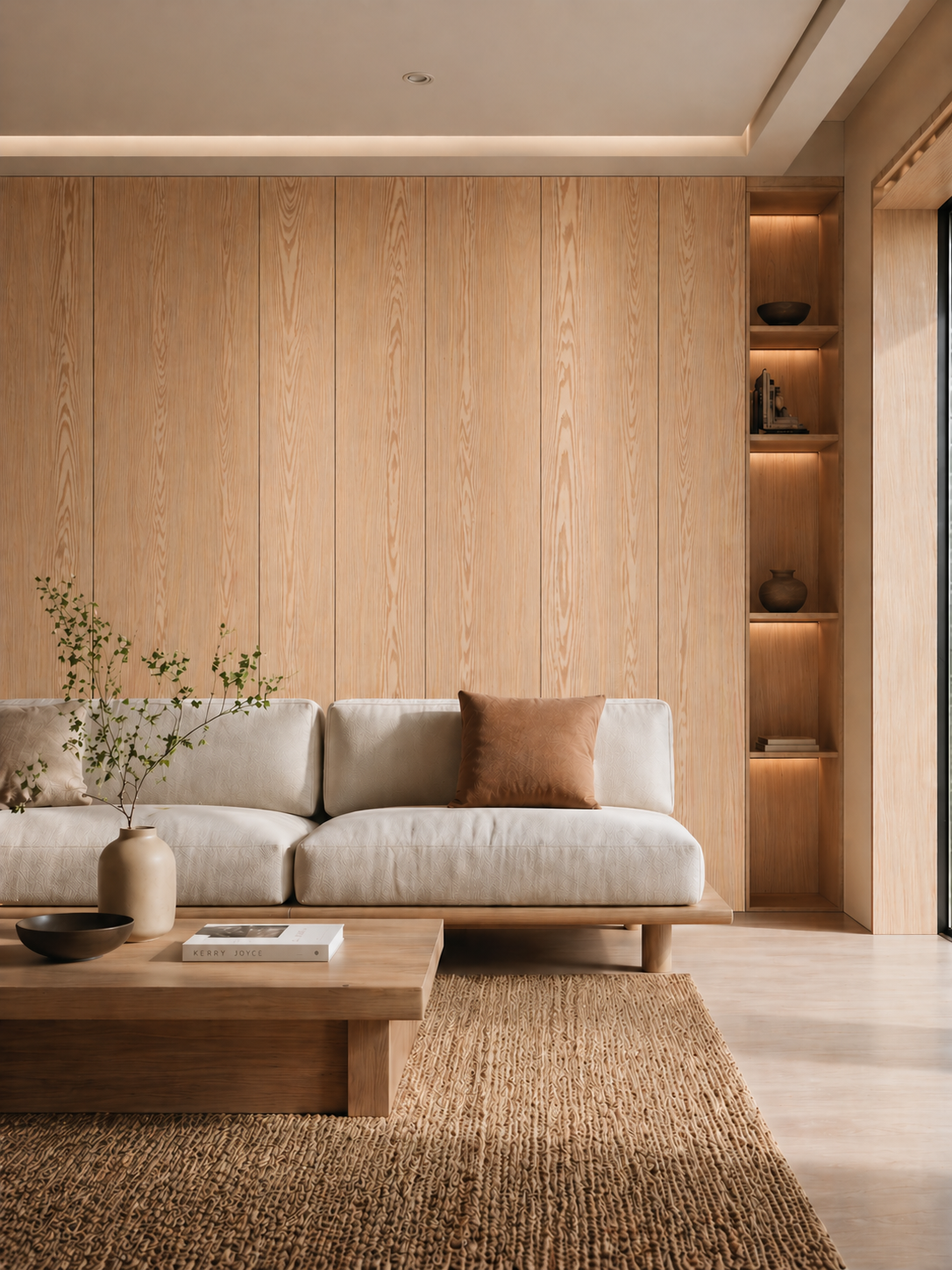
In residential interiors, Wood Design Melamine Board can be used for wardrobes, kitchens, TV cabinets, bedroom furniture, shelving, storage systems, and customized cabinetry.
Natural wood-inspired surfaces work particularly well with contemporary, minimalist, Scandinavian, Japandi, and modern luxury interiors, where material authenticity is important but visual simplicity remains essential.
Hospitality Interiors
Hotels and hospitality projects require materials that create a premium atmosphere while remaining suitable for repeated use.
Wood textures can bring warmth to guest rooms, reception desks, wardrobes, wall features, and public areas. Compared with solid timber solutions, engineered decorative boards can also support more standardized production and installation.
Retail and Commercial Spaces
Retail environments increasingly use material design to communicate brand identity.
Wood-inspired decorative surfaces can create a natural, premium, or craft-oriented atmosphere for boutiques, restaurants, cafés, offices, and branded commercial interiors. By combining texture with carefully selected colors and furniture forms, designers can create a stronger and more memorable spatial identity.
High-End Customized Furniture
Customization is another area where engineered wood-effect boards offer considerable value.
Furniture brands can combine different wood species, grain directions, colors, and embossed structures to develop distinct collections. This allows surface design to become a core part of product differentiation rather than simply a finishing option.
A More Flexible Approach to Wood-Inspired Design
One of the most important advantages of engineered decorative wood surfaces is design flexibility.
Natural wood is limited by the properties and availability of particular species. A melamine decorative surface, by contrast, can reinterpret wood aesthetics through different combinations of color, grain, texture, and embossing depth.
Designers can therefore move beyond traditional “light oak” or “dark walnut” concepts and explore more expressive interpretations of wood:
- Deep and dramatic grain structures
- Fine-pore natural textures
- Rustic timber effects
- Contemporary linear grains
- Warm natural tones
- Dark architectural wood finishes
- Highly tactile three-dimensional surfaces
This creates a broader visual vocabulary for furniture and interior designers.
Designing for the Next Generation of Wood Furniture
The future of furniture surfaces is unlikely to be defined by appearance alone.
As furniture becomes increasingly design-driven and consumers become more sensitive to material authenticity, successful decorative materials will need to balance three dimensions: visual quality, tactile experience, and technical performance.
YAKCO Wood Design Melamine Board reflects this direction.
It combines the visual language of natural wood with engineered surface technology, while the tested substrate data demonstrates the importance of mechanical, dimensional, and surface-performance characteristics in creating a complete decorative board solution.
For furniture manufacturers, this means more than simply replacing solid wood with a printed alternative. It means gaining access to a controlled, scalable, and design-oriented material platform.
For designers, it means greater freedom to explore wood as a visual and tactile language.
For end users, it means furniture that delivers the warmth and character associated with natural wood while offering the consistency and practicality expected from modern engineered materials.
Conclusion
Wood will remain an enduring influence in furniture and interior design, but the way wood aesthetics are expressed is changing.
The next generation of wood-inspired surfaces is moving beyond flat imitation toward richer texture, greater tactile realism, and stronger integration between design and engineering.
YAKCO Wood Design Melamine Board represents this evolution by combining wood-inspired aesthetics with dimensional surface technology, controlled manufacturing, and performance-oriented substrate engineering.
The future of wood design is not simply about making engineered boards look like timber.
It is about making them look natural, feel authentic, perform reliably, and give designers more freedom.
That is where engineered wood design surfaces can create value beyond appearance—and where YAKCO continues to explore the next generation of decorative materials.