中文简体
中文简体





Previous Post
In modern furniture and interior design, wood grain remains one of the most enduring and versatile surface designs.
However, as high-end furniture, bespoke interiors, and commercial spaces demand higher standards for material quality, simply creating a surface that “looks like wood” is no longer enough. Designers and end users are increasingly looking for more authentic grain definition, realistic tactile experiences, and surface materials that combine sophisticated aesthetics with long-term performance.
Against this background, YAKCO Wood Design Melamine Board takes wood-grain design beyond visual decoration. Through deep embossed textures and coordinated grain structures, it creates a surface that comes closer to the natural look and feel of real wood.
To know more about YAKCO 3D Embossed Wood Board
From “Wood Grain Pattern” to “Wood-Like Materiality”
Traditional wood-grain surfaces mainly rely on printed patterns to reproduce the color, grain, knots, and character of natural timber. However, natural wood has one distinctive quality: its texture can be both seen and felt.
When you run your fingers along a piece of natural wood, you can feel the subtle changes in grain direction and depth. Natural growth patterns, knots, vessels, annual rings, cutting marks, and irregular structures further contribute to its unique tactile character.
The design philosophy behind YAKCO Wood Design Melamine Board is not simply to reproduce a wood-grain image. Instead, it combines visual grain with a three-dimensional embossed surface, enhancing the perception of authentic wood texture.
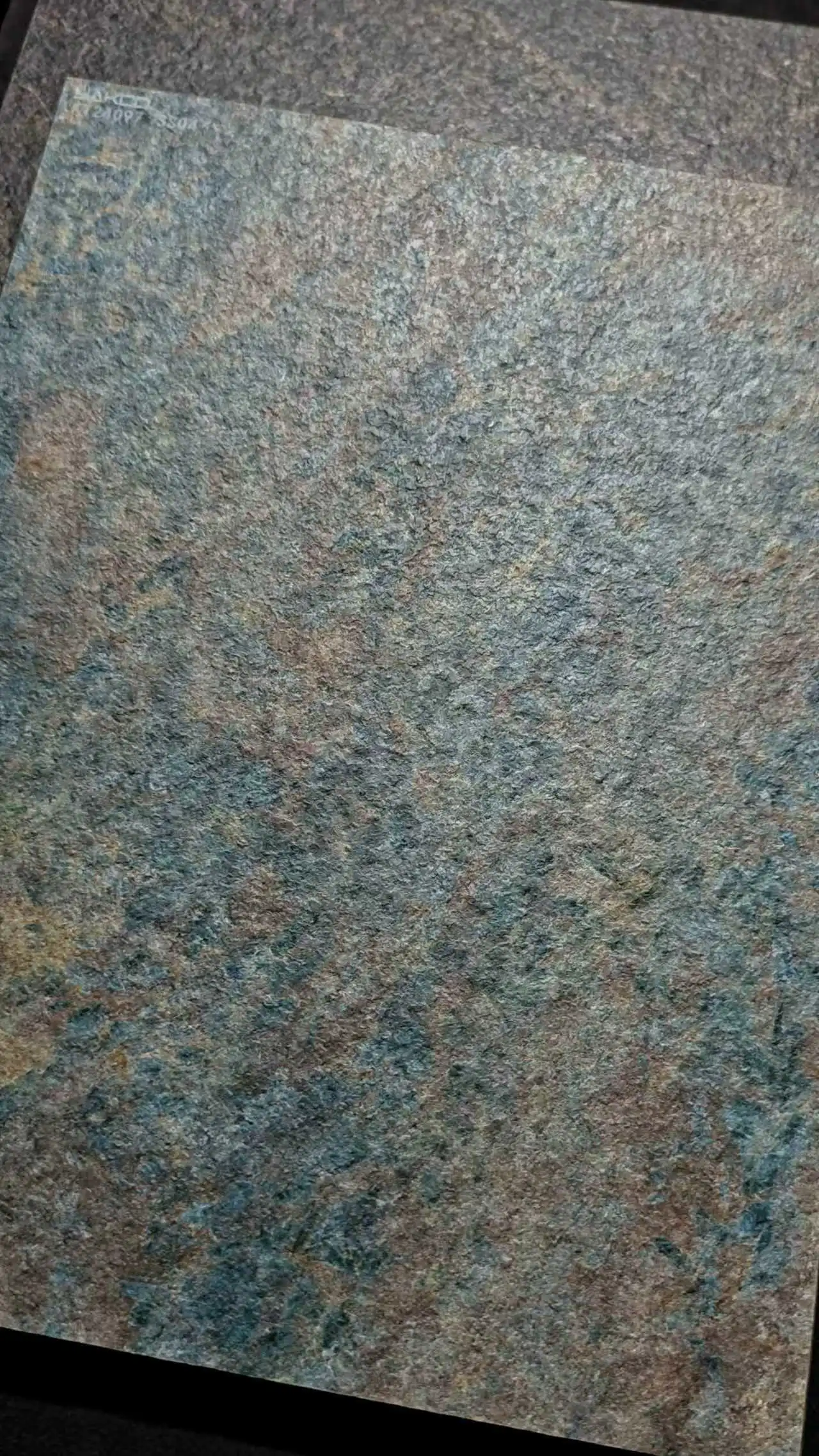
When viewed or touched at close range, the grain does not remain a purely printed image. The surface develops a tangible structure with depth and variation, creating richer highlights, shadows, and tactile feedback.
In this way, a wood-grain melamine board becomes more than a visual substitute for timber—it becomes a distinctive design material in its own right.
Deep Embossing: Redefining the Depth of Wood Grain
For wood-grain surfaces, embossing depth plays an important role in determining their three-dimensional appearance.
Shallow textures can reproduce the visual effect of wood from a distance, but when viewed up close, the surface may still appear relatively flat. A deeper embossed structure, by contrast, creates stronger transitions between light and shadow, giving the grain greater dimensionality.
YAKCO focuses on deep embossing technology to enhance the three-dimensional structure of wood grain and create a more pronounced tactile experience.
Within YAKCO's deep embossed surface technology, texture depths can exceed 50 silk, or 0.5 mm, extending the wood-grain effect from a two-dimensional printed pattern into a three-dimensional tactile surface.
This additional depth not only changes the visual character of the board but also allows designers to work with lighting, viewing angles, and material combinations to create richer spatial effects.
In applications such as cabinet doors, wall panels, and furniture fronts, deep embossed wood grain can produce distinctive directional highlights and shadows, adding greater depth and character to large surfaces.
To know more about YAKCO Technology
Synchronized Visual and Tactile Texture
A premium wood-grain surface is not simply about making the texture as complex as possible. The key lies in the coordination between the printed grain, color, and embossed structure.
YAKCO Wood Design Melamine Board emphasizes the relationship between visual grain and embossed texture, using synchronized texture design to create a more coherent and natural surface.
Wood features such as vessels, annual rings, knots, and cutting marks can be expressed through variations in grain direction, depth, and structure. When the visual pattern and tactile texture correspond naturally, the user experiences the material as a complete surface rather than simply a printed decoration.
This is an important distinction between synchronized embossing and conventional surface embossing.
For designers, this approach not only improves the authenticity of the material but also expands the possibilities of wood-grain applications. Instead of being limited to conventional flat decorative surfaces, wood grain can become a three-dimensional design element for contemporary minimalism, Japandi-inspired interiors, Wabi-Sabi aesthetics, natural interiors, modern woodworking, and high-end bespoke furniture.
Inspired by Natural Wood, Designed for Modern Manufacturing
Natural timber offers an irreplaceable organic beauty, but practical furniture and interior applications also need to address factors such as natural color variation, grain differences, material consistency, and resource efficiency.
Decorative boards offer another possibility: combining the visual character of wood with the consistency of industrial manufacturing.
YAKCO Wood Design Melamine Board uses paper impregnated with thermosetting resins as the decorative surface. The 18 mm double-finished particleboard sample included in Test Report No. 25-0494 was evaluated according to GB/T 15102-2017, covering a range of mechanical and surface-performance properties.
The testing included bending strength, modulus of elasticity in bending, internal bond strength, 2-hour thickness swelling, moisture content, density, screw holding capability, resistance to high-low temperature cycles, surface scratching, surface wearing, cigarette burns, dry heat, staining, cracking, and vapor.
This demonstrates an important principle in modern decorative board development: surface aesthetics and engineering performance need to be considered together.
From Surface Aesthetics to Long-Term Performance
For furniture and interior applications, the value of a decorative surface is not determined by its initial appearance alone.
Kitchen cabinetry, wardrobes, commercial displays, hotel furniture, and wall systems are exposed to friction, scratches, temperature changes, moisture, and everyday stains. Surface durability therefore plays an equally important role.
According to Test Report No. 25-0494, the 18 mm test sample achieved a bending strength of 29.8 MPa, an internal bond strength of 0.36 MPa, and a 2-hour thickness swelling of 1.0%. Its surface-wear test showed no show-through after 350 rotations, with a wear value of 57 mg/100 r. The surface scratching test reached 1.50 N.
Additional surface-performance tests recorded Grade 5 for resistance to dry heat, cracking, and vapor, while resistance to cigarette burns and surface staining achieved Grade 4.
These results demonstrate how decorative design and practical performance can be integrated into the development of a wood-grain surface rather than treating aesthetics and functionality as separate priorities.
Designed for High-End Furniture and Interior Applications
With its realistic wood-grain appearance, dimensional texture, and tested surface performance, YAKCO Wood Design Melamine Board can be applied across a wide range of furniture and interior environments.
For high-end bespoke furniture, deep embossed wood grain can be used on wardrobe doors, kitchen cabinetry, TV units, sideboards, storage systems, and other furniture fronts, adding visual depth and tactile character.
For wall and commercial interiors, large-format applications can further emphasize grain direction and changes in light and shadow, transforming the wall from a simple background into an active part of the interior design.
In hotels, offices, and retail environments, wood-grain surfaces can create a balance between natural warmth and contemporary design while supporting the demands of everyday use and maintenance.
For designers seeking material differentiation, deep embossed wood grain can also be combined with metal, stone, glass, textiles, and other surfaces to create sophisticated material contrasts.
The Next Step in Wood-Grain Surface Design
The future of wood-grain decorative surfaces will not simply be about higher-resolution printing. Increasing attention will be placed on texture depth, tactile experience, synchronized embossing, and overall material performance.
This is the direction explored by YAKCO Wood Design Melamine Board: reproducing not only the color and visual character of timber, but also creating a more convincing three-dimensional surface through deep embossing technology.
When visual appearance, tactile experience, and performance are integrated into one material system, a decorative board becomes more than just a “surface.”
It becomes a language of wood grain within an interior, a tactile element within furniture design, and a material tool that allows designers to explore the balance between natural aesthetics and contemporary manufacturing.
YAKCO Wood Design Melamine Board — bringing wood grain beyond visual appearance and deeper into the tactile experience.
Inspired by natural wood grain, reinterpreted through deep embossing technology, and supported by reliable performance, YAKCO transforms wood-grain melamine boards from conventional decorative surfaces into sophisticated surface solutions for modern furniture and interior design.