中文简体
中文简体






Previous Post
Moisture resistance is one of the most critical weaknesses of surface decorated particleboard with paper impregnated thermosetting resins.
Know More: yakco technology
According to GB/T 15102-2017, the upper limit for 2h swelling in thickness is 8.0%, which is merely a “passing line” for wet areas such as kitchens, bathrooms, and balcony cabinets.
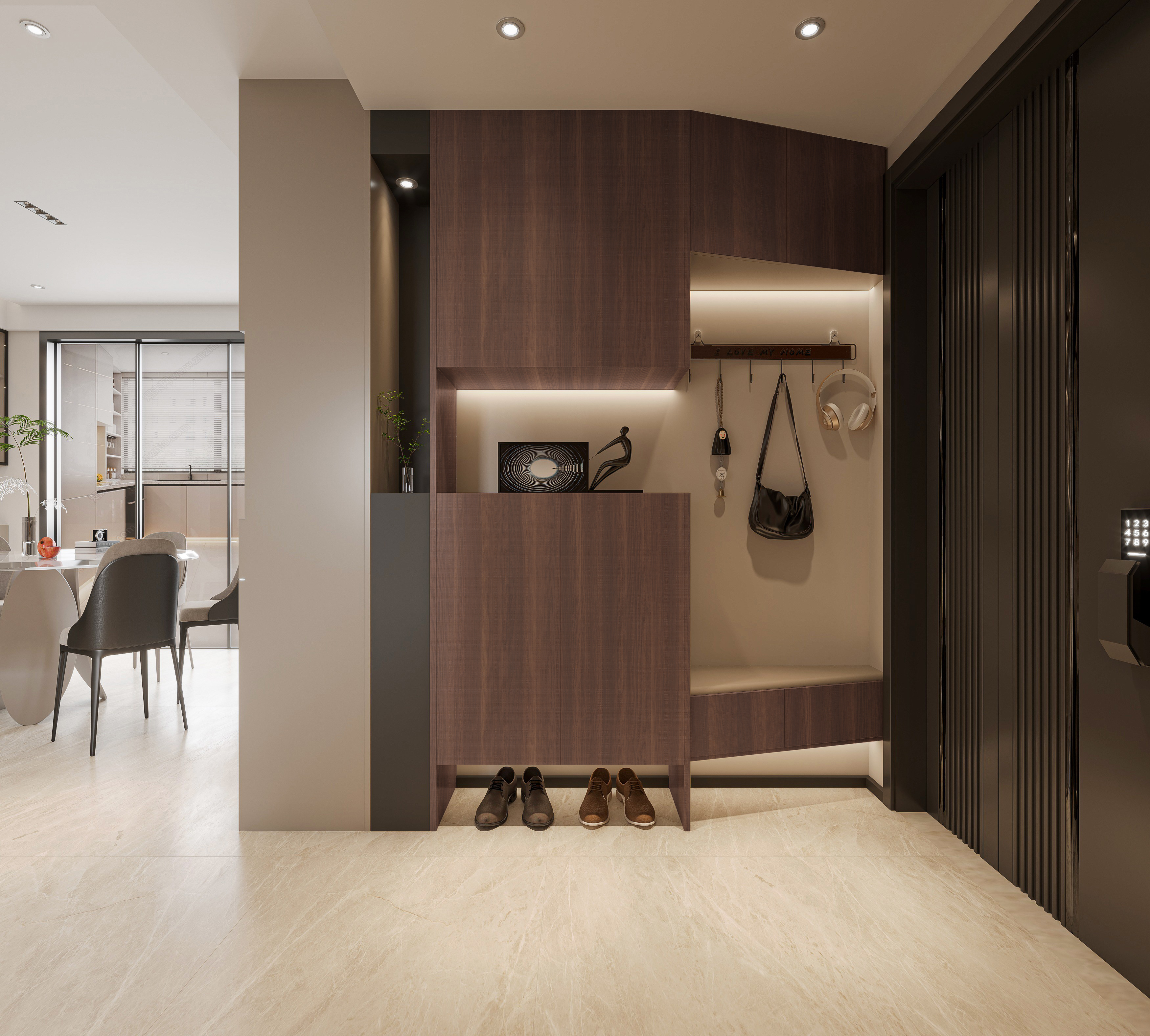
However, in YAKCO’s test report, the tested value is only 1.0%– that is, one-eighth of the national standard limit.
This data difference cannot be explained by simply “adding more moisture repellent.” The following sections break down the core reasons for achieving this low expansion rate from an industrial system perspective.
Why Does Low Swelling Depend on More Than Just Additive Concentration?
The industry typically reduces 2h swelling in thickness by increasing the amount of paraffin wax emulsion or resin adhesive, but this approach has diminishing marginal returns– beyond a certain proportion, not only do costs rise sharply, but it also affects the internal bond and machining performance of the board.
YAKCO’s low swelling is the result of synergistic control across three aspects:
1.Raw material particle size distribution:
Using Russian pine as the main substrate material, whose fiber morphology is regular and adhesive penetration is uniform. The particle size is adjusted through online screening feedback, and the slender ratio of the thin surface layer particles is reasonable, providing a dense surface barrier layer.
2.Internal bond strength:
The national standard requires ≥0.35 MPa, and YAKCO tested at 0.36 MPa. Although it appears only “slightly above the standard,” 0.36 MPa means that the contact area and penetration depth at the adhesive-particle interface have reached a more stable steady‑state range, and the lateral channels for moisture diffusion are effectively cut off.
3.Precise moisture content matching:
The substrate moisture content tested at 5.3% (national standard 3.0%~13.0%). This value is on the dry side– not high enough to reserve expansion space, nor low enough to cause machining brittleness– making the swelling response curve gentler.
The elastic modulus and moisture content of these three factors are not independent variables: particle size distribution affects the effective bonding area per unit cross‑section, and the adhesive system, after curing, restricts the water absorption orientation of the molecular chains.
YAKCO’s process parameter settings are essentially a balance between density, adhesive application rate, and swelling.
German Equipment and Full‑Process Chain Control
Low swelling also depends on pressure gradient control during the pressing process.
In 2018, YAKCO added a fully automatic short‑cycle fast press worth approximately RMB 15 million, while investing over RMB 300 million to introduce a complete Dieffenbacher continuous press line.
Why is this critical for reducing swelling?
Uniform thickness distribution from the continuous press: Traditional single‑opening or multi‑opening presses tend to produce uneven panel thickness or asymmetric density gradients, especially at the end of hot pressing where the surface layer’s pore‑closing effect is weaker.
The Dieffenbacher equipment, however, achieves fully automatic thickness control and online density feedback, allowing the swelling channels to form a gradient dense zone before exiting the press.
Stability assurance from more than 30 pressing lines: YAKCO currently has more than 30 pressing lines, with pressing technology at a leading level in East China.
The number itself is not an advantage, but simultaneous operation of multiple lines actually forces a narrowing of the process window– any deviation in pressure or temperature parameters on any line will be exposed by batch‑to‑batch differences.
On YAKCO’s fully automatic multi‑opening press, the pressure curve can be closed‑loop calibrated for different thicknesses and impregnated papers, keeping batch‑to‑batch fluctuations in swelling to an extremely low level.
The “Invisible” Quality Control Frequency
Most decorative board companies are satisfied with batch‑by‑batch or monthly sample testing.
However, in YAKCO’s actual production process, the sampling frequency for substrate density, moisture content, and internal bond strength reaches once every 2 hours, while full‑item validation tests are sent to third‑party institutions every month.
Quality control does not rely on testing agencies but is rooted in the data collection and response speed of online monitoring equipment.
Under this frequency, any variable that could cause an increase in swelling (e.g., slight drift in adhesive application rate, an overly narrow dry moisture range) can be identified and calibrated in advance. In other words, the 1.0% swelling value is not a “lucky batch” but the inevitable result of a high‑frequency quality control system.
Commercial Applications: What Does Low Swelling Mean?
1.Wet areas in kitchens (sink cabinets, near dishwashers):
With swelling only one-eighth of the national standard limit, the board thickness changes almost negligibly in the event of occasional water leakage or condensation contact. The stress difference between the edge banding and the board surface is minimal, and the risk of edge banding failure is greatly reduced.

2.Bathroom cabinets in dry/wet zones:
Under seasonal humidity changes (southern rainy weather, high humidity after a bathroom shower), the panels will not warp at the edges, affecting door opening and closing.
The tested 5.3% moisture content itself lies in a low‑sensitivity swelling‑shrinkage range, effectively suppressing the radial deformation amplitude of the substrate after water absorption.
3.Large‑span hanging cabinet bottom panels:
Low thickness swelling also means that the mid‑span structural stability under self‑weight load is maintained, with no excessive deflection increase over long‑term use.
According to feedback from YAKCO’s engineering case studies, its moisture resistance has been repeatedly used in demanding projects such as high‑end custom whole‑house cabinetry, hotels, and hospitals where hygiene and durability are critical.
Conclusion
The swelling data of YAKCO Surface decorated PB is not covered by a single formulation innovation, but is the result of synergistic actions among particle size distribution, high‑frequency quality control, internal bond strength, and narrow‑window control of moisture content.
When the entire production line continuously operates with the goal of “approaching EU benchmark levels,” the 1.0% 2h swelling in thickness becomes a natural outcome of upgraded industrial standards, not a slogan.
YAKCO specialises in the R&D and manufacturing of surface decorated PB with paper impregnated thermosetting resins.
With a 50‑mu factory area, more than 30 pressing lines, and independent quality control across the entire chain from substrate to decorative surface, YAKCO provides high‑stability panels that withstand wet‑environment challenges for furniture and commercial spaces.
Know About Peoducts: Premium Melamine Faced Board