中文简体
中文简体





Previous Post
Designers working with 3D embossed wood texture boards all know one rule: the deeper the texture, the higher the chance of failure.
It looks fine right after pressing, but a few months later the edges of the texture start to fuzz, develop fine cracks, or even the entire decorative surface slightly bulges–this is not a pressing technique issue, but a substrate that "cannot hold up".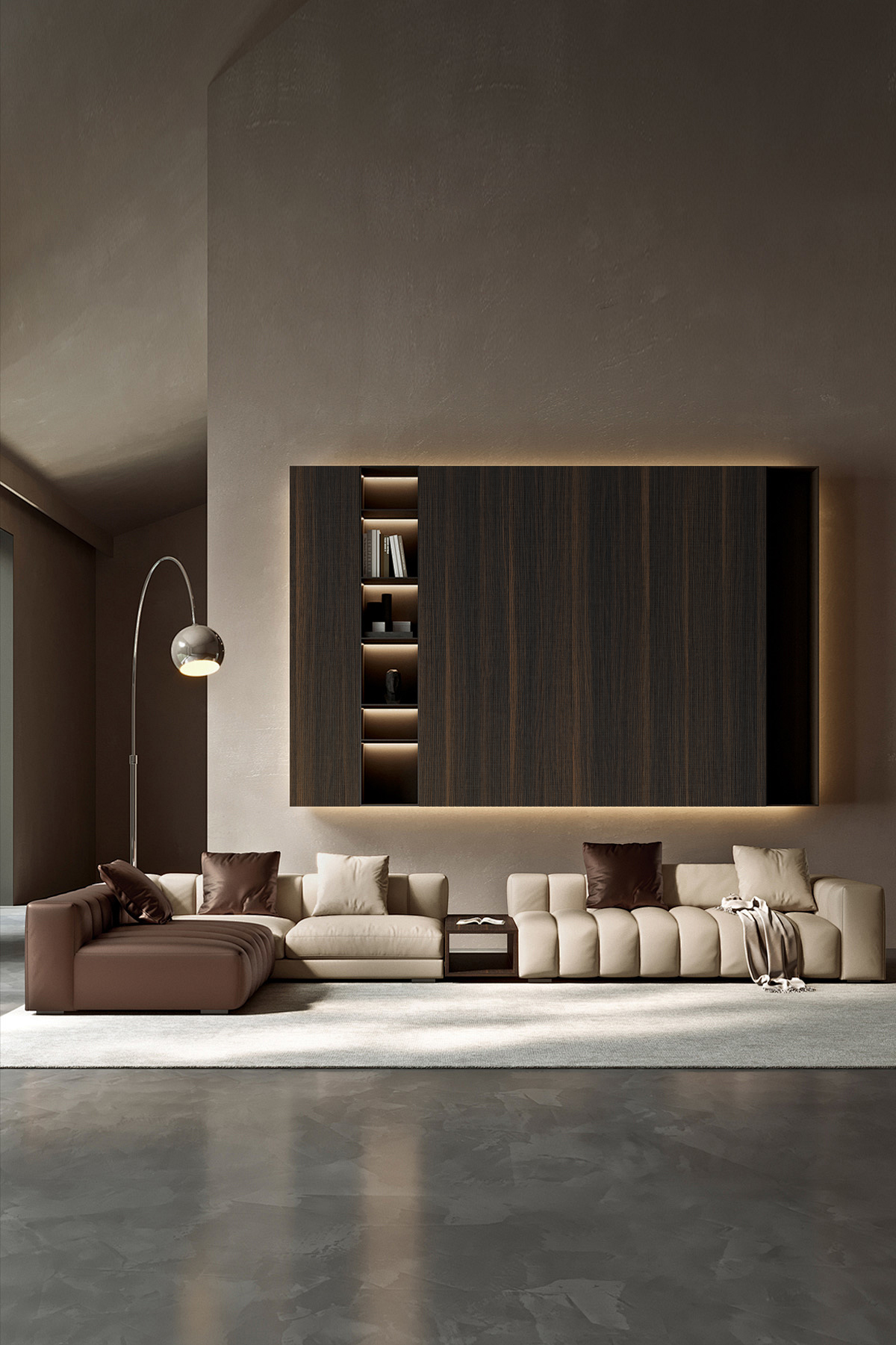
YAKCO's latest 3D embossed wood texture decorative panels, which have passed national testing, deliver a set of data worth paying attention to in the deep‑texture category.
More About: yakco technology
Where does the problem lie with ordinary substrates pressing deep textures?
The processing principle of 3D embossed wood texture board is simple: melamine impregnated paper is laid on the substrate, and a steel plate with a concave‑convex texture applies heat and pressure to "print" the texture onto the surface.
The problem is: deep textures require greater pressure and longer holding time.
Ordinary substrates have uneven density distribution, and there are large variations between batches.
During deep pressing, the raised areas of the steel plate concentrate pressure, compressing the substrate surface more; the recessed areas receive less pressure.
This uneven compression creates internal stress within the substrate.
You cannot see it right after pressing–the resin cures and "locks" everything in place. But a few months later, as ambient humidity and temperature fluctuate, the internal stress slowly releases, and the edges of the texture begin to show slight delamination, fuzzing, or even micro‑cracks.
This is not a problem with the decorative paper–it is that the substrate itself "cannot hold up" to the pressure of deep textures.
Why is YAKCO's substrate more "stable"?
Two key indicators of YAKCO's substrate determine the difference between it and ordinary substrates:
First, density is stable at 0.72 g/cm³, with extremely low batch‑to‑batch variation.
Uniform density means that during deep pressing,
the substrate beneath the raised areas of the steel plate does not cause uneven settlement due to local looseness.
After the texture is pressed, the edges are "clean"–no uneven depth.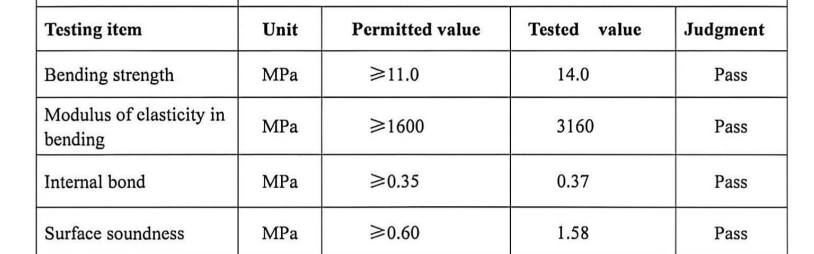
Second, internal bond is 0.37 MPa. This value determines how tightly the internal layers of the substrate are "held together".
With high internal bond, the internal stress generated by deep pressing is "absorbed" by the substrate itself, rather than being concentrated at the interface between the decorative layer and the substrate, which would push the decorative layer apart.
The test report has one set of data that directly proves this: surface soundness 1.58 MPa, while the national standard requires 0.60 MPa.
This value measures how tightly the decorative layer and the substrate are "bonded together".
1.58 MPa means that after deep textures are pressed, the adhesion between the decorative layer and the substrate will not be torn apart by stress–the texture edges do not micro‑crack, delaminate, or rebound.
Achieving this level of surface soundness requires the substrate itself to be stable enough–uniform density and strong internal bond–so that the decorative layer can "stick firmly".
Screw Holding Capability 1040N/980N: Deep‑texture cabinet doors are heavier– hardware must "stay tight"
3D embossed wood texture cabinet doors are thicker and heavier because of the surface texture, so they are usually heavier than ordinary cabinet doors.
The hinges bear a greater load, requiring higher screw‑holding capability from the substrate.
YAKCO's test data: face 1040N, edge 980N–the national standard requires 900N and 600N respectively.
Edge screw‑holding exceeds the national standard by 63%–this means that after hinge screws are driven into deep‑texture cabinet doors, they do not loosen even with long‑term opening and closing.
One of the most common after‑sales issues in whole‑house customisation is "the cabinet door does not close properly", and YAKCO substrate's screw‑holding data minimises the probability of this problem.
Resistance to Surface Staining Grade 5: Deep textures≠difficult to maintain
The grooves of 3D embossed wood texture board can trap dirt–this is a concern for many homeowners.
YAKCO achieved Grade 5 in resistance to surface staining (the highest level), with the national standard requiring≥Grade 4.
Coffee, red wine, or soy sauce spilled into the textured grooves can be wiped clean with a damp cloth–no staining, no residue. Deep textures are not difficult to maintain.
Summary
The "depth" of 3D embossed wood texture board cannot be achieved by steel plate pressure alone–it depends more on the substrate "holding up".
YAKCO's substrate–with density 0.72 g/cm³, internal bond 0.37 MPa, and surface soundness 1.58 MPa (2.6 times the national standard)–ensures that deep textures are "pressed deep, no rebound, and hardware stays tight".
For projects that pursue realistic touch and long‑term durability, YAKCO's 3D embossed wood texture board provides an answer that does not require choosing between "good looks" and "durability".
YAKCO specialises in the R&D and manufacturing Melamine Faced Board, offering a range of decorative styles including 3D embossed wood texture, Rock design, leather design, and Art Deco designs, providing tactile and durable decorative solutions for furniture manufacturing, commercial spaces, and high‑end residential projects.
Know About: 3D Embossed Wood Panel