中文简体
中文简体





Previous Post
In 2026, Art Deco is experiencing a powerful revival.
From Architectural Digest naming “Neo Deco” a trend of the year, to a 15% increase in Art Deco design briefs in the hospitality sector, to Pinterest predicting it as one of the most sought‑after styles of 2026—geometric symmetry, metallic lines, and high‑contrast colour blocks are once again becoming the design language of high‑end commercial spaces.
More: yakco technology
But designers and owners of commercial spaces know this well: Art Deco on renderings is static; real spaces are dynamic.
Hotel lobby walls are brushed by suitcases every day; boutique cabinet doors are touched by customers daily; coffee bar countertops are “tested” by hot cups and beverages every hour.
The delicacy of Art Deco can be infinitely perfect on renderings, but in real spaces, it faces continuous physical wear.
YAKCO Art Deco Melamine Board uses a 2026 national test report to calculate this “wear and tear” bill.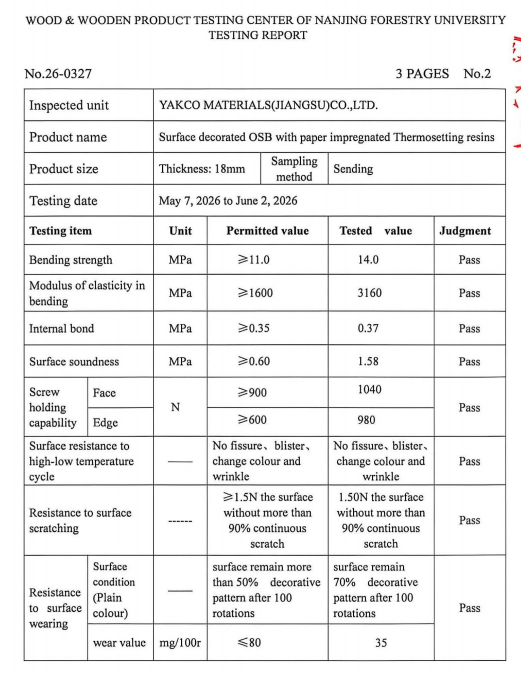
1.The Scratch Bill: How long do lines stay “intact”?
The gold lines of Art Deco are its visual skeleton.
Slender vertical stripes, radiating gold lines, stepped geometric borders—these lines together form the sense of order in Art Deco.
But in commercial spaces, the metal corners of suitcases, keys, and the edges of metal ornaments brush past the walls every day.
The wear ledger: On ordinary decorative panels, after months of dozens of daily scratches, gold lines develop visible continuous scratches—lines are “cut off,” and visual order is disrupted.
YAKCO’s data: Resistance to surface scratching 1.5N, with no more than 90% continuous scratch under the standard load. This means everyday hard objects sliding across the board surface will not cut or blur the fine lines.
Conclusion: The “intact lifespan” of gold lines extends from months to years.
2.The Stain Bill: How long do high‑contrast colour blocks stay “pure”?
Art Deco’s high‑contrast colour schemes—black‑gold, blue‑silver, black‑white—are its most recognisable visual language.
But once liquid stains penetrate the dark colour blocks, the light metallic lines turn yellow and dull.
In commercial spaces, accidental spills of coffee, red wine, and soy sauce are almost inevitable.
The wear ledger: On ordinary decorative panels, after a few liquid spills, dark colour blocks develop permanent stains—high‑contrast colour schemes become “mottled.”
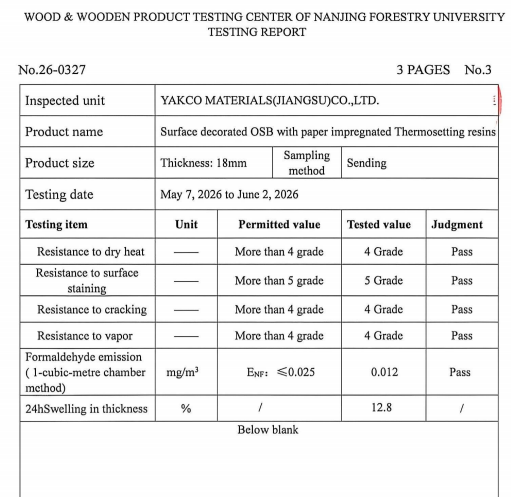
YAKCO’s data: Resistance to surface staining Grade 5 (the highest level), while the national standard only requires ≥ Grade 4. Coffee, red wine, and soy sauce spills can be wiped clean with a damp cloth—no staining, no rings.
Conclusion: The “pure lifespan” of high‑contrast colour blocks extends from months to long‑term retention.
3.The Wear Bill: How long do geometric patterns stay “sharp”?
Art Deco feature walls and cabinet doors in commercial spaces are wiped by cleaning staff every day.
With each wipe, the thickness of the decorative layer decreases at the micron level. For ordinary patterned panels, this wear may take three to five years to become visible.
But for the fine geometric patterns of Art Deco, wear first appears as blurred boundaries—line edges go from “sharp” to “rough.”
The wear ledger: On ordinary decorative panels, after two to three years of daily cleaning, geometric patterns become blurred, colours fade, and the “delicacy” disappears.
YAKCO’s data: Wear value of only 35 mg/100r, far better than the national standard requirement of ≤80 mg/100r.
Conclusion: The “sharp lifespan” of geometric patterns extends from two to three years to five years or more.
4.The Heat Bill: How long do metallic finishes stay “brilliant”?
The gold, silver, and copper metallic finishes of Art Deco are a key source of its luxurious feel. But hot coffee cups and teapot bottoms placed directly on the surface leave white heat rings on high‑gloss metallic areas—unwipable, visually a “scar.”
The wear ledger: On ordinary decorative panels, a single hot cup contact can leave a permanent heat mark.
YAKCO’s data: Resistance to dry heat Grade 4 (national standard ≥ Grade 4). Brief contact with a hot cup bottom will not damage gloss or colour.
Conclusion: The “brilliant lifespan” of metallic finishes goes from “ended by one accident” to “can be used with confidence.”
5.The “Unified Foundation” Behind the Four Bills
These four wear bills—scratch, stain, wear, heat—may seem independent, but they share the same solution: substrate stability.
YAKCO’s substrate has a stable density of 0.72 g/cm³ and internal bond of 0.37 MPa, ensuring that the decorative layer remains firmly anchored under thermal stress, moisture, and scratching. A stable substrate allows surface properties to last.
6.Conclusion: The Commercial Execution of Art Deco Is a “Long‑Term” Calculation
The logic of material selection in commercial spaces is different from residential.
Residential focuses on “does it look good”; commercial focuses on “is it durable.” The execution of Art Deco in commercial spaces cannot stop at the delicacy shown on renderings—it requires calculating a “wear and tear” bill: scratch wear, stain wear, abrasion wear, heat wear.
YAKCO Art Deco Melamine Board settles this bill clearly with the data of scratch resistance 1.5N, stain resistance Grade 5, wear value 35 mg/100r, and dry heat resistance Grade 4.
Delicate aesthetics can be placed where they are most likely to be bumped, and geometric lines and high‑contrast colour blocks can withstand the high‑frequency demands of the real world.
More: Art Deco Melamine Board