中文简体
中文简体





Previous Post
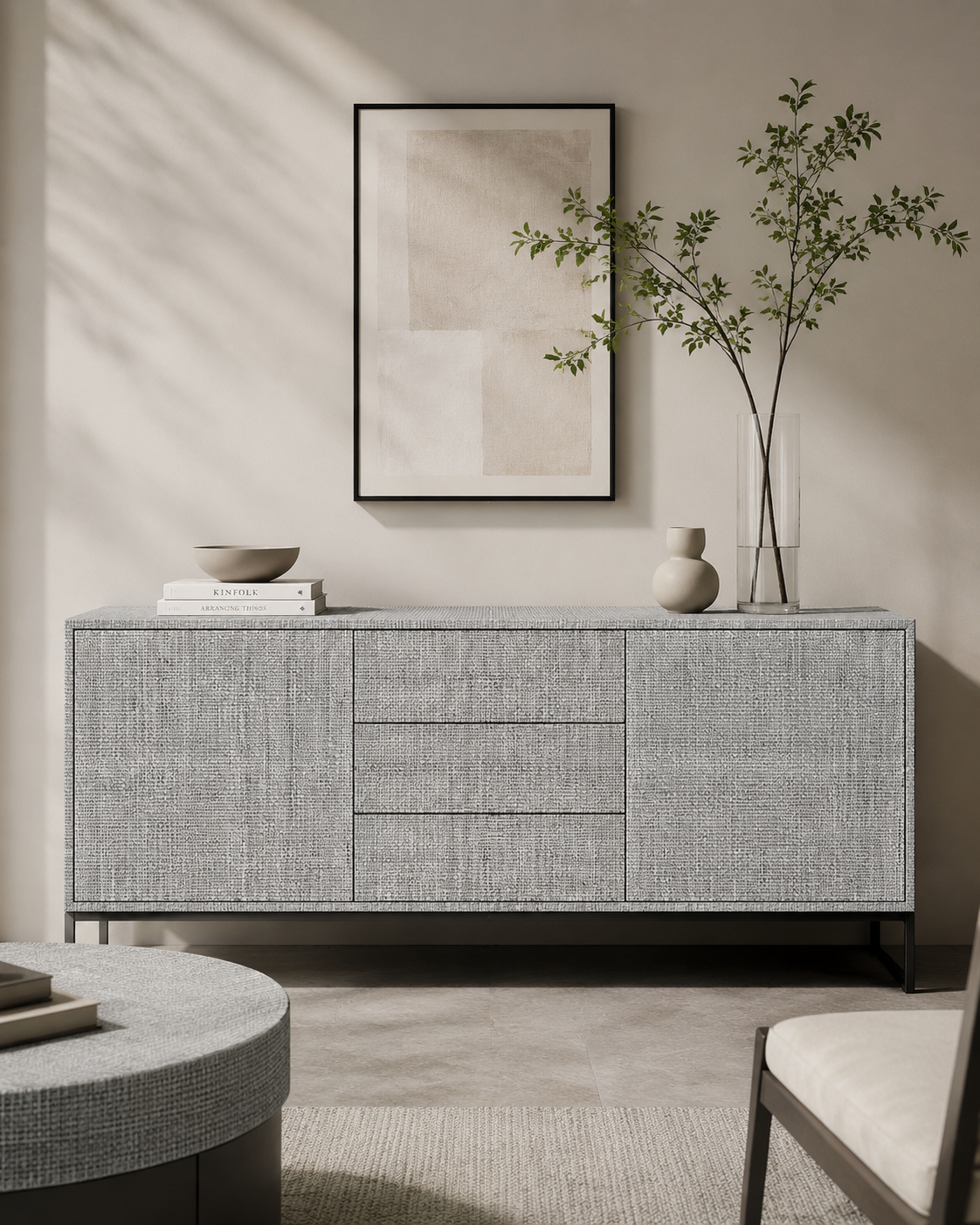
In contemporary home styles such as light luxury, modern, and Italian minimalist, Leather Design Melamine Board is emerging as a new favourite among designers–thanks to its warm, delicate touch, realistic leather grain, and understated matte sheen. It offers the premium feel of genuine leather while delivering the excellent machinability of wood-based panels.
However, the true charm of leather-textured panels lies not only in their initial visual impact, but also in whether they can maintain that soft tactile quality and intact pattern through years of touching, wiping, hot contact, and temperature fluctuations.
A series of surface performance indicators from the test report provide the scientific validation for this "lasting beauty" of leather-textured boards.
More: yakco technology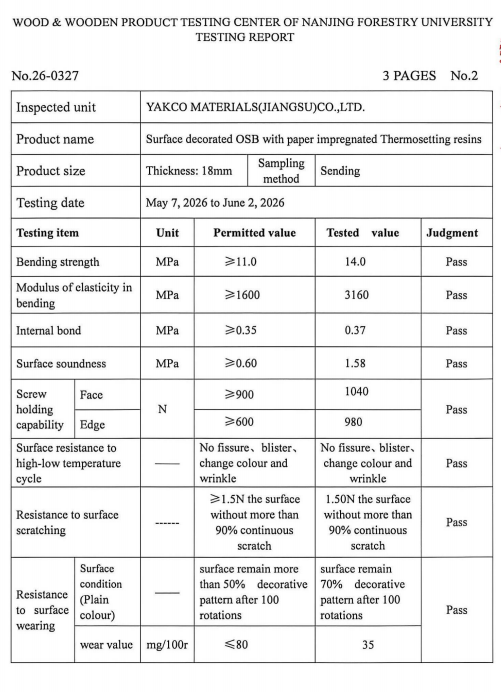
Scratch Resistance: A "Gentle Defence" Against Fingernails and Zippers
Leather-textured surfaces typically feature fine pore-like embossing, creating a soft visual and tactile effect–but this also means raised ridges are more vulnerable to scratches from hard objects.
The standard requires that under a 1.5 N load, the surface shows no continuous scratch exceeding 90% in length, and the test result was no continuous scratch at 1.5 N (Pass).
This means that in daily use, inadvertent scraping from fingernails, clothing zippers, metal pen clips, etc., will not leave white scratch marks, and the delicate leather grain remains intact.
Wear Resistance: Texture Remains Clear Despite Frequent Touching
Leather-textured panels are often used on desktops, countertops, sofa armrests, cabinet doors, and other high-contact areas.
In the wear resistance test, after 100 rotations the pattern retained 70% (standard requires only ≥50%), and the wear value was just 35 mg/100r (standard ≤80 mg/100r).
Both results significantly exceed the standard, proving that even with prolonged friction, the layered feel and matte gloss of the leather texture will not be "worn flat," preserving its initial soft appearance.
Stain Resistance: No Dirt Trapped in Pores–Clean with a Single Wipe
If pigments penetrate the pore-like embossing of leather-textured panels, they become extremely difficult to remove.
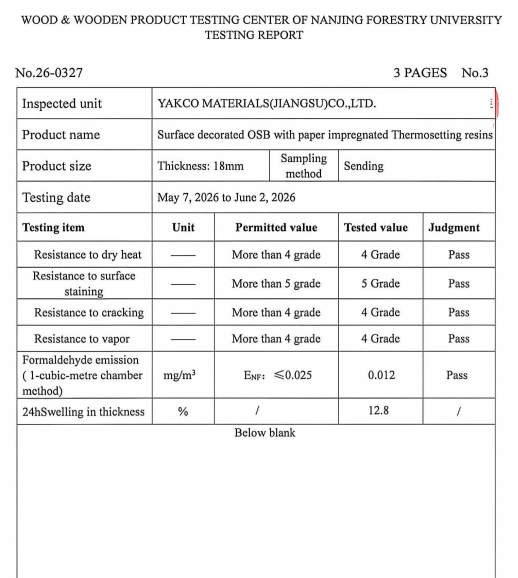
The stain resistance test achieved Grade 5 (Full score), demonstrating excellent resistance to common stubborn stains such as coffee, tea, soy sauce, red wine, and lipstick marks.
In practice, stains cannot penetrate the decorative surface and can be easily wiped away with a damp cloth–no worry about colour seeping into the embossed grooves, making daily cleaning effortless.
Resistance to Dry Heat and Vapour: Hot Objects and Moisture Will Not Harm the "Leather"
Leather-textured panels are often used on dining tables, kitchen islands, vanity cabinets, and other areas where hot bowls, cups, and steam are common.
The dry heat resistance test achieved Grade 4 (Pass)–brief contact with hot objects does not cause gloss change or whitening. The vapour resistance also reached Grade 4 (Pass)–even under continuous hot steam, no blistering, discolouration, or loss of gloss occurs.
The delicate texture of the leather remains firmly intact under humid and hot conditions.
Resistance to Cracking and High-Low Temperature Cycles: Leather Texture Does Not Crack Through the Seasons
With embossed leather surfaces, stress concentrates at ridges during alternating dry-wet and temperature changes, making them prone to micro-cracks.
The cracking resistance test achieved Grade 4 (Pass), ensuring that even under drastic humidity changes (such as the southern rainy season or northern heating season), the edges of the embossing show no cracking.
The high-low temperature cycle test showed no fissures, blistering, colour change, or wrinkling (Pass), proving that leather-textured panels can withstand transport from cold warehouses to hot workshops and can be used in residential and commercial spaces across different climate zones.
Surface Soundness: The "Lifelong Bond" Between the Leather Layer and the Substrate
If the leather decorative layer delaminates from the substrate, even the finest tactile quality is worthless. The surface soundness tested at 1.58 MPa–2.6 times the standard value (≥0.60 MPa).
This means that even with repeated wiping, thermal expansion and contraction, or minor impacts, the decorative layer will never blister, curl, or delaminate. The leather texture integrates with the substrate, remaining durable without peeling.
Internal Bond and Substrate Density: A Solid "Foundation" for Leather Panels
The surface performance of leather-textured panels depends on the substrate's support. The internal bond strength of 0.37 MPa (standard ≥0.35 MPa) ensures that the internal layers are tightly bonded without delamination.
The density of 0.72 g/cm³ falls in the upper-middle range of the national standard, providing sufficient compactness to support clear embossing, while avoiding excessive weight that complicates installation. Uniform density also ensures consistent tactile feel across every leather-textured panel.
Conclusion
The true value of Leather Design Melamine Board goes far beyond its convincingly realistic leather grain.
What makes it a decorative material that stands the test of time is the support of every surface performance indicator–scratch resistance, wear resistance, stain resistance, dry heat resistance, vapour resistance, cracking resistance, high-low temperature resistance, as well as exceptional surface soundness and a solid substrate.
When choosing a leather-textured panel, it is worth asking: what is its stain resistance grade? How low is its wear value?
These numbers are the real answer to whether it will still look like new a decade later.
More: Leather Design Melamine Board