中文简体
中文简体





Previous Post
The visual language of texture boards inherently carries a certain "sense of weight"—the roughness of granite, the layering of slate, the mottling of terrazzo.
These textures visually convey messages of "heaviness," "solidity," and "presence."
When designers choose texture boards, they are often drawn precisely to this visual "sense of weight"—it gives a wall, a tabletop, or a cabinet door a more "substantial presence."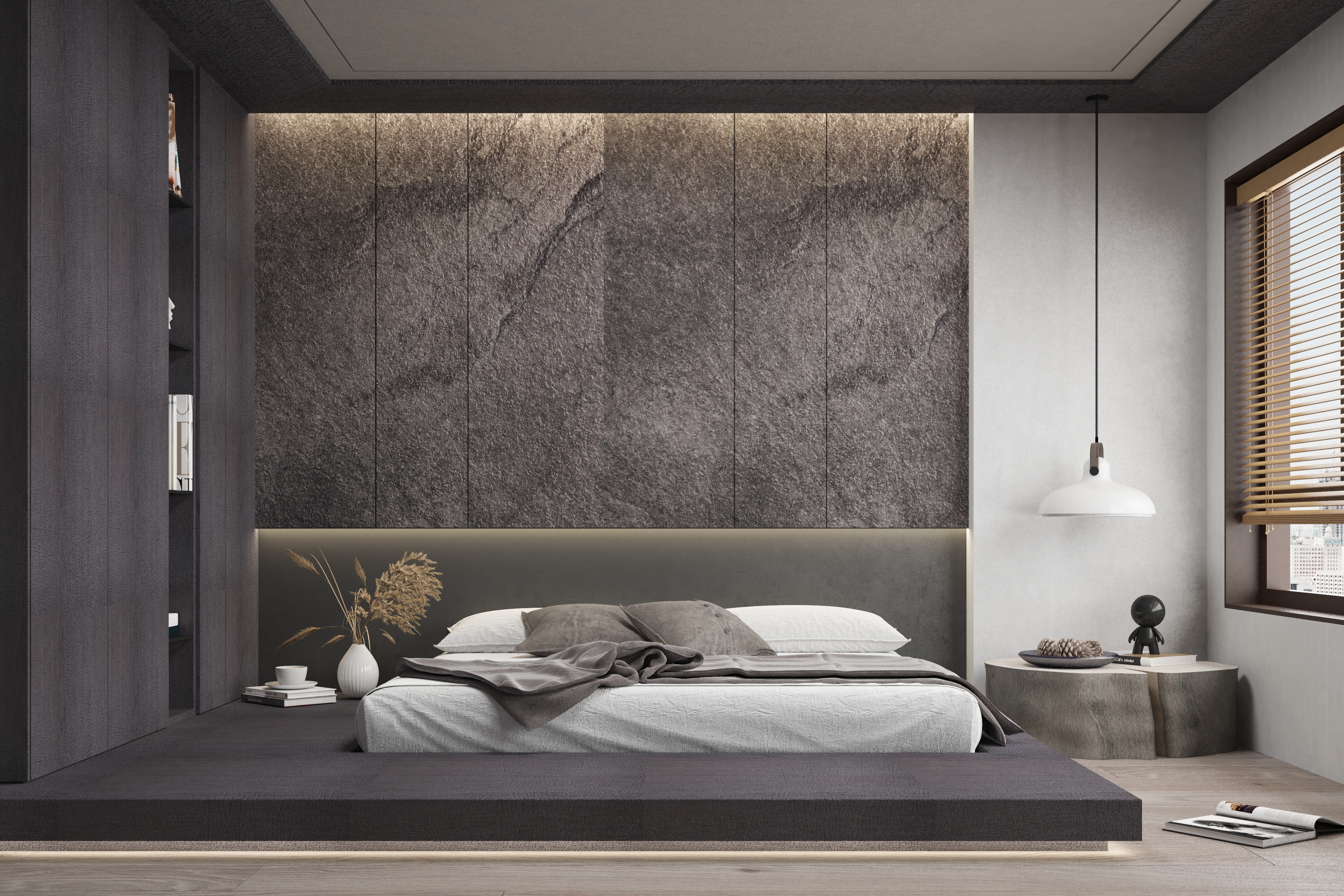
Yet designers and property owners often overlook a physical fact: visual "weight" and physical weight are two entirely different things.
The visual effect of grain boards is "heavy," but if the board itself is too heavy, installation, handling, and fabrication become difficult; if the board is too light, it can feel "insubstantial" in terms of texture.
More:yakco technology
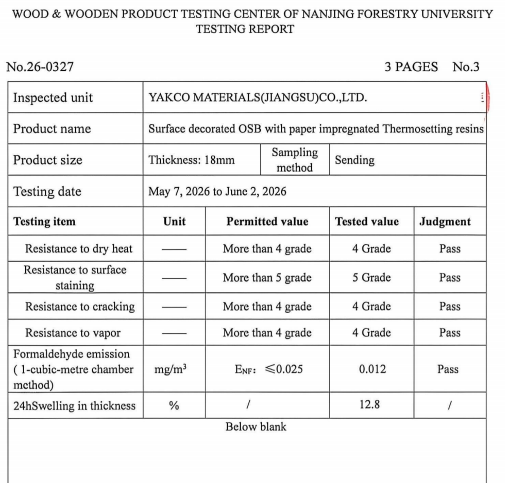
Yakco's Rock Design Melamine Board, in national testing conducted in 2026, recorded a density of 0.72 g/cm³. This figure precisely answers the question of balance between "visual weight" and "physical weight" for grain boards: how to make them look "heavy" while feeling "light" in use.
1.Density of 0.72 g/cm³: The "Goldilocks Weight" for Texture Boards
China's national standard for particleboard density requires a range of 0.60–0.90 g/cm³. Yake's measured density of 0.72 g/cm³ sits comfortably in the upper-mid range of this spectrum.
The engineering significance of this value lies in:
Lighter than high-density boards.Some texture boards on the market push density to 0.80 or even 0.85 g/cm³ in pursuit of a "hefty feel."
At the same thickness, a board with 0.85 g/cm³ is roughly 18% heavier than one at 0.72 g/cm³. For large-area grain walls or oversized grain cabinet doors, this 18% weight difference directly impacts handling difficulty, installation costs, and the load on hardware fittings.
More substantial than low-density boards.
Boards with densities below 0.65 g/cm³, while lighter, suffer from inadequate screw-holding capacity, poor bending strength, and surfaces prone to indentation.
A density of 0.72 g/cm³ ensures performance in load-bearing, screw-holding, and deformation resistance without adding unnecessary weight.
Density uniformity ensures board-to-board consistency.
Yakco's substrate features a uniform density distribution with minimal batch-to-batch variation. This means no "this board is heavy, that one is light" discrepancies within the same batch.
Every board that installers receive feels the same, weighs the same, and performs the same during fabrication.
1.The Art of Balancing "Visual Weight" and "Physical Weight"
The "premium feel" of grain boards comes from a delicate balance between visual heft and physical lightness:
If the board is too heavy, installation costs rise.
A 2.4 m × 1.2 m grain board at 0.85 g/cm³ weighs nearly 40 kg. Moving it requires two people, installation demands extra reinforcement, and shipping costs more.
If the board is too light, the texture feels inadequate.
Texture boards below 0.65 g/cm³ sound "hollow" when tapped, have edges prone to chipping, and lack screw-holding strength—physical flaws that directly betray the visual sophistication.
A density of 0.72 g/cm³ is precisely the sweet spot.
Yakco's texture board at this density ensures visual "heft" while keeping physical "heaviness" under control.
Designers can specify it for large wall surfaces and oversized cabinet doors without worrying about handling difficulties, complex installation, or excessive hardware loads.
1.The Process Logic Behind Density: How to Make Every Board "Weigh the Same"
Achieving an "average" density is not difficult; the challenge is making every board "weigh the same." With ordinary grain boards, density can fluctuate between 0.65 and 0.80 across different batches.
Such variations directly impact the installer's experience: one batch cuts smoothly, the next suddenly feels harder—tooling wears faster, cutting speeds need adjustment, and edge-banding temperatures require recalibration.
Through narrow-window quality control, Yakco keeps density fluctuations within an extremely tight range. Every batch of boards consistently stabilizes at approximately 0.72 g/cm³.
Installers receive boards that feel consistent, cut consistently, and perform consistently.
This "consistency" translates directly into faster installation speeds, less machine adjustment time, and lower material waste on project sites.
1.The "Spillover Effects" of Density: From Weight to Performance
A density of 0.72 g/cm³ is not just about weight—it also influences the overall performance of grain boards:
Screw-holding capacity.
With moderate density, screws experience balanced resistance across the substrate—neither too loose to "grip" nor too dense to "drive."
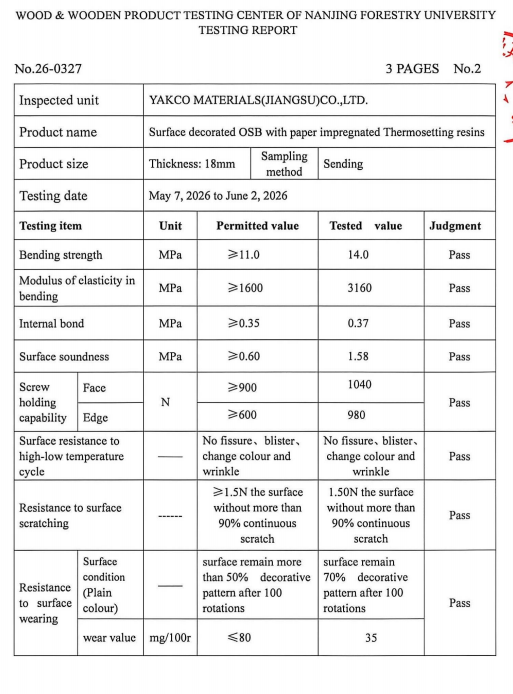
Yakco's measured screw-holding strength is 1040N on the board face and 980 N at the edge, exceeding national standard requirements.
Bending strength.
The substrate at 0.72 g/cm³ achieves a bending strength of 14.0 MPa in testing, exceeding national standards by 27%. This means grain tabletops resist cracking and sagging under load.
Machinability.
Uniform-density boards are less prone to chipping or fuzzing during CNC cutting. Furniture manufacturers do not need to repeatedly adjust machining parameters due to density variations between batches.
Conclusion: The "Premium Aesthetic" of Texture Boards Rests on a Balanced Density
When designers choose grain boards, they seek visual "weight"—that solid, substantial, commanding visual presence.
But this visual "weight" should not come at the cost of physical "heaviness."
Yakco Rock Design Melamine Board, with a density of 0.72 g/cm³ (national standard: 0.60–0.90), resolves the tension between "visual weight" and "physical weight" for grain boards: visually heavy enough, physically light enough. Installers can move it, hardware can support it, and designers can specify it with confidence.
When a designer says, "I want that hefty grain texture," Yake answers with density data the unspoken question: "The weight you see—the weight you can carry."