中文简体
中文简体





Previous Post
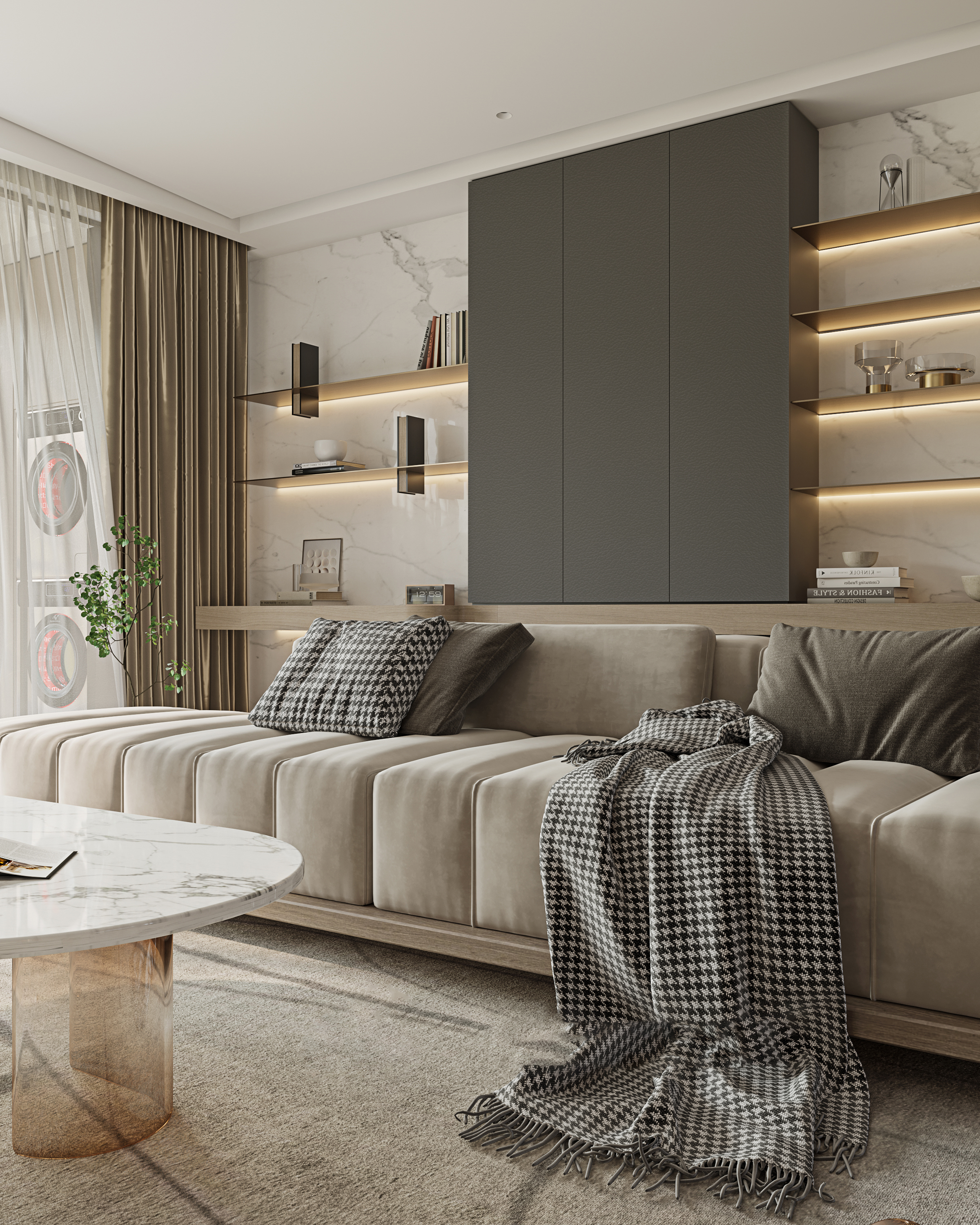
Rock texture boards are increasingly used in vertical spaces such as lobby feature walls, corridor wall cladding, and elevator lobby walls. Designers choose rock texture boards because their visual language is powerful enough—the ruggedness of granite, the layering of slate, the mottling of terrazzo—to transform a wall from “background” into “protagonist.”
But rock texture boards installed vertically face an easily overlooked issue: they do not bear weight, but they must “stay attached.”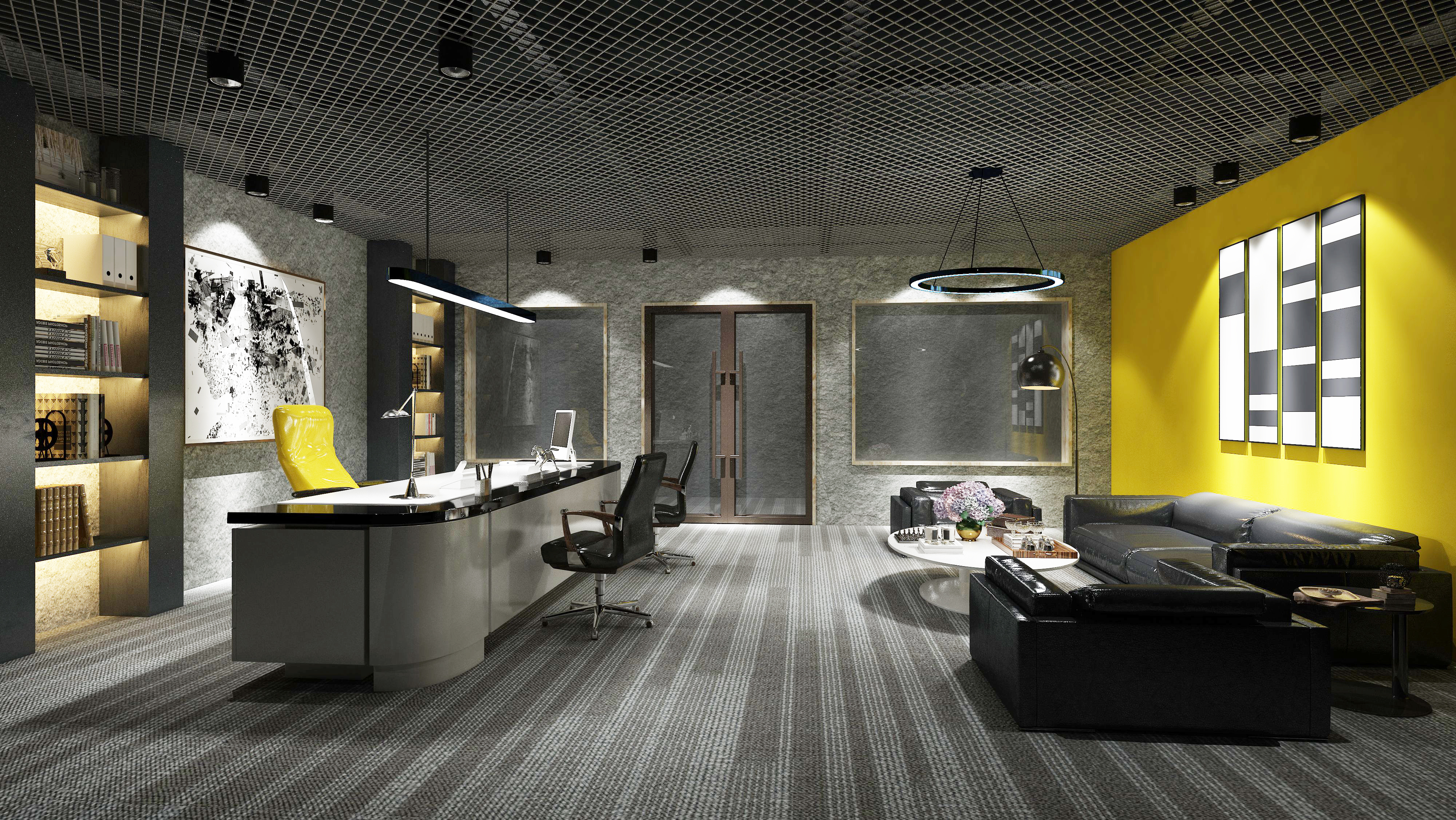
After large‑area rock texture wall panels are installed on the wall, the bonding strength between the decorative layer and the substrate determines the “wall life” of the panel.
If the bonding strength is insufficient, problems that may appear after a few years include: micro‑gaps between the decorative layer and the substrate (invisible to the naked eye, but the tapping sound becomes “hollow”), slight edge warping, and uneven joints—these are not “fractures,” but “loosening.”
YAKCO’s data point precisely answers the core question for rock grain boards in vertical wall applications: how firmly is the decorative layer bonded to the substrate?
More about Technology: yakco technology
1.What Is “Surface Soundness” and Why Should We Care?
Surface soundness measures the bonding strength between the decorative layer (the layer printed with the rock texture) and the substrate.
The higher the value, the more firmly the “skin” is bonded to the “flesh.”
For horizontal applications such as countertops and tabletops, the impact of surface soundness is mainly reflected in wear resistance and impact resistance.
But for vertical walls, the impact is more direct: it determines whether the decorative layer can remain “tightly attached” to the substrate in a vertical state over the long term, without micro‑detachment or loosening.
On vertically installed rock texture boards, the decorative layer is subjected to “downward gravity” and “outward stress”—the slight deformation of the substrate caused by temperature and humidity changes continuously exerts a “pulling” force on the decorative layer.
If surface soundness is insufficient, this sustained pulling causes micro‑gaps between the decorative layer and the substrate.
A single panel does not show it, but when the entire wall is assembled, the “looseness” at the joints accumulates into a visual impression of “lack of refinement.”
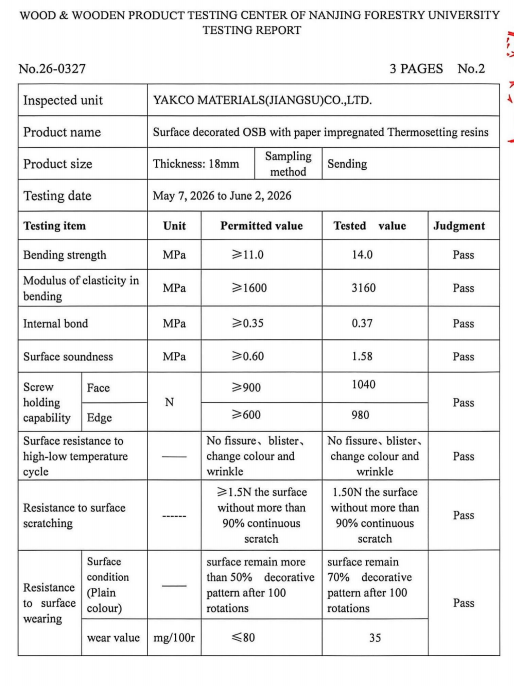
YAKCO achieved a surface soundness of 1.58 MPa, while the national standard requires only 0.60 MPa.
This bonding strength, more than double the standard, means that even if the substrate undergoes slight deformation due to temperature and humidity changes, the decorative layer remains firmly “anchored” to the substrate—no loosening, no warping, no “hollow spots.”
2.The “Joint Challenge” of Large‑Area Rock TextureWalls: Every Joint Tests the Bonding Strength
A 6‑metre‑wide rock texture feature wall may require 20 to 30 panels to be assembled. Between every two panels is a joint.
The flatness of the joints directly determines the “premium feel” of the entire wall—well‑aligned joints with flat edges make the wall look like “one piece”; misaligned joints with warped edges make it look “pieced together.”
Edge warping at joints is often not an installation issue, but rather a “decay” of bonding strength between the decorative layer and the substrate at the edges.
Panels with insufficient surface soundness naturally have weaker bonding at the cut edges than in the central area—cutting disrupts the continuity of the bond between the decorative layer and the substrate at the edges.
Added to the stress from temperature and humidity changes, the edges are the first to “loosen.”
YAKCO’s surface soundness of 1.58 MPa retains ample bonding margin even at the cut edges. Edges do not warp, joints remain flat, and the “integrity” of the entire wall is preserved.
3.The “Stability” of the Substrate: The Chassis Behind Surface Soundness
Surface soundness does not exist in isolation. Achieving 1.58 MPa depends on two underlying indicators of the substrate:
Density 0.72 g/cm³–uniformly distributed, meaning there are no “weak spots” in the contact area between the decorative layer and the substrate.
In areas with uneven density, resin penetration depth varies, resulting in inconsistent bonding strength. Uniform density ensures consistent bonding strength across every part of the panel.
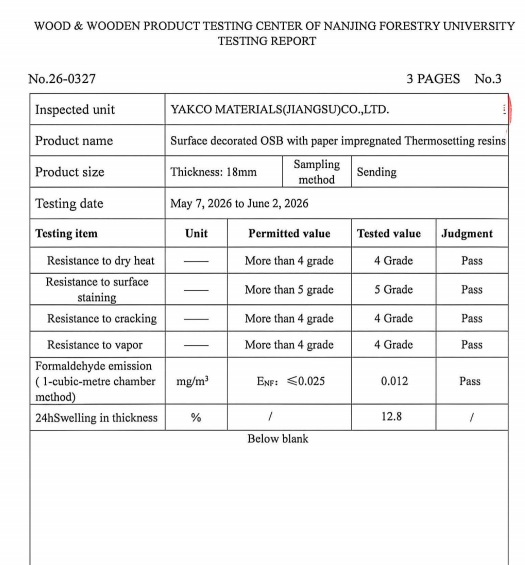
Internal bond 0.37 MPa–the internal layers of the substrate are “held together tightly.” Surface soundness measures the bond between the decorative layer and the substrate surface, but if the substrate surface itself is loose—due to insufficient internal bond—even if the decorative layer is firmly attached, the substrate surface itself may “detach.”
These two indicators are the prerequisites for the stable output of 1.58 MPa.
4.The “Long‑Term Value” of Rock TextureWalls: A Firm Bond Ensures Longevity
Rock texture walls in hotel lobbies, rock texture wall cladding in office building corridors, rock texture entryway walls in high‑end residences—these vertical walls do not suffer the friction or scratches of tabletops, but they face a different kind of wear: the “relaxation” that comes with time.
A wall that was perfect at installation may develop slight unevenness at the joints after three years; after five years, tapping certain areas may produce a “hollow” sound; after eight years, edges may begin to warp slightly—this is not the material “breaking down,” but the bonding strength between the decorative layer and the substrate gradually diminishing over the years.
YAKCO rock texture board has a surface soundness of 1.58 MPa, 2.6 times the national standard.
This margin means that even after years of temperature‑humidity cycling and stress release, the bonding strength between the decorative layer and the substrate remains above the national standard requirement.
The wall does not “loosen,” joints do not “warp,” and the integrity of the entire wall is maintained over the long term.
5.Conclusion: The Aesthetics of Vertical Walls Are Preserved by a “Firm Bond”
Designers use rock texture boards to create vertical walls, pursuing the visual effect of “one wall as one work of art.”
But how long this visual effect lasts depends not on how realistically the rock texture is printed, but on how firmly the decorative layer is bonded to the substrate.
YAKCO Rock Design Melamine Board answers the most fundamental question for vertical walls with surface soundness 1.58 MPa (2.6 times the national standard):
How long can the aesthetics of this wall last?
The answer is:
As long as the bond is firm, the rock grain will always be there. The ruggedness of granite, the layering of slate, the mottling of terrazzo—these visual languages will not “loosen” over time.
More about Rock: Rock Design Melamine Board