中文简体
中文简体





Previous Post
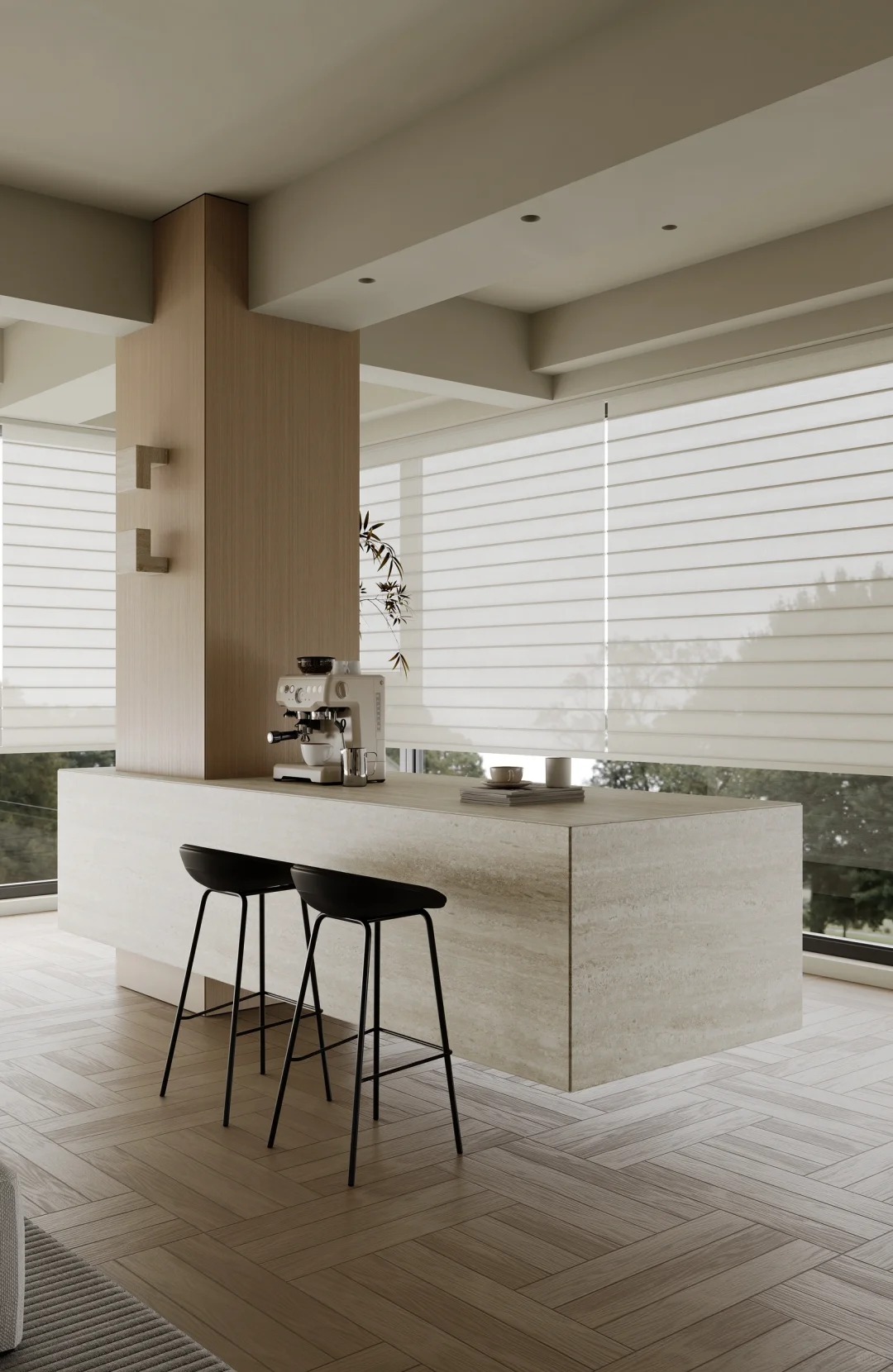
The texture of natural stone is the primary reason designers choose rock texture boards.
The grain of granite, the layering of slate, the mottling of terrazzo–these visual languages give spaces depth and character.
More:yakco technology
But the role of rock texture boards in commercial spaces goes far beyond "looking good."
Rock texture tabletops in restaurants must withstand the repeated pressure of cutlery, hot plates, and beverages; rock texture display stands in exhibition halls must bear the weight of exhibits; rock texture wall cladding in hotel lobbies must resist daily impacts without deforming.
The rock texture board is first a "structure," and only then a "decorative surface."
Yakco two data points answer a long‑overlooked question: Beyond "looking good," is the rock grain board structurally reliable?
1.Bending Strength 14.0 MPa: Bearing weight without "breaking"
Bending strength measures the maximum stress that a panel can withstand before its surface fibres reach failure under bending force–simply put, how much weight can this board take before it breaks.
YAKCO achieved 14.0 MPa, while the national standard requires 11.0 MPa. What does the extra 3.0 MPa mean?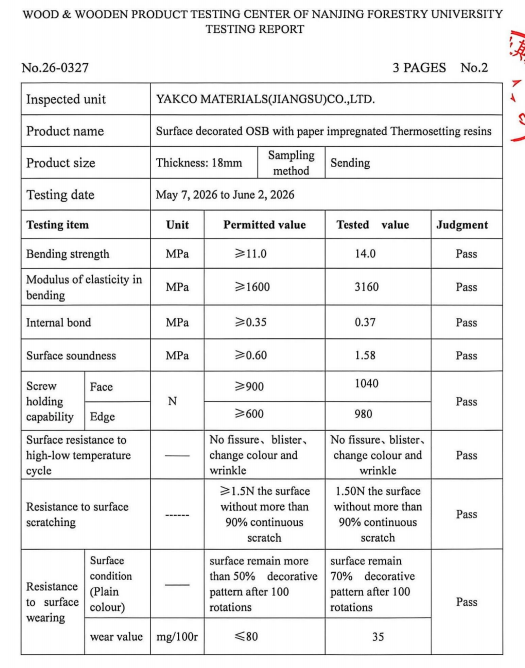
Rock texture tabletops can be made larger.
For a 1.5‑metre rock texture tabletop, an ordinary panel (11.0 MPa) is already close to its breaking point when fully loaded, while YAKCO substrate (14.0 MPa) still has ample safety margin.
Restaurants do not need to add a support column in the middle of the table–the space feels more open.
Rock texture display stands can cantilever further.
In commercial exhibition halls, rock grain display stands with hollow bottoms need to bear exhibits without tilting.
14.0 MPa means designers can reduce support points and achieve a lighter structural language–the stand appears to "float" above the floor.
Accidental heavy loads do not cause breakage.
In commercial spaces, occasional heavy objects placed on the surface, or someone accidentally sitting on it–the margin of 14.0 MPa ensures that the rock texture board does not break under unexpected loads.
For commercial space operators, bending strength addresses the "safety baseline"–tabletops will not suddenly break, and display stands will not suddenly collapse.
2.Modulus of Elasticity 3160 MPa: Bearing weight without "sagging"
If bending strength answers "will it break?", then modulus of elasticity answers "will it bend?"
Modulus of elasticity reflects the panel's ability to resist bending deformation–the higher the value, the "stiffer" the panel, and the smaller the deflection under load.
YAKCO achieved 3160 MPa, while the national standard requires only 1600 MPa–nearly double.
The real‑world value of this data is:
Rock texture tabletops do not sag under long‑term loads.
With ordinary panels (1600 MPa), after two years of heavy loads, the middle of the tabletop develops visible "sagging"–cups wobble, and visually it appears "low in the middle, high at both ends."
3160 MPa means that even after years of continuous loading, the rock grain tabletop remains flat.
Rock texture wall cladding does not deform under its own weight.
When large‑area rock texture wall cladding is installed vertically, its own weight causes slight bending in the middle, and joints "open up."
High modulus keeps the panels "standing straight," with the entire wall flat and uniform.
Rock texture cabinet doors do not sag under their own weight.
For rock texture cabinet doors over 2 metres tall, if the substrate's modulus is insufficient, the door's own weight causes bending in the middle–when closing, the top edge fits while the bottom gap is large.
3160 MPa keeps tall doors "standing straight."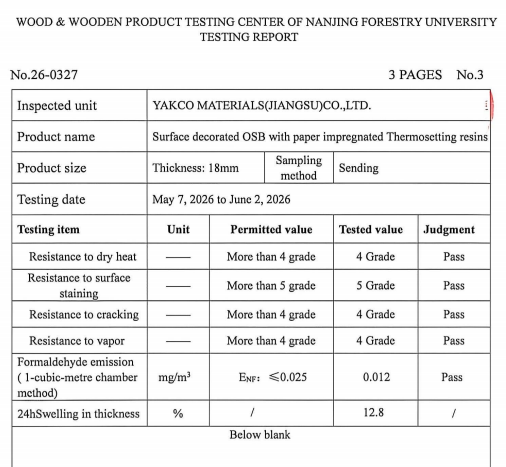
For designers of commercial spaces, modulus of elasticity addresses "long‑term quality"–tabletops do not sag, walls remain flat, and cabinet doors stay straight.
3.The "Chassis" of Structural Performance: Density and Internal Bond
Bending strength and modulus of elasticity do not come from nowhere.
They depend on two underlying indicators of the substrate:
Density 0.72 g/cm³–uniformly distributed, ensuring no "soft spots" in the board.
Low density fluctuation means consistent bending performance across the same batch–the first panel is as "stiff" as the thousandth.
Internal bond 0.37 MPa–the layers inside the substrate are "held together tightly."
Under bending load, the load transfers from the surface layer to the core layer.
If internal bond is insufficient, inter‑layer slippage occurs, greatly reducing bending performance.
These two indicators are the prerequisites for the stable output of 14.0 MPa and 3160 MPa.
4.Why Should Commercial Spaces Pay Attention to the Structural Performance of Rock Texture Boards?
The logic of material selection in commercial spaces is different from residential.
Residential focuses more on "does it look good" and "is it eco‑friendly," while commercial spaces focus on "is it durable" and "is it safe."
A rock texture board on a restaurant tabletop bears not only the weight of food every day–but also the pressure of guests' arms, impacts from cutlery, and instantaneous thermal stress from hot plates.
365 days a year, dozens of repeated loads daily.
If structural performance is insufficient, the tabletop begins to "sag" in the third year, and may develop micro‑cracks in the fifth.
YAKCO Rock Design Melamine Board uses the two data points of bending strength 14.0 MPa and modulus of elasticity 3160 MPa to answer the most fundamental question for rock texture boards in commercial spaces: Beyond looking good, can it "hold up"?
5.Conclusion: The "Realism" of Rock TextureIs Built on Structure
Designers choose rock texture boards because they are first attracted to the visual texture.
But the true value of rock texture Melamine Faced boards in commercial spaces lies in meeting both requirements: visually like stone, structurally strong enough.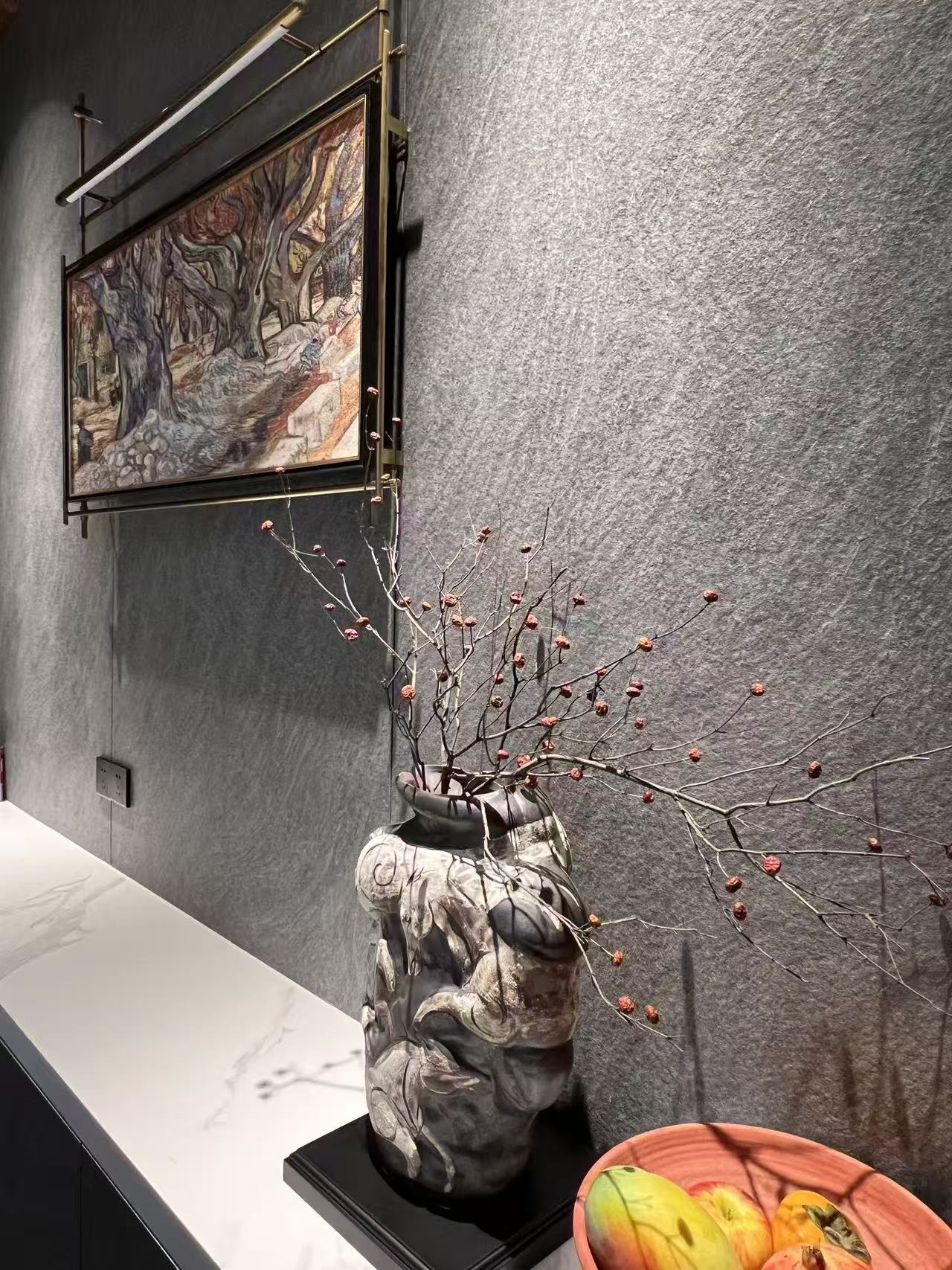
When a designer says, "I want a large‑area rock texture wall," YAKCO answers the unspoken question with structural data: "Rest assured, it holds up."