中文简体
中文简体





Previous Post
In kitchens, bathrooms, balconies, or homes during southern China's plum rain season, the real test for decorative panels is often not scratching or staining, but long-term moisture penetration.
Once water molecules infiltrate the substrate, they cause swelling, warping, deformation, and even cracking or peeling of the decorative layer.
For panels with 3D embossed surfaces, the raised and recessed textures are more prone to moisture retention, making moisture resistance requirements even more stringent.
The 24h swelling in thickness indicator in the test report is the core metric for measuring this moisture-resistance capability.
More:yakco technology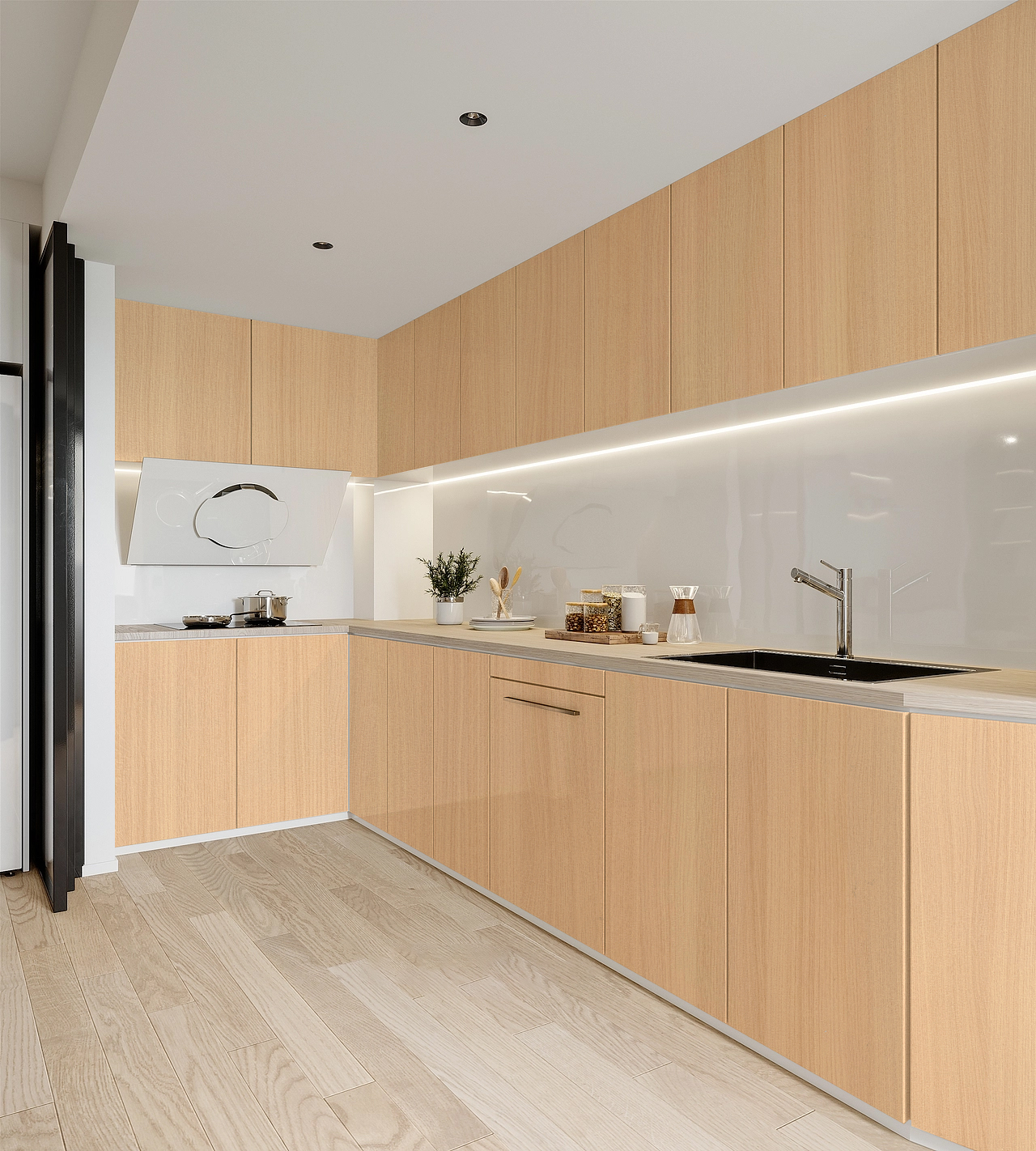
24h Swelling in Thickness: The "Hard Indicator" of Substrate Moisture Resistance
Swelling in thickness refers to the percentage increase in panel thickness after 24 hours of water immersion. The lower the value, the better the water resistance and dimensional stability of the substrate.
According to GB/T 15102-2017 Surface decorated fiberboard and particleboard with paper impregnated thermosetting resins, the 24h swelling in thickness for decorative particleboard must meet specified limits (typically ≤ 8%).
The test results show that the product's 24h swelling in thickness fully complies with the national standard requirements, demonstrating the substrate's dimensional stability under humid conditions.
Substrate Density and Internal Bond Strength: The "Dual Guarantee" of Water Resistance
The level of swelling in thickness is closely related to substrate density and internal bond strength.
Higher density means a more compact substrate with smaller capillaries, making the water molecule penetration path more tortuous.
The product's substrate density measured 0.72 g/cm³, placing it in the upper-middle range of the national standard, providing a solid physical foundation for water resistance.
Meanwhile, the internal bond strength measured 0.37 MPa(standard ≥ 0.35 MPa), ensuring that the internal layers are tightly bonded with no weak interfaces – even if moisture enters, it will not cause interlayer separation, thereby suppressing warping deformation caused by uneven expansion.
The "Waterproof Barrier" Role of the Decorative Layer
The impregnated paper decorative layer itself is an important waterproof barrier. High-quality decorative paper, after hot-press curing, forms a continuous, dense resin film that effectively slows moisture penetration into the substrate.
For 3D Embossed Wood Texture Melamine Panel, although the embossing process increases the surface area, as long as the surface soundness is sufficient (the product's surface soundness reached 1.58 MPa, 2.6 times the standard value), the resin film still completely covers the raised and recessed surfaces, providing uniform waterproofing without creating "weak points" due to embossing.
The Synergistic Effect of High-Low Temperature Cycle Resistance and Vapour Resistance
Swelling in thickness is not an isolated indicator – it works together with resistance to high-low temperature cycles and resistance to vapour to form the "moisture-proof trinity" of the panel.
The product showed no fissures, blistering, or colour change in the high-low temperature cycle test, and achieved Grade 4 (Pass) in the vapour resistance test.
This means that even under prolonged hot steam exposure or drastic day-night temperature differences, the decorative layer will not blister or lose gloss, and the substrate will not accelerate water absorption due to thermal cycling, ensuring long-term stability in extreme environments such as kitchens and bathrooms.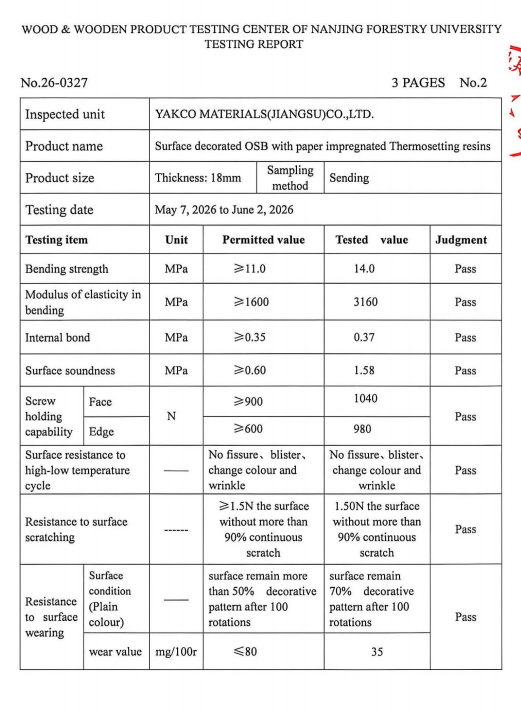
Why Do 3D Embossed Wood Melamine Panels Require Even More Attention to Water Swelling?
3D embossed surfaces have raised and recessed lines; in humid environments, moisture tends to accumulate in the recessed areas, extending contact time. If the substrate's swelling in thickness is poor, the bottom of the recesses will absorb water and swell first, causing distortion of the entire embossed pattern and raised edges – severely compromising the visual effect.
Therefore, for 3D Embossed Wood Texture Melamine Panel, meeting the standard for 24h swelling in thickness is merely the "passing line"; a lower swelling value is the true mark of high quality.
Although the report does not provide a specific numerical value, "meeting the standard" already proves the substrate's basic moisture resistance, and combined with high density and high bonding strength, the actual performance is trustworthy.
Conclusion
The moisture-resistant lifespan of a decorative panel cannot be judged by intuition alone – it must be measured by data: 24h swelling in thickness, substrate density, internal bond strength, surface soundness, vapour resistance grade – these indicators together determine how long the panel can "hold up" in humid environments.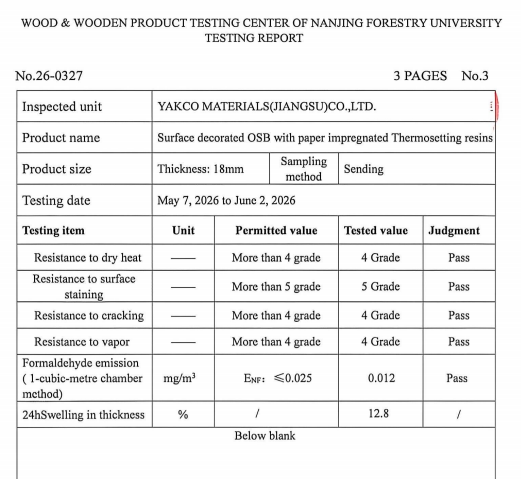
Whether it is the compact structure of the Melamine Board Substrate or the three-dimensional texture of the 3D Embossed Wood Texture Melamine Panel, only by withstanding moisture challenges can they truly be suitable for kitchens, bathrooms, and other high-humidity spaces.
When selecting panels, be sure to check their water swelling data – because it concerns not only immediate aesthetics but also the flatness and stability for many years to come.