中文简体
中文简体





Previous Post
High‑end dining spaces, boutique coffee shops, and hotel executive lounges demand far more from decorative materials than just “good looks.”
Tabletops must withstand dozens of hot coffees, teas, and soups placed directly on them every day; bar counters must cope with accidental spills of red wine, sauces, and oil; booth tabletops endure repeated friction from cutlery and cup bottoms.
Designers choose leather texture boards in these areas for the warmth and premium feel that leather texture brings.
But whether this “premium feel” can survive the daily test of hot drinks and oil stains depends on the panel’s resistance to dry heat and resistance to surface staining.
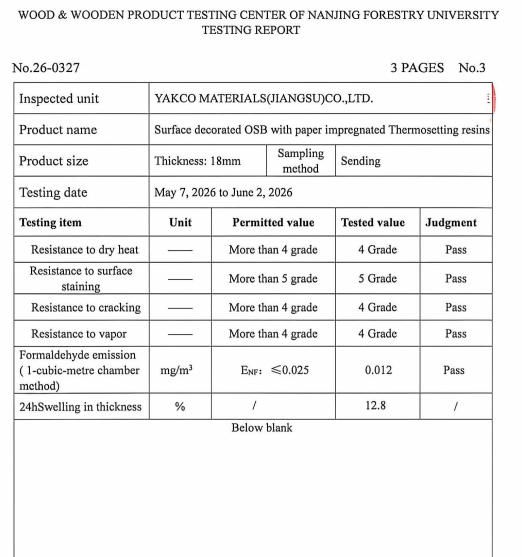
YAKCO Leather Design Melamine Board, in the 2026 national test, achieved Grade 4 in resistance to dry heat (national standard ≥ Grade 4) and Grade 5 in resistance to surface staining (the highest level).
More:yakco technology
These two data points precisely address the most practical questions for leather grain boards in dining spaces: Will a hot coffee cup leave a white ring? Will red wine penetrate and stain?
1.Resistance to Dry Heat Grade 4: Hot cup bottoms “leave no white rings”
In coffee shops, restaurants, and hotel executive lounges, hot coffee cups, teapots, and soup bowls are routinely placed directly on tabletops.
Many decorative panels fail this “high‑temperature test” – a hot cup bottom left for seconds leaves a white misty ring that cannot be wiped or polished away, becoming a permanent “scar.”
For leather texture boards, such heat marks are even more conspicuous on goat grain or woven textures, because the concave-convex structure traps the heat mark in the grooves, making it harder to repair.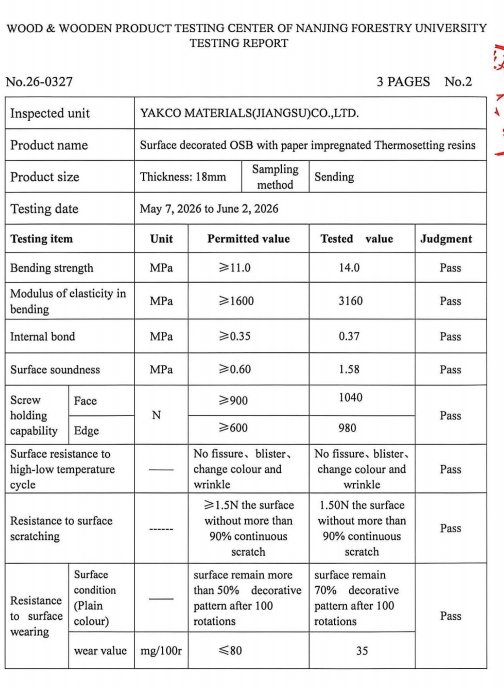
YAKCO achieved Grade 4 in resistance to dry heat, meeting the national standard.
This means that after brief contact with a hot coffee cup or teapot bottom, the surface shows no white heat rings, uneven gloss, or discolouration.
The goat grain remains full, and the woven grooves remain clear – heat marks do not “scar” the leather surface.
For restaurants with dozens of table turns per day, this data directly translates into the “aesthetic lifespan” of the tabletop – no coasters needed on every table, no worry about guests being “careless,” and no frequent polishing or repairs.
2.Resistance to Surface Staining Grade 5: Red wine and sauces “do not penetrate”
Tabletops in dining spaces face daily challenges from red wine, coffee, soy sauce, oil stains, and ketchup.
The textured grooves of leather texture are a natural structure – if the surface density is insufficient, liquids penetrate the grooves, forming permanent stains, turning the leather’s “premium feel” into a “dirty” impression.
YAKCO achieved Grade 5 in resistance to surface staining, the highest level in the national standard.
Grade 5 means that in the standard test, common contaminants such as coffee, red wine, and soy sauce can be removed by wiping with a damp cloth–no staining, no rings.
The leather grooves do not become “dirt traps”–a damp cloth restores cleanliness.
For dining space operators, this data means higher cleaning efficiency, lower detergent consumption, and less frequent tabletop refurbishment.
3.Substrate Support: Leather’s “Surface Performance” Depends on the Substrate’s “Chassis”
The performance of dry heat resistance and stain resistance ultimately depends on the underlying stability of the substrate.
YAKCO’s substrate has a stable density of 0.72 g/cm³ and internal bond of 0.37 MPa, ensuring that the leather decorative layer does not develop micro‑cracks due to substrate deformation over long‑term use – micro‑cracks are “channels” for heat marks and “shortcuts” for stains.
A stable substrate allows the leather’s heat resistance and stain resistance to last.
4.Conclusion: The Premium Feel of Leather Withstands the Test of “Heat” and “Stains”
Designers choose leather texture boards for the warmth and affinity that leather texture brings.
But in high‑frequency use scenarios such as dining spaces, coffee shops, and hotel executive lounges, the “premium feel” of leather cannot remain only at the visual level – it must withstand the “heat” of hot coffee cups and the “stains” of red wine and sauces.
YAKCO Leather Design Melamine Board uses the two data points of dry heat resistance Grade 4 and stain resistance Grade 5 to provide dual guarantees of “temperature tolerance” and “stain tolerance” for leather grain boards in dining spaces.
The goat grain is not “scorched” by hot cup bottoms, and the woven grooves are not “dyed” by red wine.
When a designer says, “I want to use leather texture boards in a restaurant,” YAKCO answers the unspoken question with data: “It handles hot cup bottoms and red wine stains.”
More: Leather Design Melamine Board