中文简体
中文简体





Previous Post
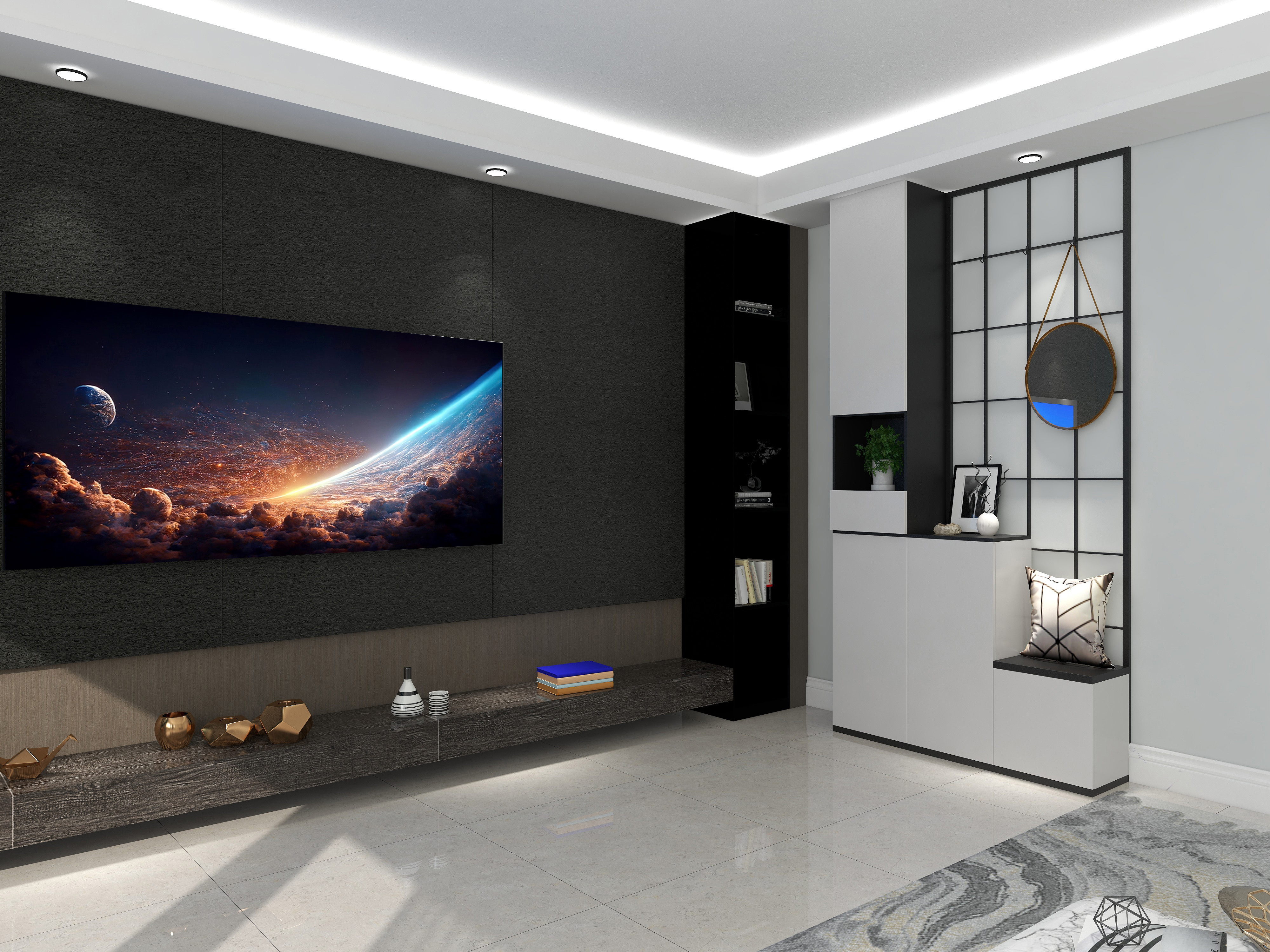
The value of leather texture Melamine Faced boards lies in using industrial methods to simulate the visual and tactile qualities of leather–the pattern of goat texture, the texture of woven patterns, the delicacy of nappa texture.
Designers choose leather texture Melamine Faced boards because they are more durable than genuine leather, easier to clean than fabric, and warmer than plain colour panels.
More:yakco technology
But leather texture Melamine Faced boards have an easily overlooked issue: how long can the "tactile feel" of the leather texture last?
Genuine leather wears out and loses its lustre over time–this is the "natural ageing" of leather.
But as an industrial product, the texture of leather grain boards should not "age"–the grain of goat grain should not be worn flat, the concave-convex of woven patterns should not be pressed down, and the delicacy of nappa grain should not be consumed by daily use.
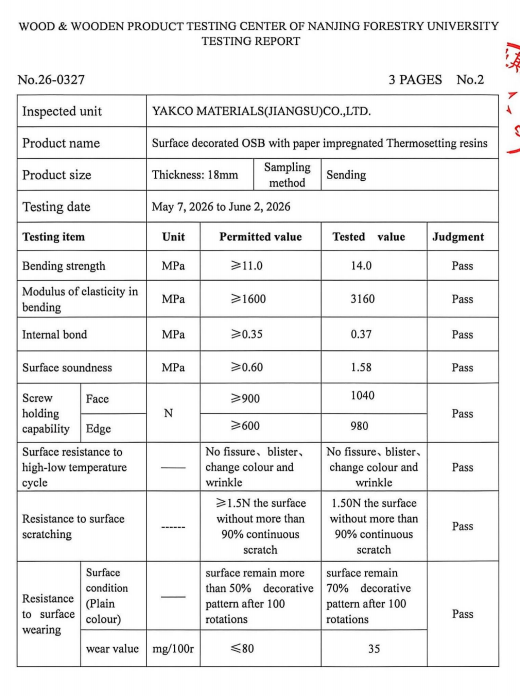
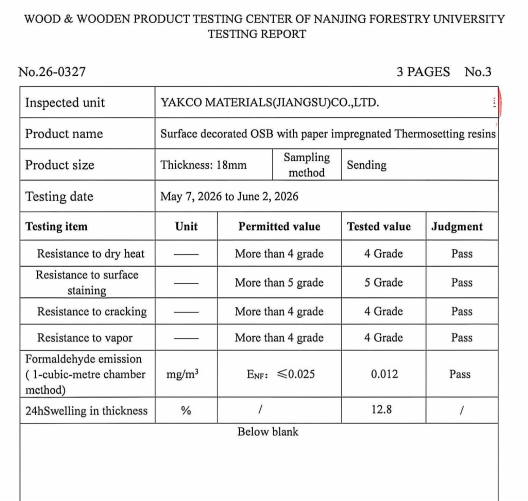
YAKCO’s data points precisely answer the most fundamental question for leather texture Melamine Faced boards: Why can the tactile feel of leather texture be maintained?
1.The "Tactile Feel" of Leather Texture Is Essentially a Physical Structure
The tactile feel of leather texture–the texture of goat texture, the concave-convex of woven patterns–is not printed, it is embossed.
Its essence is the microscopic ups and downs on the surface of the decorative layer.
Once these ups and downs are "pressed flat," the tactile feel disappears.
The pressing process of leather grain boards is essentially a "moulding" process on the substrate surface–decorative paper impregnated with melamine resin is laid on the substrate, and a steel plate with a leather texture applies heat and pressure to "press" the texture into the decorative layer.
During this process, the decorative layer is stretched and compressed along with the texture of the steel plate, forming a concave-convex structure.
But the problem is: this concave-convex structure needs the substrate to "hold it up."
If the substrate density is uneven, the embossing depth will vary–some areas will have full grain, others blurred texture.
If the substrate internal bond is insufficient, the stress generated by embossing will cause slight "rebound" on the substrate surface–the texture is clear when the steel plate presses down, but the surface "springs back" slightly after release, causing the texture to become shallower.
If the substrate moisture content is unstable, the substrate may shrink or expand after embossing, pulling the decorative layer and causing the texture to deform.
YAKCO's three sets of substrate data precisely address these three issues
2.Surface Soundness 1.58 MPa: Texture does not rebound or shrink
Surface soundness measures how tightly the decorative layer is bonded to the substrate. The higher the value, the more firmly the decorative layer is "nailed" to the substrate, and the less likely it is to rebound or shrink after embossing.
YAKCO achieved a surface soundness of 1.58 MPa, while the national standard only requires 0.60 MPa.
This bonding strength, more than double the standard, means that after leather texture pressing, the decorative layer is firmly fixed to the substrate–no rebound, no shrinkage.
The pattern of goat texture remains full, and the grooves of woven patterns remain clear.
3.Internal Bond 0.37 MPa: Embossing depth does not diminish
Internal bond measures how tightly the internal layers of the substrate are "held together." The higher the value, the less likely the surface layer is to "collapse" under pressure.
YAKCO achieved an internal bond of 0.37 MPa, higher than the national standard of 0.35 MPa. This means that during deep embossing, the substrate surface does not collapse or shrink.
The leather texture of the steel plate is fully transmitted to the decorative layer, and the embossing depth is not compromised.
As deep as the steel plate, as deep as the leather texture.
Density 0.72 g/cm³: "Consistent across the entire board"
Density uniformity determines the "consistency" of leather grain embossing.
Areas with higher density are embossed deeper, while areas with lower density are embossed shallower–on the same board, the texture depth varies, visually appearing "blurred."
YAKCO's substrate density is stable at 0.72 g/cm³, with minimal batch‑to‑batch fluctuation. Uniform density means that every part of the board responds consistently under pressure, and the leather pattern depth remains the same from the front to the back of the board.
For large‑area leather grain wall panels or full cabinet doors, this data guarantees continuity and consistency of the texture.
5.The "Tactile Durability" of Leather Texture Is the External Manifestation of Substrate Stability
Designers choose leather texture Melamine Faced boards for a "leather tactile feel you can touch."
But behind that tactile feel is the substrate supporting it–surface soundness determines whether the texture is clear, internal bond determines whether the texture is deep enough, and density uniformity determines whether the entire board is consistent.
YAKCO Leather Design Melamine Board uses the three data points of surface soundness 1.58 MPa, internal bond 0.37 MPa, and density 0.72 g/cm³to answer the most practical question for leather grain boards: How long can the tactile feel of leather texture last?
The answer is:
As long as the substrate does not deform, the leather texture does not deform. The pattern of goat texture is always there, the grooves of woven patterns are always there, and the delicacy of nappa grain is always there.
6.Conclusion: The "Warmth" of Leather Texture Withstands the Test of Time
Designers choose leather grain boards for the warmth and affinity that leather brings.
But this warmth cannot be "temporary"–it needs to withstand daily use, cleaning, and friction in real spaces.
YAKCO Leather Design Melamine Board uses the data of surface soundness 1.58 MPa, internal bond 0.37 MPa, and density 0.72 g/cm³ to prove that the tactile feel of leather texture is not a "fragile thing."
The texture of goat texture, the concave-convex of woven patterns, the delicacy of nappa grain–these tactile details remain clearly distinguishable after years of use.
When a designer says, "I want the warm touch of leather texture," YAKCO responds with data: the tactile durability of leather texture is determined from the inside out.
More: Leather Design Melamine Board