中文简体
中文简体





Previous Post
Leather textures—the texture of goat grain, the weave of woven patterns, the fineness of nappa—are becoming a popular choice for high‑end hotels, boutique clubs, and luxury residential spaces.
Designers choose leather texture boards because they combine visual warmth with tactile affinity, transforming spaces from “cold luxury” into “warm luxury.”
More: yakco technology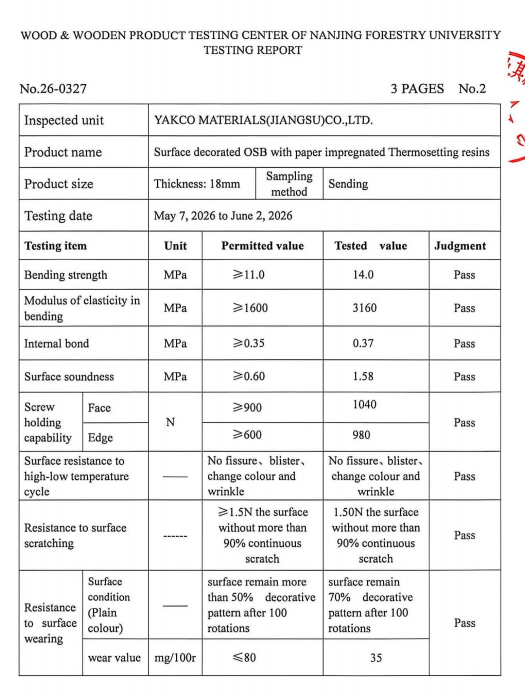
But designers and homeowners often overlook one issue: the “premium feel” of leather texture is not only about the surface—it is also about the hardware connections.
Cabinet door hinges, drawer slides, and handle bases.
A leather texture board may feel warm to the touch, but if the hinge screws loosen, the drawer slides fail, or the handles wobble, the “premium feel” of the entire piece of furniture collapses instantly.
The reliability of hardware connections on leather grain boards depends on an often‑overlooked indicator: screw holding capability.
YAKCO’s data points answer the most practical question for leather grain boards in real‑world use: Can the premium feel of leather texture be “underpinned” by hardware?
1.The “Premium Feel” of Leather Texture Begins with the Hinge
High‑end cabinetry is increasingly pursuing “seamless” and “hidden” designs—concealed hinges, recessed handles, flush doors.
But these designs place extremely high demands on hardware connection stability.
Cabinet doors open and close dozens of times a day, with hinges bearing cyclic alternating stress. Drawers under full load generate lateral torque.
Handles are pulled repeatedly. These dynamic loads are ultimately all transmitted to the connection between the panel and the screws.
If screw holding capability is insufficient, screw holes gradually enlarge under repeated stress—hinges loosen, door panels sag, drawer slides stick.
These issues are not visible at installation, but surface after six months to a year of use.
For high‑end commercial spaces, every “improperly closing” cabinet door consumes the space’s quality perception.
YAKCO’s face screw holding capability of 1040 N exceeds the national standard by 15.6%; its edge screw holding capability of 980 N exceeds it by 63%.
The edge performance is particularly noteworthy—the edge screw‑holding of ordinary particleboard is typically a weak point, because the edge is the “side” of the substrate, where the fibre direction is perpendicular to the screw, resulting in naturally weaker holding power than on the face.
The oriented large flakes of YAKCO’s OSB substrate allow screws driven into the edge to still be “gripped” by fibres from multiple directions.
This means hinges installed on the edges of cabinet side panels remain secure through long‑term opening and closing; drawer slides fixed to side panel edges remain attached under full load.
2.The “Warm Touch” of Leather Texture Should Not Come at the Cost of Loose Hardware
The appeal of leather texture boards lies in their “softness”—visual softness, tactile warmth.
But this softness must not extend to hardware connections.
If hinge screws loosen and door panels sag, the customer perceives not “the warmth of leather texture,” but “poor cabinet workmanship.”
YAKCO’s screw holding capability data ensures that the hardware connections of leather grain boards are “solid” enough.
Face 1040 N and edge 980 N of holding power mean that even with 50 door openings per day, 18,000 per year, the holding force of the screw holes remains above the loosening threshold.
Hinges do not loosen, door panels do not sag, handles do not wobble—the warm touch of leather texture is not “betrayed” by loose hardware.
3.The “Chassis” Behind Screw Holding Capability: Substrate Density and Internal Bond
Screw holding capability is not an indicator borne by the decorative layer alone. Its foundation lies in the substrate.
YAKCO’s substrate has a stable density of 0.72 g/cm³ and an internal bond of 0.37 MPa (national standard ≥0.35 MPa).
Uniform density means that when a screw is driven in, the substrate bears the force evenly in all directions, without local looseness that would fail to “hold.”
High internal bond means the internal layers of the substrate are “held together tightly”—after the screw is driven in, the substrate does not “fall apart” internally due to local stress, which is the root cause of enlarged screw holes after repeated assembly and disassembly in low‑grade panels.
A stable substrate allows screws to “hold.”
4.The Engineering Value for Large‑Area Leather Texture Cabinetry
For cabinetry projects in hotel guest rooms, high‑end residences, and commercial spaces, the value of screw holding capability is directly reflected in three areas:
Reduced after‑sales maintenance.
Loose hinges and failed drawer slides are among the most common after‑sales complaints in whole‑house customisation.
YAKCO’s screw holding capability data eliminates the probability of these issues at the source.
Improved delivery quality.Installers do not need to worry about “screws not tightening” or “tightening now but loosening later.”
Hardware is installed correctly the first time, and every cabinet door opens and closes smoothly, every drawer slides evenly at delivery.
Extended service life.
High screw holding capability means longer “fatigue life” at hardware connections. After tens of thousands of door openings, the screw holes remain tight, and the overall service life of the furniture is extended.
5.Conclusion: The “Premium Feel” of Leather Texture Is a Shared Language of Surface and Hardware
Designers choose leather texture boards for the visual and tactile “premium feel.”
But this premium feel cannot remain only on the surface—it needs to be “underpinned” by hardware.
A cabinet door that closes without rattling, a drawer that slides without wobbling, a handle that remains secure for years—these details are the ultimate expression of premium feel.
YAKCO Leather Design Melamine Board uses the screw holding capability data of face 1040 N and edge 980N to prove that the “premium feel” of leather texture has not only surface warmth but also hardware solidity.
The tactile warmth of leather is not “betrayed” by loose hardware, and the premium feel is not “consumed” by time.
When a designer says, “I want the premium feel of leather texture,” YAKCO answers the unspoken question with data: “It has both surface warmth and hardware solidity.”
More: Leather Design Melamine Board