中文简体
中文简体





Previous Post
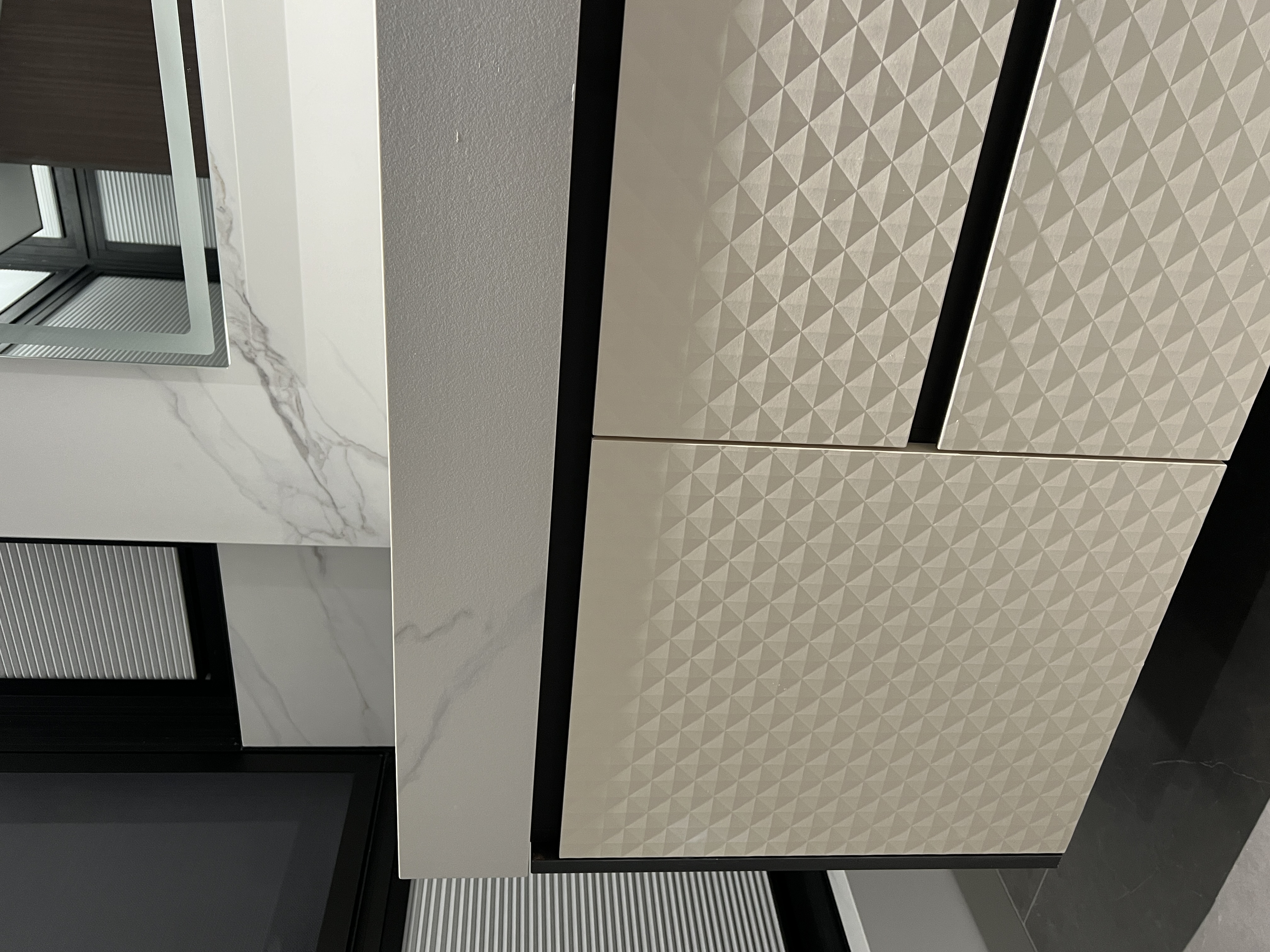
In the design of high‑end hotels, clubs, and commercial exhibition spaces, leather texture boards are increasingly being used for large‑area walls– from sofa feature walls in lobbies, to wall cladding in corridors, to full decorative walls in meeting rooms.
Designers aim for a visually fluid "uninterrupted" effect: continuous texture, consistent direction, no "breaks."
More:yakco technology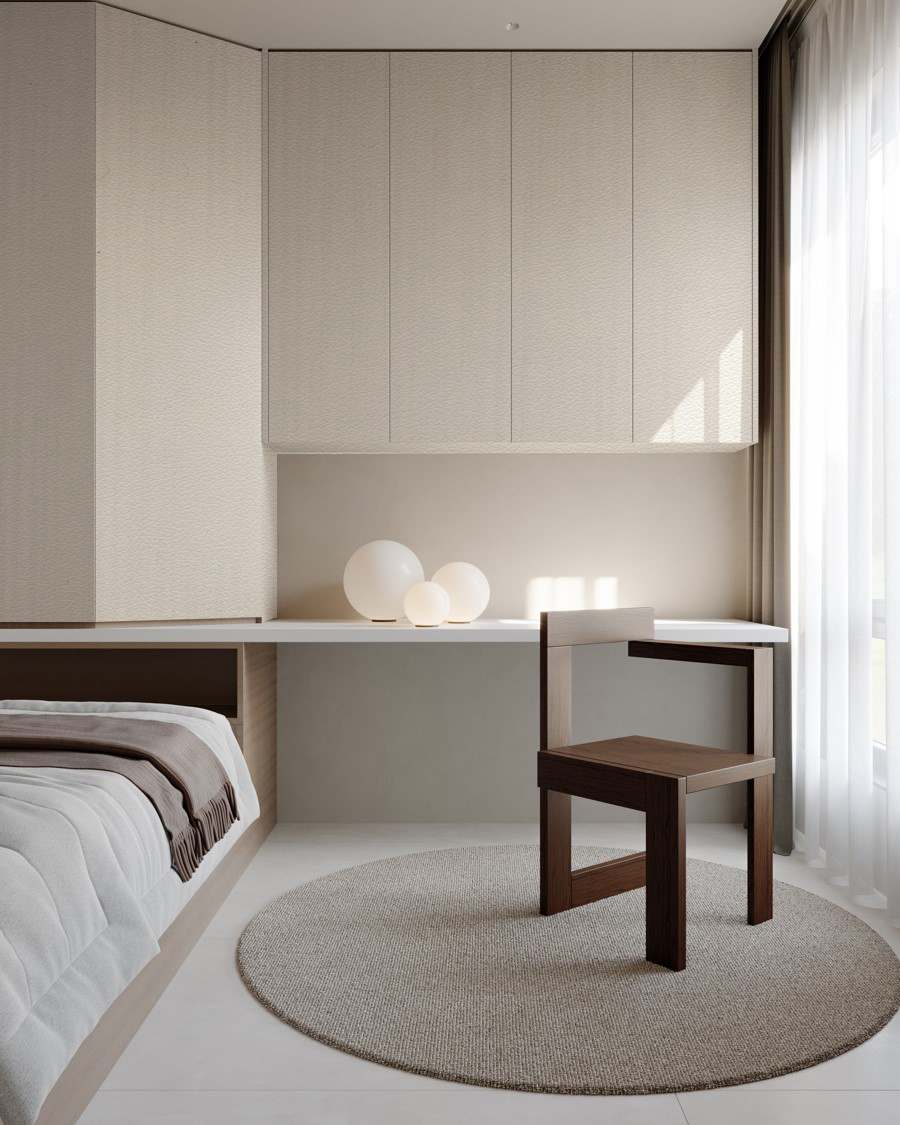
But the execution of large‑area leather grain walls presents a hidden engineering challenge: the continuity of texture depends not only on installation precision, but also on the batch‑to‑batch consistency of the panels.
The texture on a single leather texture board is continuous, but when panels from different batches are joined together, the texture may not "match"–differences in particle size, variations in concave-convex depth, or deviations in texture direction.
These differences become very noticeable on a full wall, directly undermining the "uninterrupted" design effect.
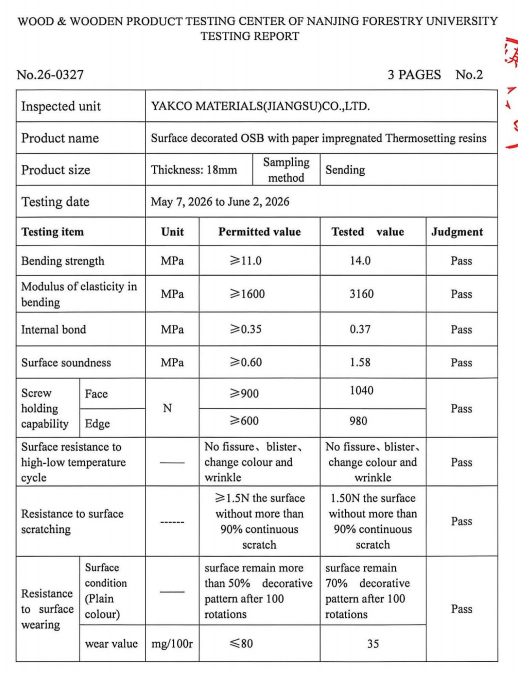
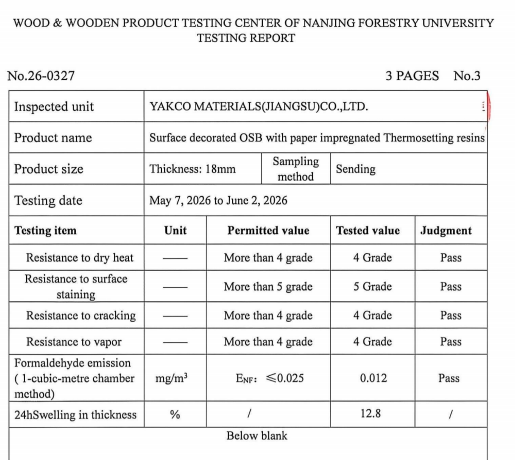
YAKCO Leather Design Melamine Board, in the 2026 national test, addresses this issue with a set of data related to "consistency": density 0.72 g/cm³(with minimal batch‑to‑batch fluctuation), internal bond 0.37 MPa, and surface soundness 1.58 MPa.
The following sections break down, from an engineering execution perspective, how these three data points ensure "texture continuity" on large‑area leather grain walls.
1.Minimal Batch‑to‑Batch Density Fluctuation: Every Batch of Leather Grain Is "Embossed to the Same Depth"
The texture depth of leather texture boards is determined by the pressing process.
But with the same pressing parameters, texture depth varies when applied to substrates of different densities–higher density areas are embossed shallower (because the substrate is "harder"), while lower density areas are embossed deeper (because the substrate is "softer").
If the substrate density differs significantly between batches, the leather texture depth produced by the same steel plate will vary.
The first batch may have full goat grain; the second batch may have flatter goat texture–when joined on the same wall, the difference is immediately visible.
YAKCO's substrate density is stable at 0.72 g/cm³, with minimal batch‑to‑batch fluctuation.
This means that panels from different batches, under the same pressing process, produce essentially the same leather grain depth.
The texture of the first batch and the tenth batch show no visual difference.
The continuity of texture on large walls is secured at the source.
2.Internal Bond 0.37 MPa: The Decorative Layer of Every Panel Has Consistent "Anchoring Force"
Internal bond determines how tightly the internal layers of the substrate are "held together." If internal bond is unstable, the stress response during pressing varies–panels with higher internal bond anchor the decorative layer firmly, while panels with lower internal bond allow slight "rebound" of the decorative layer,
These tiny differences are not visible on a single panel, but when ten or twenty panels are joined, the texture depth appears to "jump."
YAKCO achieved an internal bond of 0.37 MPa, higher than the national standard of 0.35 MPa, with stable batch‑to‑batch control.
The anchoring force of the decorative layer is consistent across every panel, and embossing depth does not "jump" due to different substrate batches.
On large‑area installations, texture depth remains uniform.
3.Surface Soundness 1.58 MPa: The "Sharpness" of Leather Texture Edges Is Consistent
The clarity of leather texture depends on the bonding strength between the decorative layer and the substrate–that is, surface soundness. Higher bonding strength results in sharper leather grain edges; lower bonding strength results in blurred edges.
YAKCO achieved a surface soundness of 1.58 MPa, while the national standard only requires 0.60 MPa.
This bonding strength, more than double the standard, means that within the same batch, every panel has consistent sharpness of leather texture edges.
When joined, there is no difference between "this panel is sharp, that panel is blurred."
4.The Engineering Challenge of Large‑Area Leather Grain Walls: From a Single Panel to a Full Wall
A single 60cm×60cm leather grain board has perfect texture. But a 6m×3m wall may require 30 panels. The real engineering challenge is: how do you make these 30 panels look like "one piece" when joined.
Ordinary leather texture boards may "pass every test" in national standards, but batch‑to‑batch consistency is not guaranteed.
The first shipment to the site may have a density of 0.73, the second shipment a density of 0.69–with the same pressing process, the texture depth differs by over ten microns.
Installers only discover the mismatch after mounting, but with tight deadlines, they have to proceed.
The final result is a "patchwork" feel–discontinuous texture and a less premium visual.
YAKCO's narrow‑window quality control ensures that substrate density, internal bond, and surface soundness are consistent across different batches.
Every panel the installers receive has matching texture depth, edge sharpness, and grain fullness. The final wall looks like it was cut from a single piece.
5.Scenarios Suited for Large‑Area Applications
Based on batch‑to‑batch consistency assurance, YAKCO Leather Design Melamine Board is particularly suitable for the following large‑area applications:
Hotel lobby sofa feature walls – the goat grain fullness is consistent across the entire wall, with no "this section is deeper, that section is shallower" differences.
Club corridor wall cladding – woven texture direction is consistent across dozens of metres, with texture matching at joints and "breaks" eliminated.
Full decorative walls in meeting rooms– after large‑area leather grain panels are joined, the visual effect is seamless, without a "patchwork" feel.
6.Conclusion: The Premium Feel of Large‑Area Leather TextureIs Not the Victory of a "Single Panel"
Designers choose leather texture boards for high‑end spaces to achieve a "premium feel" across the entire wall.
But the premium feel is not achieved by a "single panel"–it is achieved when dozens of panels are joined together, with texture that remains continuous, direction consistent, and depth uniform.
When a designer says, "I want the leather texture on the entire wall to be seamlessly consistent," YAKCO provides an answer with batch‑to‑batch consistency data–an answer that does not require choosing between "design effect" and "constructability."