中文简体
中文简体





Previous Post
What Is the Manufacturing and Chemical Synthesis of Rock Design Melamine Boards?
To understand the superior performance of a rock design melamine board, it is necessary to examine the complex multi-stage chemical and physical processes utilized during its factory synthesis, particularly resin impregnation and thermocuring crystallization.
The Impregnation Process of Melamine Formaldehyde Resin
The durability of the board surface begins with the chemical preparation of the resin system. Melamine formaldehyde resin is a thermosetting polymer synthesized through the chemical reaction of melamine and formaldehyde under controlled alkaline conditions. This reaction initiates a polycondensation process, forming a liquid resin characterized by highly reactive methylol groups.
Specialized decorative papers, printed with high-resolution geological patterns of natural stone, are passed through continuous impregnation baths filled with this liquid melamine formaldehyde resin. The porous paper fibers absorb the resin fully, ensuring complete saturation. After impregnation, the paper is passed through high-velocity drying ovens where the temperature is carefully regulated to initiate a partial curing phase, which is widely designated as the B-stage. In this semi-cured state, the resin remains dry and stable to the touch, allowing the paper to be rolled and handled easily, yet it retains its latent cross-linking capabilities, which are required for the final pressing cycle.
High Definition Decorative Print and Rock Texture Pressing
Replicating the visual authenticity of natural stone on a paper carrier requires advanced rotogravure or industrial digital printing technologies. These systems utilize multi-color ink channels to reproduce the fine mineral flecks, quartz veins, and color gradients characteristic of volcanic slate, dense granite, and metamorphic marble.
Once the printed paper is impregnated, it is positioned directly onto the structural wood substrate, which is typically a dense medium density fiberboard or a high-strength particleboard core. The assembled layers are placed into a high-pressure lamination press equipped with specialized steel plates. These steel plates are engraved using laser-carving technologies to match the exact physical contour of the printed stone veins, a process known as Embossed in Register technology which aligns the physical plate indentations with the visual printed patterns.
Under temperatures exceeding one hundred and eighty degrees Celsius and pressures reaching thirty bars, the semi-cured melamine resin melts, flows, and undergoes complete cross-linking, transforming into an irreversible, dense crystalline network. This thermocuring process physically bonds the decorative paper to the substrate while simultaneously molding the realistic, three-dimensional, sandblasted, split-face, or honed rock texture directly onto the hardened surface layer, ensuring that the visual pattern and the physical texture are in perfect, synchronized alignment.
What Structural Properties Make Engineered Melamine Surfacing Resilient?
The intense thermocuring process creates a surface layer that possesses exceptional mechanical resistance, allowing rock design melamine boards to perform reliably in environments where natural stone or solid wood veneers would suffer damage.
Thermal Resistance and Surface Hardness Profiles
The cross-linked melamine formaldehyde polymer network is highly stable and does not melt or deform when exposed to high temperatures, making these panels highly suitable for close proximity installation near kitchen appliances and hot food service zones. The cured surface can withstand direct contact with hot objects up to one hundred and eighty degrees Celsius without blistering, scorching, or discoloration, providing a vital safety margin in busy commercial environments.
In terms of surface hardness, the mineral-infused resin layer exhibits high scratch and impact resistance. On the standardized Taber Abraser scale, which measures the resistance of a surface to continuous rotary friction, high-quality rock design melamine boards achieve class ratings that indicate they can withstand thousands of abrasive cycles before the decorative print layer is compromised. This hardness prevents keys, utensils, and office equipment from carving unsightly scratches into the stone pattern, maintaining the pristine geological aesthetic over decades of active daily use.
Moisture Barrier Dynamics and Edge Banding Engineering
While the face of the melamine board is entirely non-porous and impervious to liquid water, the underlying wood-fiber core remains highly sensitive to moisture absorption. If water vapor or liquid droplets are allowed to penetrate the substrate, the wood fibers will swell and expand, leading to localized core deformation, surface cracking, and edge delamination.
To protect the vulnerable core, advanced edge banding technology is utilized. Once the raw panels are cut to the required dimensions, the exposed edges are sealed with thick polyvinyl chloride or acrylonitrile butadiene styrene plastic bands. These bands are applied using automatic edge-banding machinery equipped with polyurethane hot-melt adhesives or high-precision CO2 laser fusion systems. Laser edge banding melts the backing material of the band directly, fusing it to the board core without a visible glue line. This seamless fusion establishes an impenetrable moisture barrier that prevents water from penetrating the internal fibers during routine washing, making the panels safe for high-humidity environments like domestic bathrooms and commercial laundry zones.
How Does Rock Design Melamine Compare to Natural Stone and Veneers?
Selecting the ideal surfacing material for a high-traffic project requires comparing engineered composites against traditional solid stones and authentic timber veneers across key mechanical and economic parameters.
|
Performance Attribute |
Natural Stone Slabs |
Engineered Veneers |
Rock Design Melamine Board |
|---|---|---|---|
|
Structural Weight |
Extremely heavy, requires reinforced support |
Moderate, depends on substrate |
Lightweight, easy to handle and mount |
|
Fabrication Process |
High-cost diamond cutting and wet saws |
Moderate cutting, requires lacquer sealing |
Simple CNC routing, no post-finishing |
|
Chemical Porosity |
Highly porous, absorbs oils and stains |
Moderate absorption, prone to water marks |
Entirely non-porous, highly stain resistant |
|
Thermal Stability |
Excellent, impervious to direct flames |
Poor, sensitive to heat discoloration |
Very good, resists blistering up to 180C |
|
Mechanical Hardness |
High scratch resistance, prone to cracking |
Low scratch resistance, easy to dent |
High scratch and impact resistance |
|
Relative Project Cost |
High material and skilled labor expenses |
Moderate material and varnishing costs |
Low material cost, highly cost-effective |
Weight Constraints and Structural Load Considerations
Natural stone slabs, such as marble or granite, are exceptionally heavy materials, requiring extensive structural reinforcement of floors, wall studs, and cabinet framing before they can be safely installed. In high-rise office towers, marine yacht interiors, and mobile exhibition booths, this excess weight represents a major engineering obstacle that can compromise fuel efficiency or exceed structural building limits.
Rock design melamine boards solve this challenge by delivering the exact visual presence of solid stone at a fraction of the weight. Because the core material consists of lightweight, compressed wood fibers, a large-format wall panel can be lifted and positioned by a single technician using standard mounting clips, completely eliminating the need for heavy-duty cranes, reinforced framing, and specialized masonry anchors, thereby simplifying structural calculations and reducing overall project engineering costs.
Fabrication Efficiency and On-Site Installation Flexibility
Working with natural stone or quartz slabs requires highly specialized stone-masons equipped with diamond-tipped wet saws, dust-extraction enclosures, and heavy transportation racks. Any minor error in on-site measurement can result in catastrophic material waste, as stone slabs cannot be easily trimmed or adjusted on the construction site.
In contrast, rock design melamine boards are highly versatile and can be fabricated using standard woodworking machinery. Carpentry crews can cut, drill, bevel, and router these composite panels directly on the construction site using carbide-tipped circular saws and handheld routers, allowing them to adjust the panels instantly to fit out-of-plumb walls, uneven corners, and unexpected electrical conduit runs, which significantly accelerates the installation schedule and minimizes field-labor expenses.
What Are the Primary Applications of Stone Textured Melamine Panels?
The physical durability, lightweight structure, and rich visual options of rock design melamine boards make them highly suitable for demanding applications across residential, commercial, and hospitality spaces.
Heavy Wear Kitchen Cabinets and Countertop Backsplashes
In domestic and commercial kitchens, surfaces are exposed to intense physical wear, grease splatters, acidic food juices, and constant moisture. Traditional wood veneers are easily stained by red wine, vinegar, or citric juices, while natural stone backsplashes require periodic chemical sealing to prevent oils from soaking into the porous mineral structure.
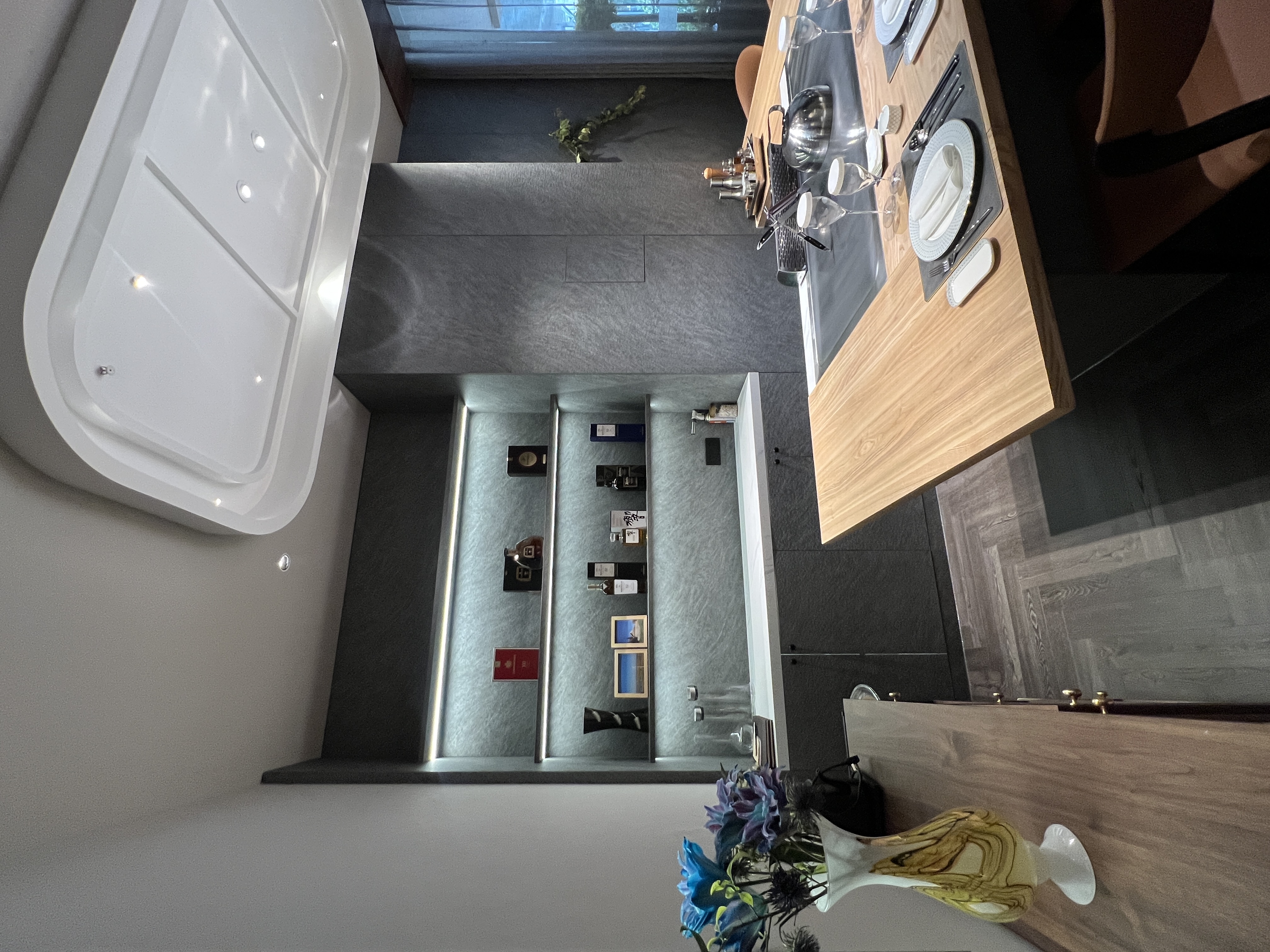
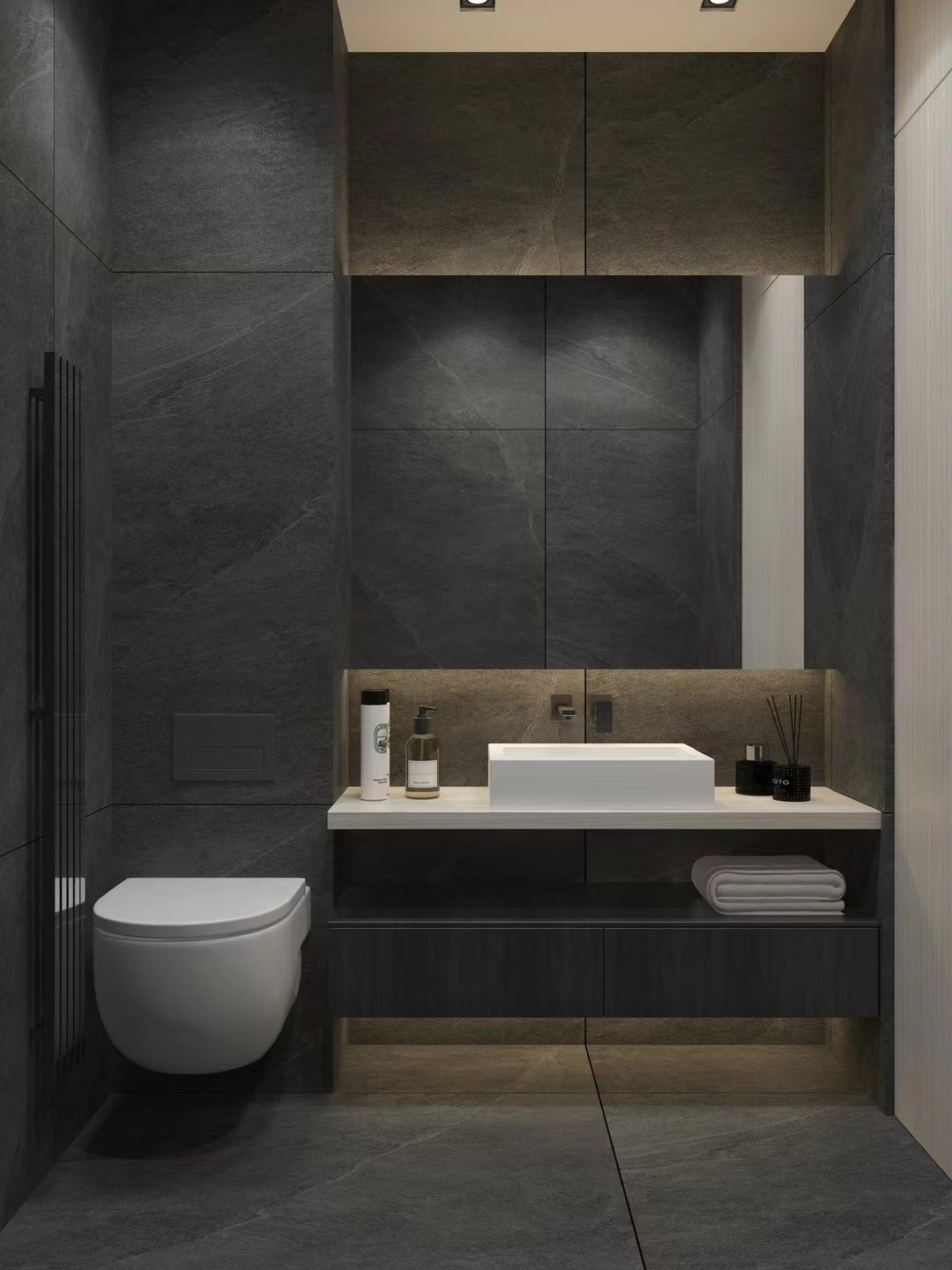
Rock design melamine boards are widely utilized for kitchen cabinet fronts, open shelving, and protective wall backsplashes. The non-porous melamine surface layer prevents liquids from penetrating, allowing grease, mustard, and coffee to be wiped away effortlessly with a damp cloth without leaving a ghost stain. The realistic rock textures, such as dark basalt or white travertine, provide a dramatic, tactile contrast when paired with flat, matte solid-color cabinet fronts, creating a highly sophisticated, modern kitchen design that is exceptionally easy to maintain.
Commercial Wall Cladding and Feature Walls
In public lobbies, corporate boardrooms, hotel corridors, and retail showrooms, wall surfaces must withstand continuous traffic and physical impacts from luggage, carts, and passing visitors. Painting or utilizing wallpaper in these high-traffic zones requires frequent touching-up and re-decorating to maintain a clean, professional appearance.
Specifying rock design melamine boards as large-format wall cladding panels provides a highly durable and visually striking feature wall solution. These panels can be mounted vertically using tongue-and-groove profile systems or suspended on aluminum Z-clip tracks, creating a seamless, architectural stone facade. The impact-resistant nature of the melamine surface protects the lower sections of the walls from damage, while the consistent stone veining ensures a uniform aesthetic across long corridors, establishing a luxurious visual experience that coordinates with the prestigious identity of commercial developments.
Modern Office Furniture and Custom Joinery
The design of modern workspaces has evolved to prioritize warm, tactile materials that promote wellness and creativity. High-end receptionist counters, conference tables, and executive desks are increasingly shifting away from sterile metals and cold plastics toward organic textures that mimic the natural environment.
Rock design melamine boards are highly favored by custom furniture designers for creating monolithic, stone-look reception desks and massive, multi-section boardroom tables. The ease of cutting forty-five degree miter joints in these panels allows joiners to build seamless box-joint constructions that replicate the look of a solid, hand-carved block of stone. This design technique provides the visual prestige of a solid stone table at a fraction of the cost, while ensuring that the office furniture can be disassembled, transported, and relocated easily if the company decides to reorganize its workspace layout.
What Installation Standards and Substrate Selection Ensure Peak Performance?
The long-term structural success of a rock design melamine board installation is determined by selecting the appropriate substrate material and utilizing professional mechanical mounting standards.
Substrate Density and Moisture-Resistant Core Varieties
The substrate, which is the structural core beneath the melamine paper, provides the panel with its flat rigidity and mechanical fasteners holding strength. The two most common cores utilized in manufacturing are Particleboard, which consists of compressed wood chips bonded with synthetic adhesive resins, and Medium Density Fiberboard, which is made from highly refined, pressurized wood fibers.
For general office furniture and dry commercial wall paneling, standard high-density particleboard is highly cost-effective and provides excellent dimensional stability, as its multi-layered wood chip structure resists bending and sagging. For high-humidity installations, such as kitchen cabinet bases, public washrooms, or laboratories, moisture-resistant grades of MDF, which are commonly referred to as MR-MDF and feature a green-tinted core, are specified. These specialized substrates utilize moisture-resistant polyurethane binders that do not expand or lose structural bond strength when exposed to high air humidity, ensuring that the finished rock design melamine board remains perfectly flat and structurally sound over decades of service.
Mechanical Cleat Systems and Adhesive Mounting Protocols
When installing large-format rock design melamine panels as wall cladding, contractors must choose between direct adhesive bonding or mechanical cleat suspension based on the flat quality of the underlying wall structure.
Direct adhesive bonding utilizing high-strength polyurethane construction adhesives is suitable for flat, clean gypsum board or masonry walls. The adhesive is applied in continuous vertical beads to the back of the panel, which is then pressed firmly onto the wall and secured with temporary bracing until the adhesive cures completely, providing a low-profile installation that maximizes usable floor area.
If the wall surface is uneven, warped, or contains exposed conduit runs, a mechanical aluminum Z-clip suspension track system is preferred. Z-clips are screwed into the wall studs at regular vertical intervals, with matching clips secured to the back of the melamine panels. The panels are then hung onto the wall track, creating a strong mechanical interlock. This suspension method establishes a uniform, flat surface regardless of the underlying wall defects, provides a small air gap that assists in thermal insulation and acoustic dampening, and allows individual panels to be removed easily for utility access or building renovations without destroying the wall structure.
What Maintenance and Restoration Routines Preserve Surface Longevity?
To ensure that rock design melamine boards retain their rich color depth, tactile texture, and mechanical integrity, maintenance personnel must follow a regular, non-destructive cleaning program designed to protect the cured polymer surface.
Daily Sanitation and Chemical Solvent Resistance
One of the greatest operational benefits of melamine-faced panels is their exceptional resistance to chemical solvents and standard household cleaners. The cured thermoset resin film is completely non-porous and non-reactive, meaning it will not suffer damage or staining from direct exposure to common chemicals like rubbing alcohol, ammonia, or commercial sanitizing sprays.
For daily cleaning, maintenance crews should utilize a soft microfiber cloth dampened with warm water and a mild, neutral dish detergent. For deeply textured slate or sandblasted stone designs, where dust and food residues can become trapped inside the micro-cavities of the texture, a soft-bristled non-metallic brush can be used in a gentle circular motion to loosen the debris. Technicians must avoid using abrasive scrubbing powders, steel wool pads, or scouring brushes, as these mechanical abrasives will gradually wear down the high points of the textured surface, leading to localized shiny patches and permanent damage to the geological pattern.
Micro Scratch Prevention and Edge Delamination Prevention
Over years of intensive commercial service, minor mechanical wear can create micro-scratches on the surface, which can dull the rich mineral color of the stone pattern. To prevent this, users should avoid sliding heavy ceramic mugs, metallic laptops, or rough-bottomed display stands directly across the surface of executive desks or reception counters, utilizing soft felt pads beneath these items instead.
If a deep scratch does occur, it cannot be sanded out or polished like natural solid timber, as the decorative print layer is exceptionally thin. Instead, deep scratches can be filled and masked using color-matched acrylic filler waxes or specialized furniture repair pens designed to bond with thermoset resins.
To prevent edge delamination, users must ensure that hot coffee makers, boiling kettles, and steam-producing appliances are not positioned directly beneath the edge joints of melamine wall panels or cabinets, as continuous exposure to hot, localized moisture vapor can soften the edge-banding adhesive over time, creating tiny gaps where water can enter. By conducting simple annual inspections of the edge seals, cleaning the textured veins gently, and managing structural loads intelligently, facility managers and homeowners can enjoy the exceptional beauty and robust, maintenance-free performance of rock design melamine boards across a wide range of challenging indoor environments.