中文简体
中文简体





Previous Post
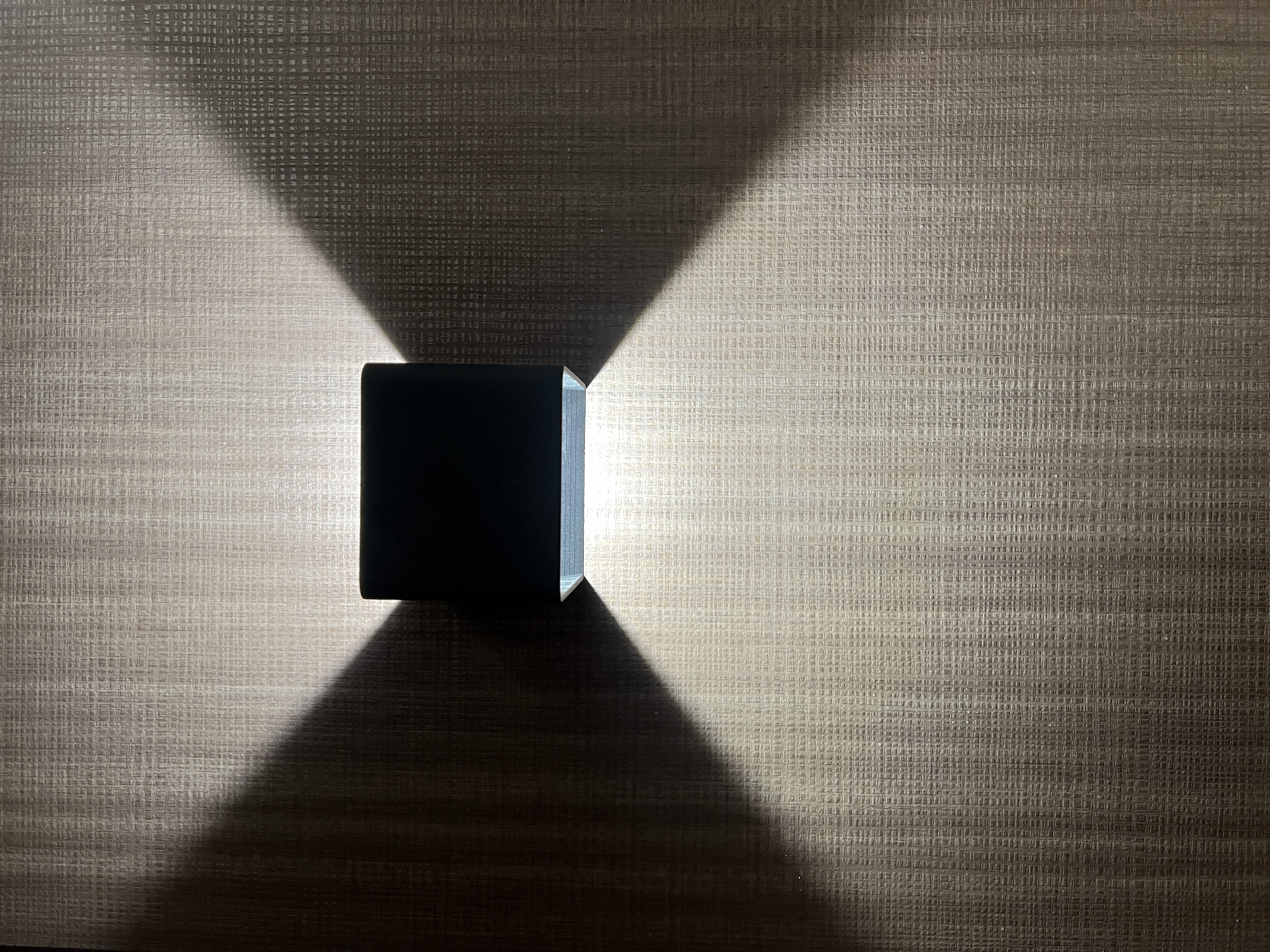
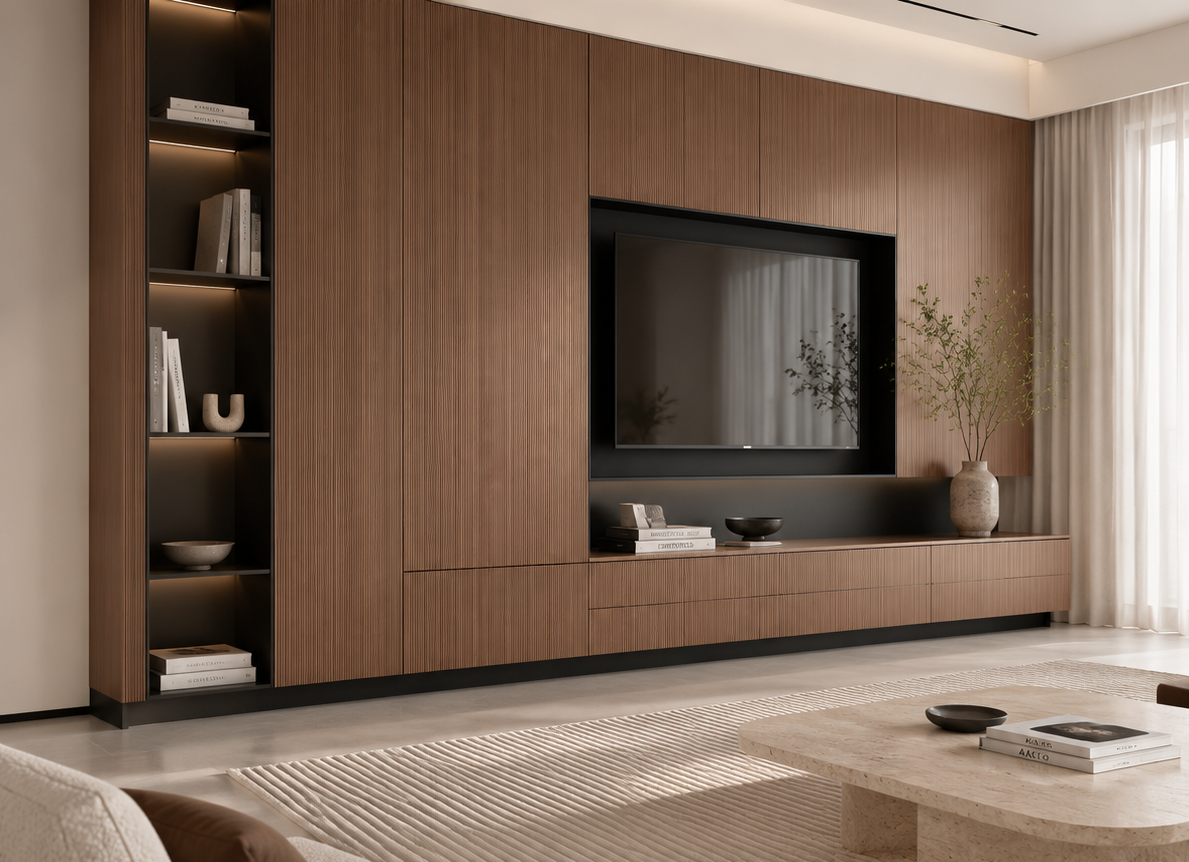
When a decorative panel is endowed with the geometric lines of Art Deco or the delicate texture of Leather Design, its value first manifests in visual and tactile appeal.
However, can these meticulously designed surfaces remain intact through daily use—resisting scratches from keys, spills of hot soup, coffee stains, steam, and temperature fluctuations? The answer lies in the panel's surface performance indicators.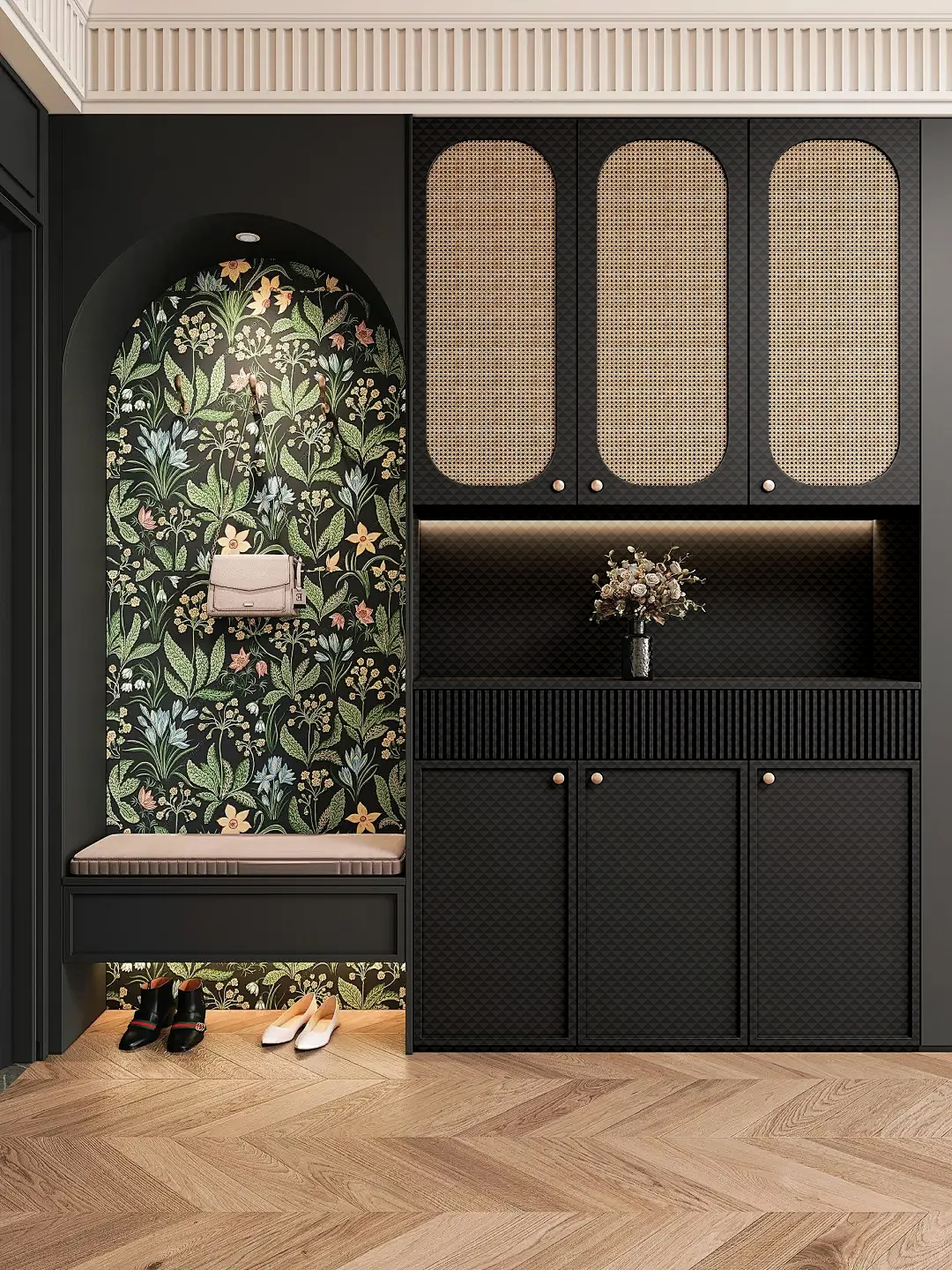
According to GB/T 15102-2017 for wood-based panels surfaced with paper impregnated thermosetting resins, surface properties cover multiple dimensions: resistance to scratching, wearing, dry heat, staining, cracking, vapour, and high-low temperature cycles.
The test data provide a quantified "durability checklist."
More:yakco technology
Resistance to Surface Scratching: Withstanding Everyday "Accidental Scratches"
Requirement: Under a 1.5 N load, the surface must not show a continuous scratch exceeding 90% in length.
Test result: Under 1.5 N, no continuous scratch—Pass. This means a metal key, a zipper pull, or a hard pen tip sliding accidentally across the surface will not leave a noticeable mark.
This is especially important for Art Deco style panels with high-gloss or matte solid colours, where scratches would directly disrupt the crisp decorative lines.
Resistance to Surface Wearing: The "Durability" of Decorative Patterns
Wear resistance is measured by two criteria: Surface condition – after 100 rotations, the decorative pattern must retain more than 50%, and the test result showed 70%; Wear value – standard ≤80 mg/100r, tested at 35 mg/100r, far better than required.
For leather-textured boards, this means that even on frequently touched surfaces like desktops, countertops, or cabinet doors, the pattern will not fade or blur due to friction, significantly extending service life.
Resistance to Dry Heat, Staining, Cracking, and Vapour: The "Kitchen and Dining Table Tests"
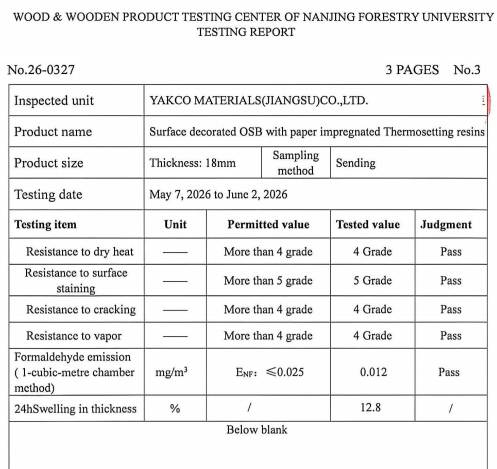
All four indicators are graded; ≥grade 4 is considered passing, and all results reached:
Resistance to dry heat: Grade 4 (Pass) – can withstand brief high-temperature contact from hot pots or cups without discolouration or loss of gloss.
Resistance to surface staining: Grade 5 (Full score) – excellent resistance to common stains such as coffee, tea, soy sauce, and red wine, making cleaning easy.
Resistance to cracking: Grade 4 (Pass) – no micro-cracks develop under alternating wet and dry conditions, protecting the substrate from moisture ingress.
Resistance to vapour: Grade 4 (Pass) – even under continuous hot steam, no whitening, loss of gloss, or blistering occurs.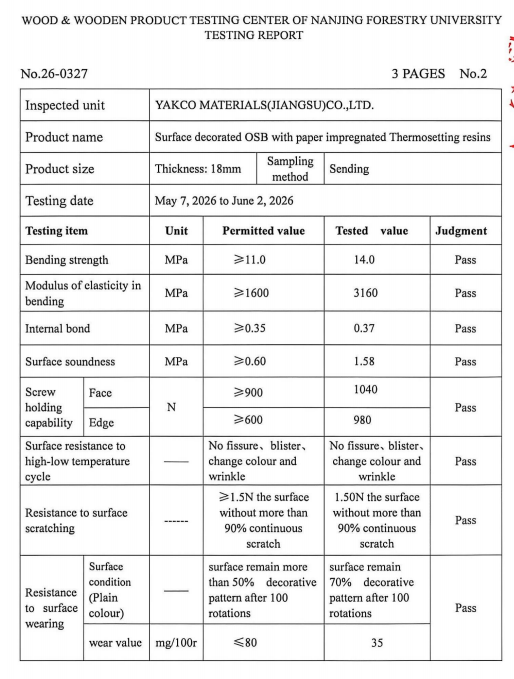
Surface Resistance to High-Low Temperature Cycles: Adapting to Seasonal and Regional Temperature Variations
The standard requires no fissures, blistering, colour change, or wrinkling; the test results fully complied.
This ensures that when panels are used in environments ranging from heated northern rooms to humid southern climates, the decorative layer and substrate do not separate due to expansion and contraction – particularly critical for custom furniture used across different regions.
Conclusion
A superior decorative panel is not merely the simple layering of a "good-looking" decorative paper and a "solid" substrate; it is a systematic balance of all surface properties and substrate performance.
For furniture that pursues the artistic feel of Art Deco or the light-luxury texture of Leather Design, surface performance data are a more reliable "quality certificate" than the pattern itself.
When selecting panels, beyond the grain and colour, it is worth asking: What are the scratch resistance, stain resistance, and heat resistance ratings?
These numbers are the key to determining whether your cherished furniture will stay beautiful for years to come.