中文简体
中文简体





Previous Post
Batch delivery is the truest "stress test" for the decorative board industry. A hotel project often requires thousands of decorative panels of the same texture, and a finished residential project may involve tens of thousands of cabinet sets.
Know About Tech: yakco technology
What designers and contractors worry about most is often not "is the sample good?" but "is the bulk delivery the same as the sample?"– batch-to-batch consistency is the core dignity of industrial products.
YAKCO's panels delivered multiple excellent data points in national authority testing.
But more noteworthy than any single data point is the substrate control logic that supports the stable output of these data– especially the two indicators of density and moisture content, which are strictly locked within an extremely narrow process window.

The Narrow Window: The Watershed Between "Passing" and "Reproducible"
The national standard requires particleboard density to be between 0.60 and 0.90 g/cm³, and moisture content between 3.0% and 13.0%. This is a fairly wide range.
The advantage of a wide window is high production tolerance, but the cost is large batch-to-batch performance fluctuations: within the same order, panels with higher density have good screw holding capability but are prone to edge chipping during processing;
panels with lower density are lighter but have insufficient screw holding capability; panels with higher moisture content have a greater risk of later shrinkage and deformation, while those with lower moisture content are more brittle.
YAKCO's tested data are:
density 0.72 g/cm³, moisture content 5.3%. These two numbers themselves are not surprising, but the real value lies in the control logic behind them– YAKCO locks the density target at 0.72±0.02 and the moisture content target at 5.3±0.5, forming an "internal control narrow window" far tighter than the national standard.

What Does the Narrow Window Mean?
It means that the differences in density and moisture content between panels within the same batch, or even across different batches, are compressed to an extremely small range.
When density fluctuation is reduced from the standard‑permitted ±0.15 to ±0.02, and moisture content fluctuation from ±5% to ±0.5%, the mechanical properties, processing performance, and surface suitability of the panels become highly reproducible.
Why Is the Narrow Window Critical for Engineering Projects?
The requirement of large engineering projects for panels is essentially "de‑individualisation" – every panel should be identical to its twin. Narrow‑window control directly delivers three engineering values:
1.No frequent adjustment of processing parameters:
When the panel density is stable around 0.72, the feed speed of CNC machining, sawing rotation speed, and edge banding temperature can be set once, without re‑adjusting for each batch.
For furniture factories undertaking large commercial projects, this means saving tens of thousands of RMB in equipment commissioning costs and compressing delivery cycles by several days.
2.Predictable hardware connection reliability:
Screw holding capability is positively correlated with density.
Density consistency under the narrow window means that the screw torque for hinges, handles, and three‑piece connectors can be standardised, avoiding on‑site rework caused by "this batch tightens well, the next batch strips."
YAKCO's tested screw holding capability is 1110N (national standard ≥900N), and under high density consistency, the batch‑to‑batch range of screw holding capability is controlled within 50N.
3.Stable decorative pressing results:
Moisture content fluctuation is a major cause of blistering and delamination after decorative paper pressing.
YAKCO locks moisture content at the low‑shrinkage‑swelling range of 5.3% with fluctuation control in ±0.5%, meaning that the melamine impregnated paper contacts a highly consistent substrate surface state during pressing, resin penetration is uniform, and batch‑to‑batch differences in gloss, colour difference, and adhesion of the finished decorative surface are extremely small.

How Is the Narrow Window Achieved? – Dual Support from Equipment and Quality Control
The narrow window is not achieved by "slogans"; it requires dual guarantees from hardware and systems.
YAKCO's investment in equipment is key:
introducing the German Dieffenbacher continuous press line, equipped with online thickness scanning and density feedback systems, and closed‑loop control of pressure, temperature, and speed during hot pressing, reducing the unevenness of density distribution to one‑third of that of traditional multi‑opening presses.
On the quality control side:
YAKCO performs sampling tests for density and moisture content once every 2 hours, while sending samples to third‑party institutions for full‑item review every month.
The significance of high‑frequency sampling is that once density or moisture content shows a trend of deviating from the narrow window, it can be adjusted immediately on the production line, avoiding the scrapping or downgrading of entire batches.
The "Spillover Effect" of the Narrow Window: Surface Durability Also Benefits
Stable density and precise moisture control directly spill over into surface performance. YAKCO panels achieved Grade 5 (the highest) in resistance to dry heat, resistance to vapor, and resistance to cracking, Grade 4 in resistance to surface staining, and a wear value of 57 mg/100r.
These results are not due to the decorative impregnated paper alone, but to the uniform and stable physical foundation provided by the substrate under test conditions such as hot pressing, moisture impact, and stress release.
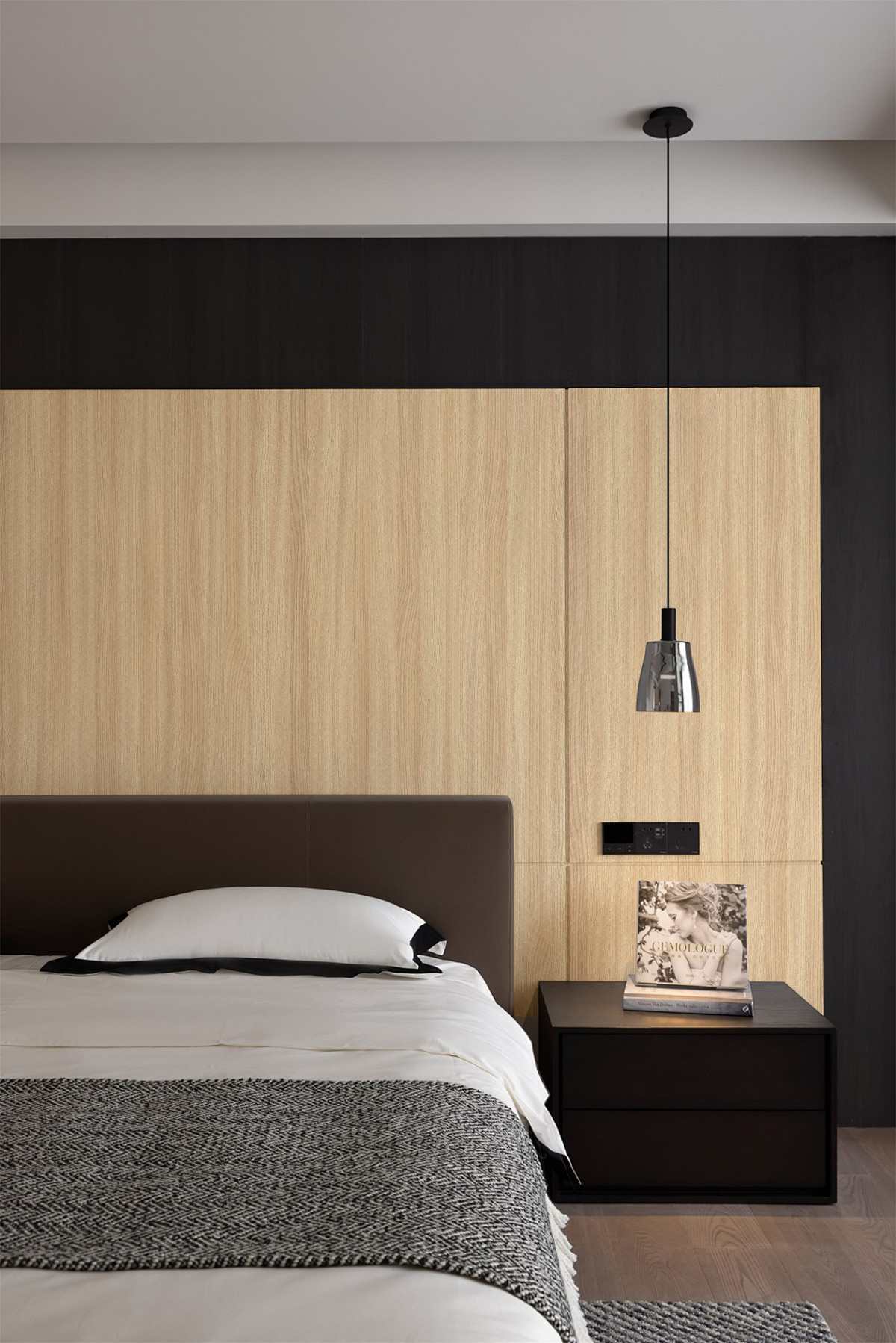
YAKCO Substrate Narrow‑Window Control Has Been Validated in Multiple Large Projects:
1.A hotel group in East China (3,000 guest rooms):
Whole‑house custom cabinets used YAKCO decorative panels.
During project acceptance, 20 batches and 200 panels were sampled. The density range was only 0.04 g/cm³, and the moisture content range was only 0.6%.
The contractor reported: zero edge chipping during CNC processing, high consistency in hinge installation torque, and no rework.
2.A finished residential project (1,200 units):
Cabinet door panels used YAKCO's 3D embossed wood texture series. Six months after delivery, the customer complaint rate was zero, with no misaligned cabinet doors or decorative surface cracking caused by substrate deformation.

Conclusion: Narrow Window, Broad Trust
Density 0.72, moisture content 5.3– these two numbers are unremarkable in YAKCO's test report, far less eye‑catching than "bending strength 29.8 MPa" or "resistance to dry heat Grade 5" .
But in the real world of engineering implementation, it is precisely this narrow‑window control of substrate indicators that determines whether tens of thousands of panels can be as stable as a single panel.
The value proposition of YAKCO Melamine Board Substrate is clear: not pursuing the peak limit in the laboratory, but ensuring that every panel on the production line falls stably within the narrow window.
Because what engineering projects need is never "the single best panel", but "every panel as reliable as the next".
Know More About Products: Premium Melamine Faced Board