中文简体
中文简体





Previous Post
When a piece of furniture features the geometric colour-blocking of Art Deco or the supple leather-like texture of Leather Design, designers and consumers are often captivated by its unique decorative language.
However, what truly determines whether this furniture will still have doors that do not sag, handles that do not loosen, and surfaces that do not peel after ten or twenty years are the "connection strength" indicators hidden deep in the test report – screw holding capability and surface soundness.
Though less visible than scratch or wear resistance, they silently underpin the long-term quality of every fitting and every square inch of the decorative surface.
More:yakco technology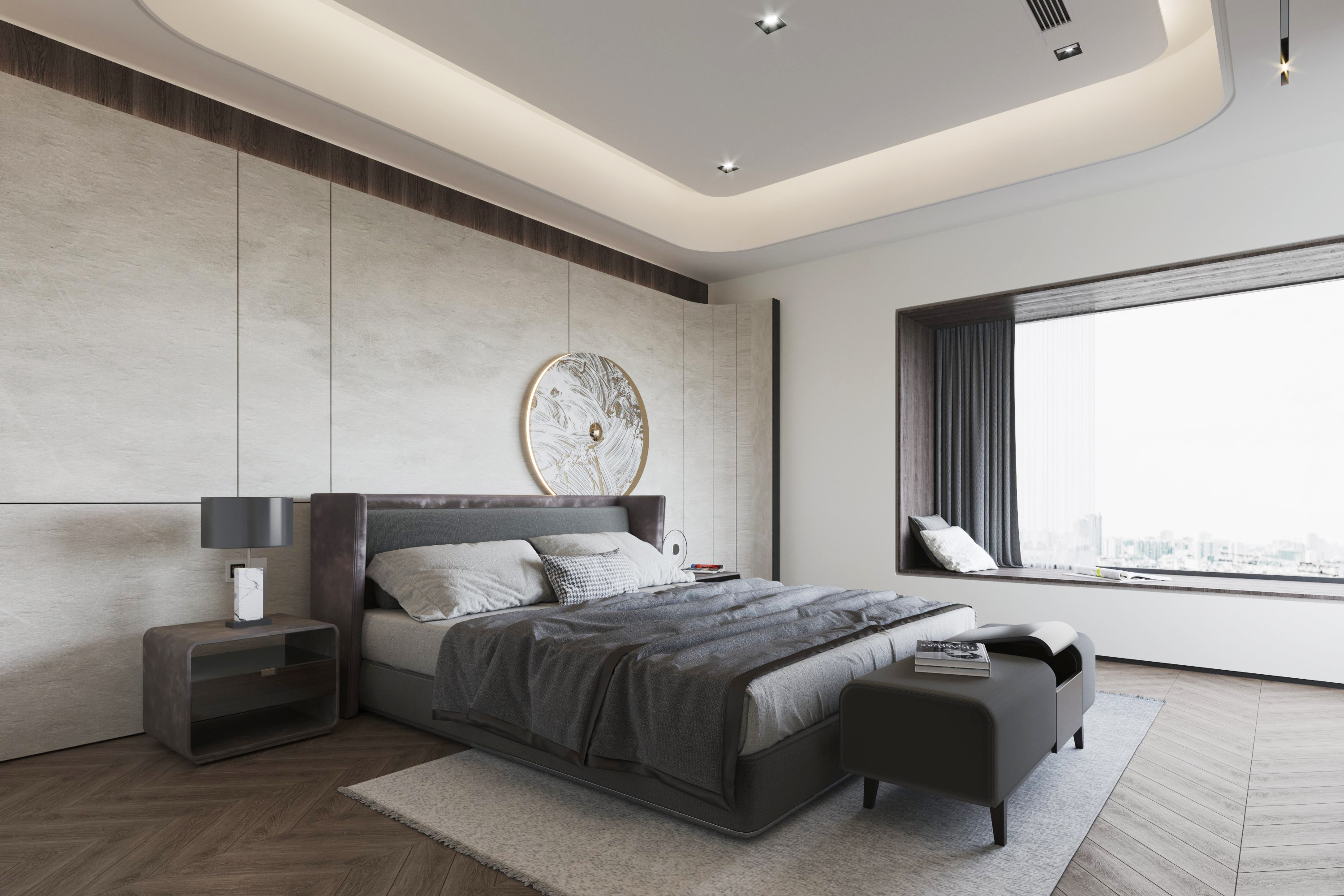
Screw Holding Capability: The "Grip" of Hardware Connections
Furniture assembly depends on screws – hinges, handles, connectors, and slides are all fixed to panels via screws.
Whether screws can "hold firm" in the panel depends on screw holding capability.
The test data provide clear answers in two aspects:
Face screw holding force: Standard requires ≥900 N, tested value 1040 N, exceeding the requirement by 15.6%. This means when you install cabinet door hinges, the screws are firmly "bitten" and will not gradually loosen under frequent opening and closing.
Edge screw holding force: Standard requires ≥600 N, tested value 980 N, exceeding the requirement by 63.3%.
The edge is often where narrow edging, edge connections, or side-mounted hardware are placed, placing greater demands on the panel's edge density.
A value of 980 N ensures that even when screws are driven into the edge, sufficient pull-out resistance is provided, greatly reducing the risk of edge cracking and screw slippage.
For the narrow-frame cabinet doors and slim metal handles commonly seen in Art Deco styles, as well as the fixation of leather-like panels in tufted button applications, high screw holding capability ensures these delicate hardware components are securely attached without fear of loosening over time.
Surface Soundness: The "Never Separate" Promise Between Decorative Layer and Substrate
Surface soundness measures the adhesion strength between the impregnated paper decorative layer and the substrate.
This indicator directly determines whether the decorative surface will blister, peel, or curl at the edges.
The standard requires ≥0.60 MPa, and the tested value reached 1.58 MPa – 2.6 times the standard value.
Such high bonding strength means that even under temperature changes, humidity fluctuations, or accidental impacts, the decorative paper remains tightly bonded to the substrate, with no edge curling or local hollowing.
For Leather Design imitation leather surfaces, which often feature delicate embossing and a supple tactile feel, insufficient bonding strength could cause the decorative layer to delaminate under repeated touching and friction.
The tested value of 1.58 MPa provides long-term assurance for this tactile experience – even on frequently touched sofa armrests, bed headboards, or office desktops, the surface layer maintains its original integrity and flatness.
Internal Bond and Substrate Density: The "Soil" for Screw Holding and Bonding
Screw holding capability and surface soundness do not exist in isolation; they depend on the density and uniformity of the substrate itself.
The internal bond strength tested at 0.37 MPa (standard ≥0.35 MPa) ensures that there is no weak interface between the internal layers of the substrate, preventing interlayer separation when screws are driven in.
The density of 0.72 g/cm³ (in the upper-middle range of the national standard 0.60–0.90) ensures that the substrate is compact enough to firmly "grip" screws, yet not overly heavy, facilitating machining and installation.
Long-Term Value: From Test Data to User Experience
Screw holding capability and surface soundness are the cornerstones of furniture "longevity." If an Art Deco custom cabinet has insufficient screw holding force, after a few years the hinge screws will loosen, doors will sag, and gaps will become uneven.
If a Leather Design tabletop lacks adequate surface soundness, a hot cup may cause blistering, and a single scratch may lift the surface.
The test values – 1040 N, 980 N, and 1.58 MPa – are a powerful refutation of these potential issues.
Conclusion
When selecting impregnated paper surfaced panels, patterns and colours are certainly the immediate attraction, but what truly determines furniture performance and service life are often the unseen "connection data."
The refined lines of Art Deco Melamine Board and the warm touch of Leather Design Melamine Board can only transcend from being merely "good-looking" to "functional and durable" classics when built upon a foundation of high screw holding capability and strong bonding performance.
More: Art Deco Melamine Board